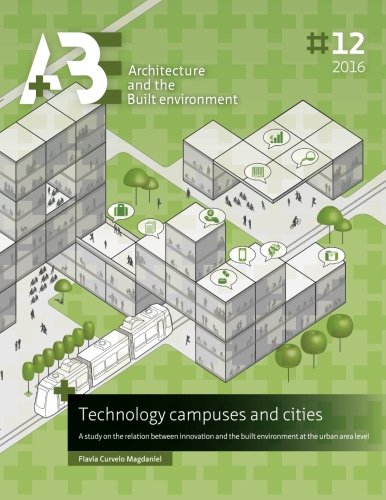

Technology campuses and cities : a study on the relation between innovation and the built ... environment at the urban area level Magdaniel, Flavia Curvelo txt
Colombia : Deft University of Technology, Faculty of Architecture , 2016Descripción: 476 pages: illustrations: 30 cmTipo de contenido:- text
- unmediaded
- volume
- 9789461867094
- 22123202
- NA6602.T4 M34 2016
| Imagen de cubierta | Tipo de ítem | Biblioteca actual | Biblioteca de origen | Colección | Ubicación en estantería | Signatura topográfica | Materiales especificados | Info Vol | URL | Copia número | Estado | Notas | Fecha de vencimiento | Código de barras | Reserva de ítems | Prioridad de la cola de reserva de ejemplar | Reservas para cursos | |
|---|---|---|---|---|---|---|---|---|---|---|---|---|---|---|---|---|---|---|
| Libro | CARIBET Biblioteca Arquitectura Colección General CARIBET | General NA6602.T4 M34 2016 (Navegar estantería(Abre debajo)) | 1 | Disponible | 91000000050229 |
Descripciones mejoradas de Syndetics:
This thesis examines the development of technology campuses as built environments and their role in stimulating innovation. Technology campuses entail a variety of built environments developed to accommodate technology-driven research activities of multiple organisations. The science park is the most common type of technology campus. Other types include the campuses of universities of technology and corporate R&D parks.
Governments, universities and R&D companies are investing billions of euros in developing the infrastructure that will not only support their core processes, but will help them to remain competitive by attracting and retaining the best talent. Part of these investments are targeted to develop new buildings or entire areas that often result in campuses as we know them: a concentration of buildings accommodating organisations, people, and their activities in a (green) field.
The assumption that the concentration of research activities in one location stimulates innovation is promoting the development of technology campuses in many places. However, the capacity of these built environments to support the different processes associated with innovation is not well understood - i.e. Technology campuses are urban areas in the inner city and peripheral locations that have the capacity to support the processes of knowledge creation and diffusion, as well as of attracting and retaining knowledge workers. The existent knowledge about the relationship between the built environment and innovation at the area level is limited. This knowledge gap may lead to inefficient use of the resources employed to develop technology campuses including capital, land, and time. Also, this lack of understanding can have the opposite effect, because technology campuses could easily become problematic areas dealing with vacancy, poor spatial quality, and connectivity issues frustrating the societal goal of a racting and retaining talent in the knowledge economy. A potential way to address these problems is outlining the ways in which the built environment stimulates innovation in technology campuses.
In this context, this research addresses as main question 'How does the built environment stimulate innovation in technology campuses?' This research is grounded in the field of corporate real estate management and its theoretical assumption that the built environment is a resource managed to support the goals of organisations. Research in this field has focused on the practice of real estate management from the end user's view. Campus development is a comprehensive form of this practice, because it deals with activities that vary from developing real estate strategies, developing building projects, up to maintaining and managing the portfolio of an organisation.
This research provides an understanding of the relationship between the built environment and innovation at the area level. This research developed knowledge clarifying such relationship in the form of a conceptual model and recommendations for practitioners involved in the practice of campus development.
Includes index.
Includes bibliographical references
Contents :
Summary
PART I Background
1 Introduction
1.1 Research field
1.2 Problem definition
1.2.1 Problem statement
1.2.2. Knowledge basis : gaps and opportunities
1.3 Research aim and questions
1.3.2 Exploratory questions
1.3.2 Explanatory-descriptive questions
1.4 Research design
1.4.1 Research approach
1.4.2 Strategies and methods
1.4.3 Assumptions
1.5 Research outline
1.5.1 Dissertation structure
1.5.2 Readers' guide
1.5.3 Definitions
PART II Exploratory research
2 Applied concepts and theories
2.1 Introduction
2.1.1 Chapter aim and questions
2.1.2 Methods
2.2 The role of the built environment in stimulating innovation
2.2.1 Real estate as an organisational resource
2.2.2 The added value of real estate on organisational performance
2.2.3 Stimulating innovation : organisational goal, real estate strategy, and added value
2.3 Stimulating innovation in the knowledge economy
2.3.1 Cities and the built environment in the knowledge economy
2.3.2 Direction of further exploratory research in the literature
2.4 Innovation , economy and geography
2.4.1 The economics of innovation
2.4.2 The geography of innovation
2.5 Conclusions
3 Technology Campuses: emergence & development
3.1 Introduction
3.1.1 Chapter aim and questions
3.1.2 Methods
3.2 Emergence and development of technology campuses
3.2.1 The post-war period & the atomic age: the origin of the R & D Park and Nuclear power in technology campuses
3.2.2 The space age & ICT industrial revolution: the emergence of the Asian technology campuses
3.2.3 The digital & information Age: Global coverage and hybrid developments
3.2.4 Answers to guiding sub-questions
3.3 Distinct patterns in the demand for technology campuses
3.3. 1 The Triple Helix as main stakeholder developing technology campuses
3.3.2 The strategic campus: goals on technology campuses and cities
3.3.3 Answers to guiding sub-questions
3.4 Distinct patterns in the supply of technology campuses
3.4. 1 The operational campus: the form and function of technology in cities / regions
3.4.2 Answers to guiding sub - questions
3.5 Conclusions
4 The built environment as catalyst for innovation: a conceptual framework
4.1 Introduction
4.1.1 Chapter aim and questions
4.1.2 Methods
4. 1.3 Innovation and the built environment insights from theory and practice
4.1.4 Research proposition
4.2 Towards a conceptual framework explaining the built environment as catalyst for innovation
4.2.1 Logic of the framework
4.2.2 The input - conditions leading to innovation and their relationships]
4.3 The conceptual framework and the methodological design of Part III
4. 3.1 Case study research
4. 3.2 Case selection
4. 3.3 Data collection, analysis and synthesis
4.4 Conclusions
PART III Explanatory research
5 Chapter 5
5.1 Introduction
5. 1.1 Chapter aim and questions
5. 1.2 Approach and methods
5. 1.3 The HTCE
5. 1.4 The city of Eindhoven
5.2 Conditions stimulating innovation in HTCE and Brainport - Eindhoven region
5. 2.1 Concentration of innovators: R & D as the engine of a high - tech industrial cluster
5. 2.2 Innovation area: HTCE campus at the heart of Brainport Eindhoven region
5. 2.3 Density of functions: the HTCE community generating diversity
5. 2.4 Flow in incentives: the entrepreneurial tradition of the Triple Helix in Brainport
5. 2.5 Innovation climate: Reinvention of Eindhoven based on its natural strengths
5.2.6 The presence of a catalyst: the development of HTCE facilitating innovation
5.3 The development of HTCE as catalyst for innovation
5. 3.1 Campus intervention A: Intended accommodation strategy towards concentration
5. 3.2 Campus intervention B: Representative facilities
5. 3.3 Campus intervention C: Shared facilities
5. 3.4 Campus intervention D: Flexible facilities
5. 3.5 Campus intervention E: Physical connectors
5.4 Discussion
5.4.1 Relationships between the campus interventions as catalysts for innovation
5.4.2 Stakeholder's perspectives on campus interventions as catalysts for innovation
5.4.3 Final remarks and case recommendations
5.5 Conclusions
6 The MIT Campus in Cambridge - Boston area
6.1 Introduction
6. 1.1 Chapter aim and question
6. 1.2 Approach and methods
6. 1.3 The MIT campus
6. 1.4 The city of Cambridge
6.2 Conditions stimulating innovation in MIT and Cambridge - Boston area
6.2.1 Concentration of innovators: MIT leading a prestigious science and technology cluster
6.2.2 Innovation area: MIT campus at the heart of the Cambridge - Boston area
6.2.3 Density of functions: the MIT community generating diversity
6.2.4 Flow in incentives: the entrepreneurial tradition of the Triple Helix in Massachusetts
6.2.5 Innovation climate: Massachusetts adapting the shift of technology over time
6.2.6 The presence of a catalyst: the development of MIT campus accelerating innovation
6. 3 The development of MIT campus as a catalyst for innovation
6. 3.1 Campus intervention A: Land acquisition
6. 3.2 Campus intervention B: Urban area development
6. 3.3 Campus intervention C: Shared facilities
6. 3.4 Campus intervention D: Flexible facilities
6. 3.5 Campus intervention E: Physical connectors
6.4 Discussion
6.4.1 Relationships between the campus interventions as a catalysts for innovation
6.4 .2 Stakeholder’s perspectives on campus interventions as catalysts for innovation
6. 4.3 Final remarks and case recommendations
6.5 Conclusions
7 Case comparison
7.1 Introduction
7. 1.1 Chapter aim and questions
7. 1.2 Approach and methods
7.1.3 Two technology campuses in two cities aiming to stimulate innovation the nature of their differences and similarities
7.2 Conditions stimulating innovation in HTCE and MIT campus
7. 2.1 Concentration of innovators
7.2.2 Innovation area
7. 2.3 Density of functions
7.2.4 Flow of incentives
7.2.5 Innovation climate
7.2.6 The presence of a catalyst: campuses ' developments facilitating the conditions for innovation
7.3 Discussion
7.4 Conclusions
8 The built environment as catalyst for innovation: a conceptual model
8.1 Introduction
8.1.1 Chapter aim and questions
8.1. 2 Approach and methods.
8.2 Towards a conceptual model of the built environment as a catalyst for innovation
8. 2.1 Purpose of the model
8. 2.2 Logic of the model
8. 2.3 Hypothesis and propositions
8. 2.4 Discussion
8. 3 The campus decision-maker toolbox
8. 3.1 The need for campus-specific information
8. 3.2 Information to support decisions in technology campuses
8.4 Conclusions
PART IV Conclusions
9 Conclusions and recommendations
9. 1 Introduction
9.2 Research findings
9. 2.1 Exploratory research: A conceptual framework
9. 2.2 Explanatory research: a conceptual model and tools to support campus decisions
9.3 Impact of the findings
9.3.1 Theoretical insights
9.3.2 Practical implications
9.4 Reflections on the quality of the results
9. 4.1 Exploratory research
9. 4.2 Explanatory research
9.5 Further research
References
Appendix A Qualitative survey protocol
Appendix B Compendium of technology campuses
Appendix C Analysis of the operational campus
Appendix D Case Study Protocol - HTCE
Appendix E Output indicators of innovation in HTCE and Brainport - Eindhoven region
Appendix F Case study Protocol - MIT campus
Appendix G Output indicators of innovation in MIT and Cambridge