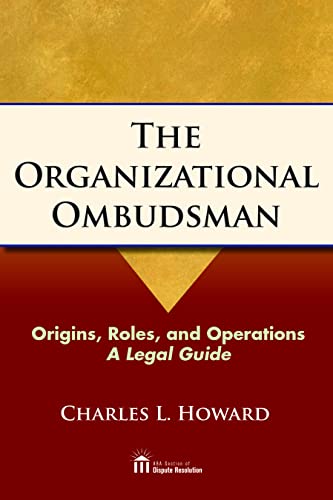

The organizational ombudsman origins, roles, and operations : a legal guide by Charles L. Howard.
Detalles de publicación: Chicago American Bar Association c2010.Descripción: xxix, 643 p. 22 cmISBN:- 9781604427783
- 1604427787
- 342.73/0667 22
- KF 5423 .H69 2010
| Imagen de cubierta | Tipo de ítem | Biblioteca actual | Biblioteca de origen | Colección | Ubicación en estantería | Signatura topográfica | Materiales especificados | Info Vol | URL | Copia número | Estado | Notas | Fecha de vencimiento | Código de barras | Reserva de ítems | Prioridad de la cola de reserva de ejemplar | Reservas para cursos | |
|---|---|---|---|---|---|---|---|---|---|---|---|---|---|---|---|---|---|---|
| Libro | Biblioteca de Derecho Mons. Fremiot Torres Oliver Colección General biblioteca derecho | KF 5423 .H69 2010 (Navegar estantería(Abre debajo)) | Disponible | 70000000884577 |
Descripciones mejoradas de Syndetics:
An essential resource for ombudsmen, dispute resolution professionals, in-house counsel, corporate executives, university administrators, compliance officers, and human resources personnel, this book provides a history of the evolution of the role of an organizational ombudsman. It explains why such a function is important for organizations and the pressures on organizations from developments in criminal law, employment law, and corporate governance and regulation. The book provides:
A detailed rationale for the creation of ombudsman offices, including a review of demographic data and workplace/societal changes in technology and globalization that have influenced how we work and interact in large organizations. Suggestions for structuring and documenting an ombudsman program and how to address issues that arise in litigation. A comprehensive presentation of various legal issues associated with organizational ombudsman programs, including collecting cases that deal with imputed notice and confidentiality. Topics of interest to ombudsmen and to those with whom they work, including discovery tools, arbitration and mediation, the federal sentencing guidelines, the Cleary Act, constitutional limitations on claims of privilege, and the European Union Data Privacy Directive. Numerous examples of how ombudsmen function in their organizations to illustrate how they are effective in addressing issues that people would not otherwise raise.Includes index.
What is an organizational ombuds? -- Why should organizations create ombuds programs? -- How can ombuds' confidentiality be protected? -- What else would be helpful for an organizational ombuds to know?
Includes bibliographical references and index.