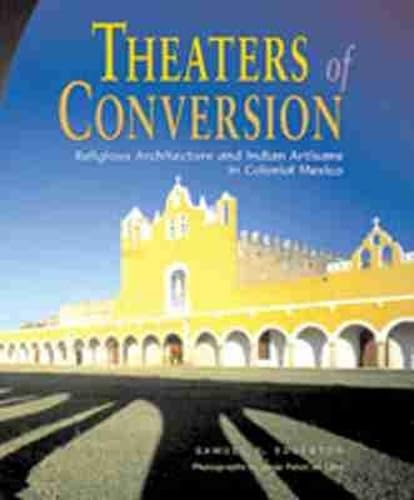

Theaters of Conversion : religious architecture and indian artisans in colonial Mexico. / Samuel Y. Edgerton ; with photographs by Jorge Pérez de Lara ; drawings by Mark Van Stone, James E. Ivey, and the author. txt
Idioma: Inglés Mexico : New Mexico Press, 2001Edición: 1st. edDescripción: 350 p. ill. ; maps ; plans ; 27 cmTipo de contenido:- text
- unmediaded
- volume
- 9780826322562
- 704.94820972
- N7914.A1 E34 2001
| Imagen de cubierta | Tipo de ítem | Biblioteca actual | Biblioteca de origen | Colección | Ubicación en estantería | Signatura topográfica | Materiales especificados | Info Vol | URL | Copia número | Estado | Notas | Fecha de vencimiento | Código de barras | Reserva de ítems | Prioridad de la cola de reserva de ejemplar | Reservas para cursos | |
|---|---|---|---|---|---|---|---|---|---|---|---|---|---|---|---|---|---|---|
| Libro Col. General CARIBET | CARIBET Biblioteca Arquitectura Colección General CARIBET | General N7914.A1 E34 2001 (Navegar estantería(Abre debajo)) | 1 | Disponible | 91000000035519 |
Descripciones mejoradas de Syndetics:
Mexico's churches and conventos display a unique blend of European and native styles. Missionary Mendicant friars arrived in New Spain shortly after Cortes's conquest of the Aztec empire in 1521 and immediately related their own European architectural and visual arts styles to the tastes and expectations of native Indians. Right from the beginning the friars conceived of conventos as a special architectural theater in which to carry out their proselytizing. Over four hundred conventos were established in Mexico between 1526 and 1600, and more still in New Mexico in the century following, all built and decorated by native Indian artisans who became masters of European techniques and styles even as they added their own influence. The author argues that these magnificent sixteenth and seventeenth-century structures are as much part of the artistic patrimony of American Indians as their pre-Conquest temples, pyramids, and kivas. Mexican Indians, in fact, adapted European motifs to their own pictorial traditions and thus made a unique contribution to the worldwide spread of the Italian Renaissance.
The author brings a wealth of knowledge of medieval and Renaissance European history, philosophy, theology, art, and architecture to bear on colonial Mexico at the same time as he focuses on indigenous contributions to the colonial enterprise. This ground-breaking study enriches our understanding of the colonial process and the reciprocal relationship between European friars and native artisans.
Includes index.
Includes bibliographical references.
Contents :
Preface and Acknowledgments ix --
List of Illustrations xiii --
Introduction Art as a Tool of Christian Conversion 1 --
Chapter 1 The Millennium of the Medicant Friars 13 --
Chapter 2 The Cross and the Tree The Christian Convento as Indian Cosmos 35 --
Chapter 3 The Arch and the Cave Open Chapels in the Yucatán 73 --
Chapter 4 Indians and Renaissance Art Fray Pedro de Gante’s School of Art at San Jose de los Naturales 107 --
Chapter 5 Christian Murals by Indian Artists 129 --
Chapter 6 The Convento as Theater Medieval Autos and Nahua Neixcuitilli 155 --
Chapter 7 Stage and Scenery 173 --
Chapter 8 The Cloister as Theater Adam and Eve Lost in Aztec Paradise 207 --
Chapter 9 The Convento as Theater of Memory 237 --
Chapter 10 “El Dorado” The Desolate Desert Conventos of New Mexico 1598 – 1700 247 --
Chapter 11 Religious Architecture in “Those Most Remote Provinces” 271 --
Notes 299 --
Bibliography 330 --
Index 345 --
Illustrations :
Introduction --
Fig. 1.1 Convento of Nuestra Señora, Izamal, Yucatán --
Fig. 1.2 Detail, relief sculpture with artist's signature --
Fig. 1.3 Detail, relief sculpture of place glyph --
Fig. 1.4 Detail, relief sculpture of date plaque --
Fig. 1.5 Distribution of Indian nations in sixteenth-century Mesoamerica --
Chapter 1 --
Fig. 1.1 Fray Pedro de Gante --
Fig. 1.2 The first twelve Franciscan apostles --
Fig. 1.3 Detail, relief sculpture showing a "dog of the Lord" --
Fig. 1.4 The first seven Augustinian friars in Mexico --
Fig. 1.5 Sandro Botticelli, Crucifixion with Penitent Magdalen and an Angel --
Fig. 1.6 Saint Christopher Carrying Christ across the Sea, mural --
Fig. 1.7 Martin de Vos, Saint John of Patmos Writing the Apocalypse --
Fig. 1.8 Lord's prayer in Testerian hieroglyphics with Nahuatl translation --
Fig. 1.9 Leonardo da Vinci, Human Skull --
Chapter 2 --
Fig. 2.1 Locations of conventos mentioned in this book --
Fig. 2.2 Convento church of Santo Domingo, Yanhuitlán, Oaxaca --
Fig. 2.3 Open chapel of the convento of Santiago, Cuilapan, Oaxaca --
Fig. 2.4 Convento church of San Juan Bautista, Coixtlahuaca, Oaxaca --
Fig. 2.5 Diagram of a prototypical Mexican convento --
Fig. 2.6 Gothic style nave vaulting --
Fig. 2.7 Mudéjar style nave ceiling --
Fig. 2.8 Convento church of Saints Pedro y Pablo, Dzidzantún, Yucatán --
Fig. 2.9 Church and friary of the convento of San Agustín, Acolman --
Fig. 2.10 Convento church of San Juan Bautista, Yecapixtla, Morelos --
Fig. 2.11 Convento church and portería of Santa María Magdalena, Cuitzeo, Michoacán --
Fig. 2.12 Convento church of San Agustín, Yuriria (formerly San Pablo), Guanajuato --
Fig. 2.13 Detail, Yuriria church's west facade --
Fig. 2.14 Cloister of the convento of San Miguel, Huejotzingo, Puebla --
Fig. 2.15 Portería of the convento of Santa María Magdalena, Cuitzeo, Michoacán --
Fig. 2.16 Last Judgment, mural --
Fig. 2.17 Convento of San Francisco, Tlahuelilpa, Hidalgo --
Fig. 2.18 Convento of Santiago, Cuilapan, Oaxaca --
Fig. 2.19 Convento of Nuestra Señora, Izamal, Yucatán --
Fig. 2.20 Preconquest relief in facade of seventeenth-century Dominican church, Teotitlán del Valle, Oaxaca --
Fig. 2.21 Exposed section of rejoneado masonry, convento of Los Santos Reyes, Metztitlán, Hidalgo --
Fig. 2.22 Detail, Codex Vindobonensis --
Fig. 2.23 Patio of the convento of San Gabriel, Cholula --
Fig. 2.24 Patio de los Naranjos, Cathedral of Seville, Spain --
Fig. 2.25 Interior of the convento church of San Gabriel, Cholula --
Fig. 2.26 Founding of Tenochtitlan, frontispiece, Codex Mendoza --
Fig. 2.27 Posa in patio of the convento of San Miguel, Huejotzingo, Puebla --
Fig. 2.28 North door of the church of San Miguel, Huejotzingo, Puebla --
Fig. 2.29 Fray Diego Valadés, engraving depicting the ideal convento patio --
Fig. 2.30 Patio cross at the convento of San Agustín, Acolman, Mexico --
Fig. 2.31 Detail, Codex Vindobonensis --
Fig. 2.32 Cross on patio wall, convento of San Salvador, Malinalco, Mexico --
Chapter 3 --
Fig. 3.1 Rosary Chapel, convento of Asunción de Nuestra Señora, Tlaxcala, Tlaxcala --
Fig. 3.2 Yucatán peninsula showing convento and visita sites mentioned in chapter 3 --
Fig. 3.3 Cenote at Telchaquillo, Yucatán --
Fig. 3.4 Church at Tixpéhual, Yucatán --
Fig. 3.5 Church at Tecoh, Yucatán --
Fig. 3.6 Detail, western facade of church at Telchaquillo, Yucatán --
Fig. 3.7 Palapa house near Sudzal, Yucatán --
Fig. 3.8 Fray Diego Valadés, Human Sacrifice upon an Aztec Temple, engraving --
Fig. 3.9 Open chapel at Dzibilchaltún, Yucatán --
Fig. 3.10 Convento of San Miguel, Maní, Yucatán --
Fig. 3.11 Prototypical sixteenth-century open chapel church in the Yucatán --
Fig. 3.12 Church at Sudzal, Yucatán --
Fig. 3.13 Maya pyramid at Mayapán, Yucatán --
Fig. 3.14 Church at Tabí, Yucatán --
Fig. 3.15 Prototypical sixteenth-century open chapel church in the Yucatán with palapa ramada --
Fig. 3.16 Reconstruction of a Classic Maya temple, Piedras Negras, Guatemala --
Fig. 3.17 Seventh-Day Adventist chapel near Oxkutzcab, Yucatán --
Fig. 3.18 Convento of Nuestra Señora, Izamal, Yucatán --
Fig. 3.19 Shrine with three crosses marking the entrance road to Tabí, Yucatán --
Fig. 3.20 Prototypical sixteenth-century church in the Yucatán with masonry nave replacing palapa ramada --
Fig. 3.21 Nave of the church at Calotmul, Yucatán, showing rollizo vaulting --
Fig. 3.22 Detail, ruined church at Pixila (Cuauhtémoc), Yucatán --
Fig. 3.23 Western facade espadaña of church at Cacalchen, Yucatán --
Fig. 3.24 Western facade espadaña of church at Yotholin, Yucatán --
Fig. 3.25 Western facade espadaña of church at Tixcuytún, Yucatán --
Fig. 3.26 Frederick Catherwood, engraving, ruins of late Classic Maya temple "Dovecote" at Uxmal, Yucatán --
Chapter 4 --
Fig. 4.1 Saint Catherine of Siena, mural --
Fig. 4.2 Saint Antonine of Florence, mural --
Fig. 4.3 Diagram of Alberti's linear perspective "window" --
Fig. 4.4 Detail, Raphael, School of Athens --
Fig. 4.5 Fray Diego Valadés, Fray Pedro de Gante Preaching to the Indians, engraving --
Fig. 4.6 Agony in the Garden, mural --
Fig. 4.7 Flagellation of Christ, mural --
Fig. 4.8 Fray Diego Valadés, The "Pagan Philosopher," engraving --
Fig. 4.9 Fray Diego Valadés, The "Christian Philosopher," engraving --
Fig. 4.10 Sebastiano Serlio, perspective rendering of an arched architectural bay, woodcut --
Fig. 4.11 A typical Nahua screenfold manuscript unfolded --
Fig. 4.12 Nahua deities Mictlantecuhtli and Quetzalcoatl, Codex Borgia --
Chapter 5 --
Fig. 5.1 Annunciation, Palacio Carvajal, Cáceres, Spain --
Fig. 5.2 Scenes of Augustinian Heroes, mural --
Fig. 5.3 Detail, mural, Actopan stair hall --
Fig. 5.4 Detail, mural, Actopan stair hall --
Fig. 5.5 Title page from Fernandez de Oviedo y Valdes's La historia general de las Indias --
Fig. 5.6 Last Supper, mural --
Fig. 5.7 Ecce Homo, mural --
Fig. 5.8 Death and Coronation of the Virgin, mural --
Fig. 5.9 Testera framed by an illusionistic doorway, convento of Santiago, Cuilapan, Oaxaca --
Fig. 5.10 Prophets and Sibyls, mural --
Fig. 5.11 Detail, Prophets and Sibyls, mural --
Fig. 5.12 Last Judgment, relief carving, convento of San Andrés, Calpan, Puebla --
Fig. 5.13 Last Judgment, woodcut from Nova contemplativa --
Fig. 5.14 Detail, Virgin of Guadalupe, Basilica de Guadalupe, Mexico City --
Fig. 5.15 Juan Gerson, scenes from the Old Testament and the Apocalypse, entryway ceiling, convento of La Asunción de la Virgen, Tecamachalco, Puebla --
Fig. 5.16 Painted tequitqui molding around the wall in the convento of San Martin, Huaquechula, Puebla --
Fig. 5.17 Title page of Fray Alfonso de Veracruz's Dialectica . . . Aristotelis --
Fig. 5.18 Interior of the chapel, convento of San Francisco, La Rábida, Spain --
Fig. 5.19 Painted illusionistic tequitqui molding around the cloister corridor wall, convento of San Martin, Huaquechula, Puebla --
Chapter 6 --
Fig. 6.1 Crèche with artificial pool with live animals and plants, San Juanito church, Malinalco, Mexico --
Fig. 6.2 Detail, mural, south wall of the convento church of San Miguel, Ixmiquilpan, Hidalgo --
Fig. 6.3 Detail, mural, south wall of the convento church of San Miguel, Ixmiquilpan, Hidalgo --
Fig. 6.4 Detail, mural, south wall of the convento church of San Miguel, Ixmiquilpan, Hidalgo --
Fig. 6.5 Detail, mural, north wall of the convento church of San Miguel, Ixmiquilpan, Hidalgo --
Fig. 6.6 Detail, mural, south wall of the convento church of San Miguel, Ixmiquilpan, Hidalgo --
Chapter 7 --
Fig. 7.1 Church of Santa Maria Sopra Minerva, Assisi, Italy --
Fig. 7.2 Scenes from the Life of Saint Francis, Basilica of Saint Francis, Assisi --
Fig. 7.3 Perspective overlay, Scenes from the Life of Saint Francis, Basilica of Saint Francis, Assisi --
Fig. 7.4 Giotto, Scenes from the Life of the Virgin Mary, Arena Chapel, Padua --
Fig. 7.5 Coronation of the Virgin, Basilica of Santa Maria de la Asunción, Arcos de la Frontera, Spain --
Fig. 7.6 Crucifixion, Prado Museum, Madrid --
Fig. 7.7 Pintoricchio, Scene from the Life of Pope Pius II --
Fig. 7.8 Ancient Roman theater, Mérida, Spain --
Fig. 7.9 Crucifixion, mural --
Fig. 7.10 Martyrdoms of Augustinian Friars, cloister corridor, convento of San Miguel, Charo, Michoacán --
Fig. 7.11 Open chapel–portería, convento of the Anunciación de Nuestra Señora, Cuernavaca, Morelos --
Fig. 7.12 Open chapel, convento of Saints Pedro y Pablo, Teposcolula, Oaxaca --
Fig. 7.13 Open chapel, convento of Saints Pedro y Pablo, Teposcolula, Oaxaca --
Fig. 7.14 Open chapel, convento of Saints Pedro y Pablo, Teposcolula, Oaxaca --
Fig. 7.15 Detail, the Codex Aubin --
Fig. 7.16 Open chapel, convento of San Juan Bautista, Coixtlahuaca, Oaxaca --
Fig. 7.17 Reproduction of detail from map showing the convento church above the Coixtlahuaca place-sign --
Fig. 7.18 Place-sign of Coixtlahuaca as repeated relief motif, convento of San Juan Bautista, Coixtlahuaca, Oaxaca --
Fig. 7.19 Open chapel at the convento of San Nicolás de Tolentino, Actopan, Hidalgo --
Fig. 7.20 Detail, mural inside open chapel, convento of San Nicolás de Tolentino, Actopan, Hidalgo --
Fig. 7.21 Detail, mural inside open chapel, convento of San Nicolás de Tolentino, Actopan, Hidalgo --
Fig. 7.22 Detail, mural inside open chapel, convento of San Nicolás de Tolentino, Actopan, Hidalgo --
Fig. 7.23 Open chapel, convento of San Luis Obispo, Tlalmanalco, Mexico --
Fig. 7.24 Aztec deity Xochipilli, statue --
Fig. 7.25 Detail, open chapel, convento of San Luis Obispo, Tlalmanalco, Mexico --
Fig. 7.26 Detail, open chapel, convento of San Luis Obispo, Tlalmanalco, Mexico --
Fig. 7.27 Central arch of open chapel, convento of San Luis Obispo, Tlalmanalco, Mexico --
Chapter 8 --
Fig. 8.1 Cloister, convento of San Andrés, Epazoyucan, Hidalgo --
Fig. 8.2 Workshop of Rogier van der Weyden, detail, The Annunciation --
Fig. 8.3 Virgin Immaculate, mural --
Fig. 8.4 Crucifixion, mural --
Fig. 8.5 Cloister corridor, convento of San Salvador, Malinalco, Mexico --
Fig. 8.6 Temple of Eagle and Jaguar Knights, Malinalco, Mexico --
Fig. 8.7 Portería facade, convento of San Salvador, Malinalco, Mexico --
Fig. 8.8 Detail, portería facade, convento of San Salvador, Malinalco, Mexico --
Fig. 8.9 Testera, cloister corridor, convento of San Salvador, Malinalco, Mexico --
Fig. 8.10 Cloister corridor, convento of San Salvador, Malinalco, Mexico --
Fig. 8.11 Detail, cloister corridor, convento of San Salvador, Malinalco, Mexico --
Fig. 8.12 Detail, Codex Borbonicus --
Fig. 8.13 Aztec 260-day ritual calendar --
Fig. 8.14 Detail, cloister corridor wall, convento of San Salvador, Malinalco, Mexico --
Fig. 8.15 Detail, Cacao Tree with Monkeys --
Fig. 8.16 Detail, Coyotes --
Fig. 8.17 Detail, Rabbit Eating Pomegranate --
Fig. 8.18 Detail, Serpent Threatening Bird --
Fig. 8.19 Detail, Codex Telleriano-Remensis --
Fig. 8.20 Detail, mural, Chapel of the Miracle of the Rosary, convento of San Juan Bautista, Tetela del Volcán, Morelos --
Chapter 9 --
Fig. 9.1 Fray Diego Valadés, The Five Senses and the Human Brain, engraving --
Fig. 9.2 Raphael, Portrait of Cardinal Tomaso Inghirami --
Fig. 9.3 Guglielmus Leporeus, woodcut diagram of his House of Ten Places --
Fig. 9.4 Fray Diego Valadés, Latin letters converted to pictographs, engraving --
Fig. 9.5 Fray Diego Valadés, detail (from fig. 2.29), Fray Pedro de Gante teaching the Indians Testerian hieroglyphics --
Chapter 10 --
Fig. 10.1 Ruins of the Nuestra Señora de los Angeles pueblo church with kiva in foreground, Pecos, New Mexico --
Fig. 10.2 Church of San Francisco de Asís, Taos, New Mexico --
Fig. 10.3 Routes of Juan de Oñate's entradas into present-day U.S. Southwest --
Fig. 10.4 Early seventeenth-century Pueblo Indian settlements and language groups along the Rio Grande and vicinity in eastern New Mexico --
Fig. 10.5 Ruins of the San Isidro pueblo church, Las Humanas, New Mexico --
Fig. 10.6 Reconstruction of the first church of San Gregorio, Abó, New Mexico --
Fig. 10.7 Facade of the San Estévan church, Acoma Pueblo, New Mexico --
Fig. 10.8 Reconstruction of the second church of San Gregorio, Abó, New Mexico --
Fig. 10.9 Ruins of the Purísima Concepción church, Quarai, New Mexico --
Fig. 10.10 Plan of the church of San Isidro, Las Humanas, New Mexico --
Fig. 10.11 Ruins of the church of San Buenaventura, Las Humanas, New Mexico --
Fig. 10.12 Ruins of the church of San José de Giusewa, Jémez, New Mexico --
Fig. 10.13 Church of San Agustín, Isleta Pueblo, New Mexico --
Fig. 10.14 Church of San José, Pueblo of Laguna, New Mexico --
Chapter 11 --
Fig. 11.1 Kiva at Chetro Ketl, Chaco Canyon, New Mexico --
Fig. 11.2 Exterior of reconstructed kiva at Aztec Ruins National Monument, Aztec, New Mexico --
Fig. 11.3 Interior of reconstructed kiva at Aztec Ruins National Monument, Aztec, New Mexico
Fig. 11.4 Ruins of the second church of San Gregorio, with kiva in its cloister, Abó, New Mexico --
Fig. 11.5 Plan of the church and convento of La Purísima Concepción, Quarai, New Mexico --
Fig. 11.6 Plan of the second church and convento of San Gregorio, Abó, New Mexico Fig. 11.7 Francesco Villamena, Jesuit church of Il Gesù, Rome, after 1586, engraving --
Fig. 11.8 Reconstruction of lateral section through the Church of San José de Giusewa, Jémez, New Mexico, looking toward the altar --
Fig. 11.9 Reconstruction of south elevation of the church and convento of La Purísima Concepción, Quarai, New Mexico --
Fig. 11.10 Parish church of San José de Gracia, Las Trampas, New Mexico --
Fig. 11.11 Interior, church of San José, Pueblo of Laguna, New Mexico --
Fig. 11.12 Reconstruction of longitudinal section through the second church of San Gregorio, Abó, New Mexico --
Fig. 11.13 Reconstruction of longitudinal section through the Church of San José de Giusewa, Jémez, New Mexico --
Fig. 11.14 Interior, church of San Agustín, Isleta Pueblo --
Fig. 11.15 Gian Lorenzo Bernini, Miracle of Saint Theresa --
Fig. 11.16 Plan of the convento and church of San Buenaventura, Las Humanas, New Mexico --
Fig. 11.17 Interior, kiva, Coronado State Park, Bernalillo, New Mexico --
Fig. 11.18 Retablo with Saints and Synthronous Trinity, church of San José, Pueblo of Laguna, New Mexico --
"The author brings a wealth of knowledge of medieval and Renaissance European history, philosophy, theology, art, and architecture to bear on colonial Mexico at the same time as he focuses on indigenous contributions to the colonial enterprise. This study enriches our understanding of the colonial process and the reciprocal relationship between European friars and native artisans." --
Includes index.
Tabla de contenidos provista por Syndetics
- Preface and Acknowledgments(p. ix)
- List of Illustrations(p. xiii)
- Introduction: Art as a Tool of Christian Conversion(p. 1)
- Chapter 1 The Millennium of the Mendicant Friars(p. 13)
- Chapter 2 The Cross and the Tree: The Christian Convento as Indian Cosmos(p. 35)
- Chapter 3 The Arch and the Cave: Open Chapels in the Yucatan(p. 73)
- Chapter 4 Indians and Renaissance Art: Fray Pedro de Gante's School of Art at San Jose de Los Naturales(p. 107)
- Chapter 5 Christian Murals by Indian Artists(p. 129)
- Chapter 6 The Convento as Theater: Medieval Autos and Nahua Neixcuitilli(p. 155)
- Chapter 7 Stage and Scenery(p. 173)
- Chapter 8 The Cloister as Theater: Adam and Eve Lost in Aztec Paradise(p. 207)
- Chapter 9 The Convento as Theater of Memory(p. 237)
- Chapter 10 "El Dorado": The Desolate Desert Conventos of New Mexico, 1598-1700(p. 247)
- Chapter 11 Religious Architecture in "Those Most Remote Provinces"(p. 271)
- Notes(p. 299)
- Bibliography(p. 330)
- Index(p. 345)