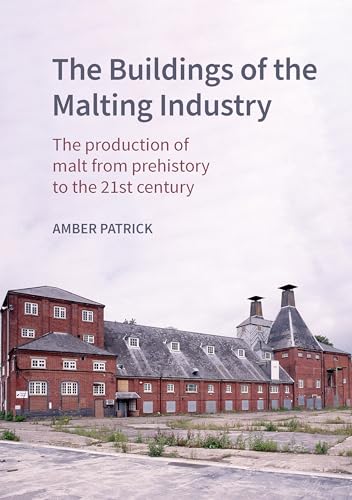

The buildings of the malting industry : the production of malt from prehistory to the 21st century. / txt
Swindon : Liverpool University Press on behalf of Historic England, 2023Descripción: x, 204 pages : ill. ; plans ; col. ; 25 cmTipo de contenido:- text
- unmediaded
- volume
- 9781837644285
- 1837644284
- NA6423.G7 P38 2023
| Imagen de cubierta | Tipo de ítem | Biblioteca actual | Biblioteca de origen | Colección | Ubicación en estantería | Signatura topográfica | Materiales especificados | Info Vol | URL | Copia número | Estado | Notas | Fecha de vencimiento | Código de barras | Reserva de ítems | Prioridad de la cola de reserva de ejemplar | Reservas para cursos | |
|---|---|---|---|---|---|---|---|---|---|---|---|---|---|---|---|---|---|---|
| Libro Col. General CARIBET | CARIBET Biblioteca Arquitectura Colección General CARIBET | General NA6423.G7 P38 2023 (Navegar estantería(Abre debajo)) | 1 | Disponible | 91000000750737 |
Descripciones mejoradas de Syndetics:
Winner of the Association for Industrial Archaeology's Peter Neaverson Award for Outstanding Scholarship 2025
The Buildings of the Malting Industry is a fascinating book on the buildings that have helped make our much loved beer over the centuries. Malt is one of the main ingredients of beer, yet the buildings in which it was and is now produced have received very little attention, although most towns and many villages had their own malthouse and kiln. This is the first book to address the paucity of detail on maltings which historically were to be found in all English counties. Today evidence for a malthouse may just be a name on a building or street. However, where they survive the pyramidal roofs clearly demonstrate the presence of a malthouse as do other less recognisable features. This book gives details of early malt kilns and shows how they changed over the centuries. Early buildings were essentially vernacular ones but by the mid-19th century some firms were using specialist architects. Then in the 20th century there was more engineering input to new maltings, in particular with the development of the pneumatic process. This once widespread industry is now mainly confined to the eastern side of the country. Elsewhere surviving maltings have been converted to other uses and examples of these are given. There are illustrations of the exteriors and interiors of malthouses and kilns which show some of the developments and how some buildings have been reused.
Acknowledgements --
Preface --
Introduction: Malt, beer, how malt is made and how the industry developed --
Chapter 1 The early evidence for maltings --
Chapter 2 The development of malthouses and malt kilns to the end of the 17th century --
Chapter 3 The 18th century and the survival of recognisable kilns --
Chapter 4 The 19th Century to 1870 --
Chapter 5 The 19th Century from 1870 --
Chapter 6 The 20th Century up to 1960 --
Chapter 7 The 20th Century from the 1960s and modern malting --
Chapter 8 The reusing of maltings – throughout their history --
Postscript --
Glossary --
Weights and Measures --
Appendix 1 The historical floor malting process --
Appendix 2 Malthouse layouts --
Appendix 3 Patents, architects and engineers --
References --
Index --
Malt is one of the main ingredients of beer, yet the buildings in which it was and is now produced have received very little attention, although most towns and many villages had their own malthouse and kiln. This is the first book to address the paucity of detail on maltings which historically were to be found in all English counties. Today evidence for a malthouse may just be a name on a building or street. However, where they survive the pyramidal roofs clearly demonstrate the presence of a malthouse as do other less recognisable features. This book gives details of early malt kilns and shows how they changed over the centuries. Early buildings were essentially vernacular ones but by the mid-19th century some firms were using specialist architects. Then in the 20th century there was more engineering input to new maltings, in particular with the development of the pneumatic process. This once widespread industry is now mainly confined to the eastern side of the country. Elsewhere surviving maltings have been converted to other uses and examples of these are given. There are illustrations of the exteriors and interiors of malthouses and kilns which show some of the developments and how some buildings have been reused.