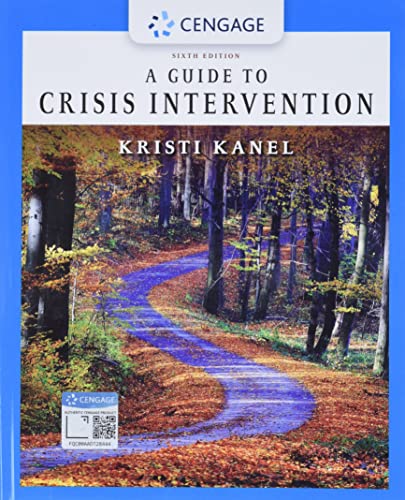

A guide to crisis intervention / Kristi Kanel.
Editor: San Francisco, CA : Cengage Learning, 2017Edición: Sixth editionDescripción: xix, 283 pages : illustrations ; 24 cmTipo de contenido:- text
- unmediated
- volume
- 9781337566414
- RC480.6 .K355 2017
| Imagen de cubierta | Tipo de ítem | Biblioteca actual | Biblioteca de origen | Colección | Ubicación en estantería | Signatura topográfica | Materiales especificados | Info Vol | URL | Copia número | Estado | Notas | Fecha de vencimiento | Código de barras | Reserva de ítems | Prioridad de la cola de reserva de ejemplar | Reservas para cursos | |
|---|---|---|---|---|---|---|---|---|---|---|---|---|---|---|---|---|---|---|
| Libro | Biblioteca de Mayagüez Colección General mb | RC480.6 .K355 2017 (Navegar estantería(Abre debajo)) | c. 1 | Disponible | 50000003281515 |
Descripciones mejoradas de Syndetics:
Handle any crisis situation with the help of this practical, nuts-and-bolts guide. A GUIDE TO CRISIS INTERVENTION, 6th Edition covers the fundamentals of situational and developmental crises, how they occur and how you can manage them. Author Kristi Kanel discusses traditional counseling models as they relate to crisis intervention, and shows how they're incorporated into her ABC Model of Crisis Intervention--which you can use in any mental health setting with anyone in crisis. Examples illuminate the psychological and behavioral dynamics associated with crisis situations. Cases and scripts help you learn exactly what to say to clients, whether the crisis is developmental; related to trauma, post-traumatic stress disorder (PTSD), substance abuse or other factors; or arises from personal victimization. You'll also learn how to conduct suicide assessments and mental status exams.
Includes bibliographical references and index.
1. An Overview of Crisis Intervention -- 2. Ethical and Professional Issues -- 3. The ABC Model of Crisis Intervention -- 4. Intervening with Crises Related to Danger to Self, Others, or Being Gravely Disabled -- 5. Developmental and Cultural Crises -- 6. Crises of Loss: Death, Relationship Breakups, and Economic Loss -- 7. Community Disaster, Trauma, and Post Traumatic Stress Disorder -- 8. Crises Related to Military Service -- 9. Crises Related to Personal Trauma -- 10. Crises Related to Sexuality -- 11. Substance Use Related Disorders and Crises -- 12. Crises Related to Aging, Physical Illness, and Disabilities.
The book offers useful day-to-day guidelines based on the ABC Model of Intervention: developing and maintaining rapport, identifying the problem and exploring the client's coping strategies. It also includes specific therapeutic interactions for use in a variety of situations. Crisis workers or those working in crisis situations can use the model effectively in any mental health setting and with any individual--from any population--in a crisis situation. Case examples and scripts of dialogues illustrate the ABC Model and show students exactly what to say to a client in a given situation. The book emphasizes brief therapeutic interventions and short-term crisis intervention counseling to enable successful outcomes despite the changes brought about by managed care organizations. Students learn the effects of dealing with crises on community workers and crisis counselors, with examples of secondary PTSD. Discussion of the cognitive tree metaphor helps students understand how to ask questions that explore the cognitive component of a crisis and how to move up the branches to extract the essential "cognitive key" that underlies the crisis. This metaphor can also help counselors see how to start with a precipitating event or subjective distress and how to reach the cognitions from that starting point. The "Cases to Role-Play" feature offers students and faculty a starting point for discussions of particular crisis scenarios. Appropriate reframes, support statements, educational statements and empowerment statements for students to practice during the role-plays accompany each case vignette. Tables summarize key points--including the history of crisis intervention, suicide assessment, death and dying stages and HIV-AIDS issues--and provide students with outlines for assessing substance abuse and other issues with clients. Although the author focuses on what clinicians do rather than on a review of research and literature, she provides more than enough information to help inform and educate clients about the nature of their crisis.