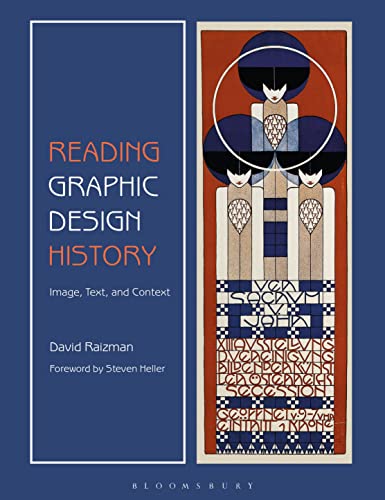

Reading graphic design history : image, text and context / David Raizman.
Series Cultural histories of designEditor: London ; New York : Bloomsbury Visual Arts, 2020Descripción: xxxiv, 251 pages, 16 unnumbered pages of plates : illustrations (some color)Tipo de contenido:- text
- unmediated
- volume
- 9781474299411
- 9781474299398
- 23 741.609
- NC998 .R35 2020
| Imagen de cubierta | Tipo de ítem | Biblioteca actual | Biblioteca de origen | Colección | Ubicación en estantería | Signatura topográfica | Materiales especificados | Info Vol | URL | Copia número | Estado | Notas | Fecha de vencimiento | Código de barras | Reserva de ítems | Prioridad de la cola de reserva de ejemplar | Reservas para cursos | |
|---|---|---|---|---|---|---|---|---|---|---|---|---|---|---|---|---|---|---|
| Libro electrónico | Biblioteca de Mayagüez Acceso en línea | NC998 .R35 2020 (Navegar estantería(Abre debajo)) | Ebook c. 1 | Disponible | 50000003290466 | |||||||||||||
| Libro | CARIBET Biblioteca Arquitectura Colección General CARIBET | General NC998 R35 2020 (Navegar estantería(Abre debajo)) | 1 | Disponible | 91000000064873 | |||||||||||||
| Libro Electrónico CARIBET | CARIBET Biblioteca Arquitectura Libros Electrónicos CARIBET | Electrónico NC998 R35 2020 (Navegar estantería(Abre debajo)) | 1 | Disponible | caribet296558 |
Descripciones mejoradas de Syndetics:
Reading Graphic Design History uses a series of key artifacts from the history of print culture in light of their specific historical contexts. It encourages the reader to look carefully and critically at print advertising, illustration, posters, magazine art direction and typography, often addressing issues of class, race and gender.
David Raizman's innovative approach intentionally challenges the canon of graphic design history and various traditional understandings of graphic design. He re-examines 'icons' of graphic design in light of their local contexts, avoiding generalisation to explore underlying attitudes about various social issues. He encourages new ways of reading graphic design that take into account a broader context for graphic design activity, rather than broad views that discourage the understanding of difference and the means by which graphic design communicates cultural values. With a foreword by Steven Heller.
Includes bibliographical references and index.
Josef Müller-Brockmann: “schutzt das Kind!” and the mythology of Swiss design --
Koloman Moser's Thirteenth Secession exhibition poster (1902): anatomy of a work of Viennese graphic design --
Cassandre and Dubonnet: art posters and publicité in interwar Paris --
Frank Zachary at "Holiday": travel, leisure, and art direction in post-World War II America --
Food, race, and the "New Advertising": the Levy's Jewish Rye Bread campaign 1963-1969 --
Graphic design and politics: Thomas Nast and the “Tammany Tiger loose” --
The politics of learning: Dr. John Fell and the Fell types at Oxford University in the later seventeenth century.
1 Josef Müller-Brockmann: "schutzt das Kind!" and the Mythology of Swiss Design -- 2 Koloman Moser's Thirteenth Secession Exhibition Poster (1902): Anatomy of a Work of Viennese Graphic Design -- 3 Cassandre and Dubonnet: Art Posters and Publicité in Interwar Paris -- 4 Frank Zachary at Holiday: Travel, Leisure, and Art Direction in Post-World War II America -- 5 Food, Race, and the "New Advertising": The Levy's Jewish Rye Bread Campaign 1963-1969
6 Graphic Design and Politics: Thomas Nast and the "TAMMANY TIGER LOOSE" -- 7 The Politics of Learning: Dr. John Fell and the Fell Types at Oxford University in the Later Seventeenth Century -- Bibliography -- Index
"Reading Graphic Design History uses a series of key texts from the history of print culture to address issues of class, race and gender. It encourages the reader to look at print advertising, illustration, posters, magazine art direction and typography aesthetically but also critically. David Raizman's innovative approach intentionally challenges the canon of graphic design history and various traditional understandings of graphic design that have privileged certain schools or movements. He re-examines 'icons' of graphic design in light of their local contexts, avoiding generalisation to explore underlying attitudes about various social issues. He encourages new ways of reading graphic design that take into account a broader context for graphic design activity, rather than generalisations that discourage the understanding of difference and the means by which graphic design communicates cultural values"--