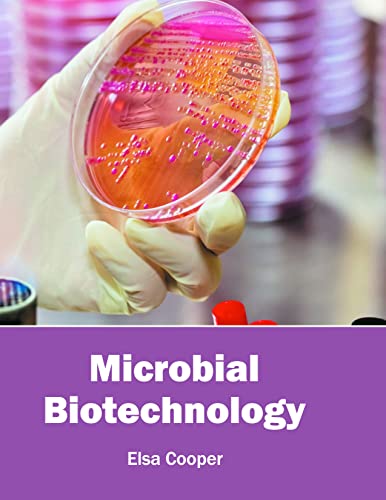

Microbial biotechnology / edited by Elsa Cooper.
Editor: New York : Syrawood Publishing House, ©2016Descripción: vii, 206 pages : illustrations ; 27 cmTipo de contenido:- text
- unmediated
- volume
- 9781682860977
- 660.62
- TP248.27.M53 M5154 2015
| Imagen de cubierta | Tipo de ítem | Biblioteca actual | Biblioteca de origen | Colección | Ubicación en estantería | Signatura topográfica | Materiales especificados | Info Vol | URL | Copia número | Estado | Notas | Fecha de vencimiento | Código de barras | Reserva de ítems | Prioridad de la cola de reserva de ejemplar | Reservas para cursos | |
|---|---|---|---|---|---|---|---|---|---|---|---|---|---|---|---|---|---|---|
| Libro | Biblioteca Encarnación Valdés Colección General bev | 660.62 M6262 (Navegar estantería(Abre debajo)) | Disponible | 80000002624164 |
Descripciones mejoradas de Syndetics:
Microbial biotechnology is an interdisciplinary field of study that incorporates concepts and techniques of microbiology and biotechnology to develop useful products. The topics covered in this extensive book deal with the major applications of microbial biotechnology in drug development, food processing, biocatalysis, etc. The ever growing need of advanced technology is the reason that has fueled the research in this field in recent times. The chapters included herein are appropriate for students seeking detailed information in this area as well as for experts.
Includes bibliographical references.
"Preface Microbial biotechnology is a technology based on microbiology. Microbial biotechnology is the use of microorganisms and their derivatives to make or modify specific products or processes. Microbial biotechnology is closely related to applied and industrial microbiology. Microbial biotechnology is sometimes considered synonymous with modern industrial microbiology. The microorganisms used in industrial processes are natural, laboratory-selected mutants, or genetically engineered strains to obtain an economically valuable product or activity on a commercial and large scale. Natural and mixed microbial strains were used in ancient or traditional industrial microbiology, whereas pure or mutant microbial strains are used in classic industrial microbiology. The use of genetically engineered microbial strains began with modern industrial microbiology or microbial biotechnology. Microbial biotechnology is an interdisciplinary field, and successful development in this field requires major contributions a wide range of disciplines, particularly microbiology, biochemistry, genetics, molecular biology, chemistry, chemical engineering, mathematics, computer technology, and so on. Recently, new methods of metabolic engineering, industrial systems biology, bioinformatics, and X-omics science such as genomics, metagenomics, transcriptomics, proteomics, metabolomics, fluxomics, and even nanobiotechnology, have been used to find and modify microorganisms with industrial capacity and their valuable products. In general, the creation of products in industrial microbiology and microbial biotechnology are typically investigated under upstream processes, fermentation processes, and downstream processes"--Provided by publisher.