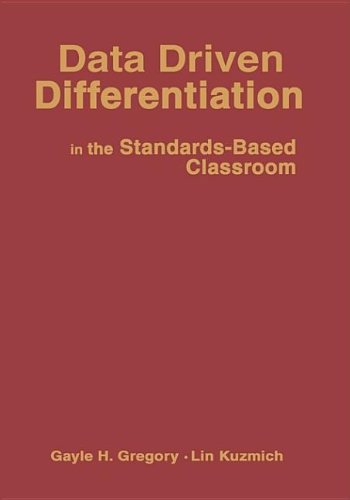

Data driven differentiation in the standards-based classroom Gayle H. Gregory, Lin Kuzmich.
Detalles de publicación: Thousand Oaks, Calif. Corwin Press c2004.Descripción: xiv, 205 p. ill. 26 cmISBN:- 0761931570 (cloth)
- 0761931589 (paper)
- 371.394 G8221d 22
- LB1031 .G733 2004
| Imagen de cubierta | Tipo de ítem | Biblioteca actual | Biblioteca de origen | Colección | Ubicación en estantería | Signatura topográfica | Materiales especificados | Info Vol | URL | Copia número | Estado | Notas | Fecha de vencimiento | Código de barras | Reserva de ítems | Prioridad de la cola de reserva de ejemplar | Reservas para cursos | |
|---|---|---|---|---|---|---|---|---|---|---|---|---|---|---|---|---|---|---|
| Libro | Biblioteca Encarnación Valdés Colección General bev | 371.394 G8221d (Navegar estantería(Abre debajo)) | Disponible | 80000002228362 |
Descripciones mejoradas de Syndetics:
"Reconciles meeting children′s affective needs with the new accountability requirements from the federal and state government. The title sounds daunting but the chapters are really quite accessible." Maria Elena Reyes, Associate Professor, School of EducationUniversity of Alaska, Fairbanks
A step-by-step guide to designing differentiated instruction to help all students grow and succeed!
Data driven instruction, standards-based teaching, diagnostic teaching, high-stakes assessments . . . they′re not just buzz words. The research shows that these realities for today′s schools in fact offer teachers powerful tools for planning differentiated instruction. This timely and comprehensive guide to collecting, analyzing, and using data to design curriculum, instruction, and assessment offers educators the step-by-step strategies and planning tools they need to help all students learn what they must know and be able to do.
Chapter by chapter, Data Driven Differentiation in the Standards-Based Classroom covers everything you need to know, including:
Using data to create a positive classroom climate Using data to differentiate instruction for student learning styles and multiple intelligences Using data for pre-assessment, formative assessment, and final assessment Curriculum approaches for data driven instruction Adjustable assignments for differentiated learning Instructional strategies that increase student learning Data driven lesson planning for differentiated learningFour sample units cover K-12 lesson planning in the basic content areas and are used to demonstrate each and every aspect of the process. The authors also provide a generous collection of templates, grids, rubrics, organizers, and planners to make this book an essential resource for every teacher, curriculum designer, and instructional leader who wants to design differentiated instruction with student success in mind.
Includes bibliographical references (p. 195-198) and index.
Introduction : differentiating with data for student growth and achievement -- Collecting data to create a positive classroom climate -- Collecting data to know the learner -- Collecting and using assessment data for diagnostic teaching -- Curriculum approaches for data driven instruction -- Adjustable assignments for differentiated learning -- Instructional strategies that increase student learning -- Data driven lesson planning for differentiated learning -- Conclusion : putting it all together for student growth and achievement.
Tabla de contenidos provista por Syndetics
- Preface
- About the Authors
- Introduction: Differentiating With Data for Student Growth and Achievement
- What Is Our Target?
- Why Differentiate?
- Theaters of the Mind: Learning Systems and the Brain
- Learning Systems and Student Growth
- Connecting Data to Learning
- Using Classroom Data to Plan Differentiated Instructional Strategies
- Targeting Growth for All Students
- 1 Collecting Data to Create a Positive Classroom Climate
- Positive Classroom Connections
- Assessing the Learning Environment
- Using Feedback
- Ritual, Respect, and Cultural History
- Differentiating Classroom Climate
- Differentiating Celebration and Praise
- Summary
- 2 Collecting Data to Know the Learner
- Going With the Flow
- Different Learning Styles
- Different Intelligences
- Student Contracting for Reflective Learning
- Intelligent Behaviors
- Reflections
- 3 Collecting and Using Assessment Data for Diagnostic Teaching
- Diagnostic Teaching
- Pre-Assessment
- Formative Assessment
- Final Assessment
- Assessing Our Assessments
- Summary
- 4 Curriculum Approaches for Data Driven Instruction
- Curriculum Mapping and Data Driven Instruction
- Standards-Based Unit Planning: Sample Math Unit on Data Analysis and Probability, "The Survey Says. . . ," Grades 3 to 5
- Critical Questions for Unit Planning
- Pre-Assessing the Learning Gap for Unit Planning
- Chunking the Learning
- Summary
- Other Sample Unit Plans
- 5 Adjustable Assignments for Differentiated Learning
- Options for Differentiated Learning
- Adjustable Learning Grids
- Adjustable Learning Elements
- Flexible Grouping
- Differentiating Pairs
- Differentiating Small Groups
- Summary
- 6 Instructional Strategies That Increase Student Learning
- The Art and Science of Teaching
- Memory Processes and the Cognitive Learning System
- Differentiating Instructional Strategies
- Recognizing Similarities and Differences/Using Metaphors and Analogies
- Summarizing and Note Taking
- Homework and Practice
- Nonlinguistic Representations
- Cooperative Group Learning
- Summary
- 7 Data Driven Lesson Planning for Differentiated Learning
- Using Data for Lesson Planning
- Essential Elements for Data Driven Lesson Planning
- Chunking the Learning for Sample Unit Plans
- Summary
- Conclusion: Putting It All Together for Student Growth and Achievement
- How Do We Do All This Without Running From the Room Screaming?
- What Can We Learn From the Errors and Successes of the Best Teachers?
- Why Is It Always About the Student?
- References
- Index
Notas de autor provistas por Syndetics
Gayle H. Gregory is first and foremost a teacher, having experienced teaching and learning in elementary, middle, and secondary schools, community colleges, and universities. She has had extensive district-wide experience as a curriculum consultant and staff development coordinator. Gayle was principal/course director at York University for the Faculty of Education, teaching in the teacher education program.Her areas of expertise include brain-compatible learning, differentiated instructional and assessment strategies, block scheduling, emotional intelligence, student motivation, RTI Tier One, collaborative learning, common core, renewal of secondary schools, enhancing teacher quality, coaching and mentoring, managing change, and building professional learning communities. She also a trainer for Visible Learning Plus with Corwin.She is an author of numerous books related to educational neuroscience and differentiated instruction, assessment, and curriculum, including the following titles:* Data Driven Differentiation in the Standards-Based Classroom, Second Edition (2014, with Lin Kuzmich)* Differentiated Instructional Strategies: One Size Doesn't Fit All, Third Edition (2013, with Carolyn Chapman)* Differentiated Instructional Strategies Professional Learning Guide: One Size Doesn't Fit All, Third Edition (2013)* Differentiated Literacy Strategies for English Language Learners, Grades K-6 and Differentiated Literacy Strategies for English Language Learners, Grades 7-12 (2011, with Amy Burkman)* Differentiated Instructional Strategies for the Block Schedule (2010, with Lynne E. Herndon)* Student Teams That Get Results: Teaching Tools for the Differentiated Classroom (2009, with Lin Kuzmich)* Teacher Teams That Get Results: 61 Strategies for Sustaining and Renewing Professional Learning Communities (2009, with Lin Kuzmich)* Differentiated Instructional Strategies for Science, Grades K-8 (2009, with Elizabeth Hammerman)* Differentiating Instruction With Style: Aligning Teacher and Learner Intelligences for Maximum Achievement (2005)* The Activities for Differentiated Classroom series (2007, with Carolyn Chapman)She is affiliated with organizations such as ASCD and Learning Forward. Her ASCD publication is The Motivated Brain: Improving Student Attention engagement and Perseverance (2015, with Martha Kaufeldt).
Gayle consults internationally with teachers, administrators, and staff developers.She and her family of two daughters and two granddaughters all reside in Burlington, Ontario.Gayle is committed to lifelong learning and professional growth for herself and others. She may be contacted at gregorygayle@netscape.net , www.gaylehgregory.com , and @gaylegregory6.
Lin Kuzmich, of KCS, Inc., is an educational consultant, professor, and author from Loveland, CO. She served the Thompson School District in several roles as the assistant superintendent, executive director of secondary and elementary instruction, director of professional development, and a building principal. Her school was named a 2000 winner of the John R. Irwin Award for Academic Excellence and Improvement. In addition, for the past decade she has been involved in staff development through several universities and the Tointon Institute for Educational Change. Kuzmich is an adjunct professor at both Colorado State University and University of Northern Colorado. She is a senior consultant for the International Center for Leadership in Education, has provided training and consulting to school districts around the country, and has presented at numerous national conferences.