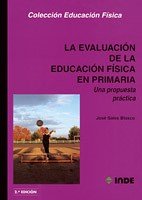

La evaluacion de la educacion física en primaria una propuesta práctica para evaluar al alumnado José Sales Blasco.
Detalles de publicación: Baracelona INDE Publicaciones l997.Descripción: 300 p. ill. 24 cmISBN:- 8487330738
- 372.86 S163e 1997
| Imagen de cubierta | Tipo de ítem | Biblioteca actual | Biblioteca de origen | Colección | Ubicación en estantería | Signatura topográfica | Materiales especificados | Info Vol | URL | Copia número | Estado | Notas | Fecha de vencimiento | Código de barras | Reserva de ítems | Prioridad de la cola de reserva de ejemplar | Reservas para cursos | |
|---|---|---|---|---|---|---|---|---|---|---|---|---|---|---|---|---|---|---|
| Libro | Biblioteca Encarnación Valdés Colección General bev | 372.86 S163e (Navegar estantería(Abre debajo)) | c.2 | Disponible | 80000002114455 | |||||||||||||
| Libro | Biblioteca Encarnación Valdés Colección General bev | 372.86 S163e (Navegar estantería(Abre debajo)) | Disponible | 80000002065673 |
Descripciones mejoradas de Syndetics:
This engaging new study analyzes cinematic treatments of the Middle Ages within a diverse range of popular and artistic films.
At a time when students have more experience with watching movies than with reading and evaluating literature and history, Cinematic Illuminations harnesses the power of popular culture to make accessible a period that often seems forbidding and remote. From The Seventh Seal and The Lion in Winter to Monty Python and the Holy Grail, the authors examine the ways in which the twentieth century has reimagined medieval times. Such analysis brings to life for students the literature, poetry, history, and art of the Middle Ages.
Drawing from current critical approaches to both medieval and film studies, Laurie A. Finke and Martin B. Shichtman focus on two main issues of historical film. First is the inherent tension between the artifice required by film to create historical reality and the accuracy central to claims of history. Second are the ways iconography and filming conventions rewrite our understanding of the historical period portrayed in the film. In this case, the authors ask, how do contemporary representations of the Middle Ages influence cultural fantasies about our own time? Their detailed and accessible readings reveal just how strongly medieval history continues to resonate with modern audiences.
Cinematic Illuminations offers medievalists, literary and cultural theorists, and film theorists and buffs a fresh approach to understanding how popular culture interprets and makes use of the past through the medium of film.
Bibliography: p. 299-300.