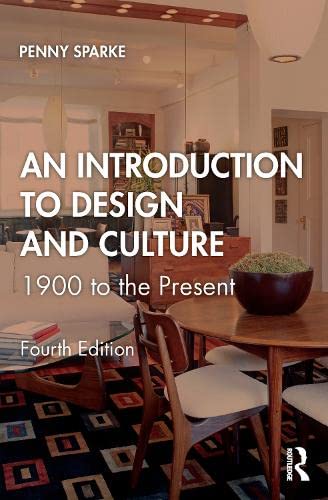

An Introduction to Design and Culture : 1900 to the Present / Penny Sparke.
Editor: Milton : Taylor & Francis Group, 2019Fecha de copyright: ©2020Edición: Fourth editionDescripción: 1 online resource (329 pages)Tipo de contenido:- text
- computer
- online resource
- 9781351023290
- 745.409/04
- NK1390 .S637 2020
| Imagen de cubierta | Tipo de ítem | Biblioteca actual | Biblioteca de origen | Colección | Ubicación en estantería | Signatura topográfica | Materiales especificados | Info Vol | URL | Copia número | Estado | Notas | Fecha de vencimiento | Código de barras | Reserva de ítems | Prioridad de la cola de reserva de ejemplar | Reservas para cursos | |
|---|---|---|---|---|---|---|---|---|---|---|---|---|---|---|---|---|---|---|
| Libro electrónico | Biblioteca de Mayagüez Acceso en línea | NK1390 .S637 2020 (Navegar estantería(Abre debajo)) | Ebook c. 1 | Disponible | 50000003283669 | |||||||||||||
| Libro Electrónico CARIBET | CARIBET Biblioteca Arquitectura Libros Electrónicos CARIBET | Electrónico NK1390 S637 2020 (Navegar estantería(Abre debajo)) | 1 | Disponible | caribet297230 |
Descripciones mejoradas de Syndetics:
An Introduction to Design and Culture provides a comprehensive guide to the changing relationships between design and culture from 1900 to the present day with an emphasis on five main themes:
Design and consumption Design and technology The design profession Design theory Design and identities.This fourth edition extends the traditional definition of design as covering product design, furniture design, interior design, fashion design and graphic design to embrace its more recent manifestations, which include service design, user-interface design, co-design, and sustainable design, among others. It also discusses the relationship between design and the new media and the effect of globalisation on design.
Taking a broadly chronological approach, Professor Sparke employs historical methods to show how these themes developed through the twentieth century and into the twenty-first century and played a role within modernism, postmodernism and beyond. Over a hundred illustrations are used throughout to demonstrate the breadth of design and examples - among them design in Modern China, the work of Apple Computers Ltd., and design thinking - are used to elaborate key ideas. The new edition remains essential reading for undergraduate and postgraduate students of design studies, cultural studies and visual arts.
Cover -- Half Title -- Title Page -- Copyright Page -- Contents -- List of figures -- Acknowledgements -- Introduction: design and culture revisited -- Part 1 Design and modernity, 1900-1945 -- Consuming modernity -- The impacts of technology -- The designer for industry -- Modernism and design -- Designing identities -- Part 2 Design and Post-modernity, 1945-1990 -- Consuming post-modernity -- Technology and design, a new alliance -- Designer-culture -- Post-modernism and design -- Redefining identities -- Part 3 Designing the new century, 1990 to the present -- Consumer culture at the millenium -- Design in the digital age -- New designers -- Theory and practice in the new century -- Designing identities in a globalised world -- Glossary -- Bibliography -- Index.
An Introduction to Design and Culture provides a comprehensive guide to the changing relationships between design and culture from 1900 to the present day with an emphasis on five main themes: Design and consumption Design and technology The design profession Design theory Design and identities. This fourth edition extends the traditional definition of design as covering product design, furniture design, interior design, fashion design and graphic design to embrace its more recent manifestations, which include service design, user-interface design, co-design, and sustainable design, among others. It also discusses the relationship between design and the new media and the effect of globalisation on design. Taking a broadly chronological approach, Professor Sparke employs historical methods to show how these themes developed through the twentieth century and into the twenty-first century and played a role within modernism, postmodernism and beyond. Over a hundred illustrations are used throughout to demonstrate the breadth of design and examples - among them design in Modern China, the work of Apple Computers Ltd., and design thinking - are used to elaborate key ideas. The new edition remains essential reading for undergraduate and postgraduate students of design studies, cultural studies and visual arts.
Description based on publisher supplied metadata and other sources.
Electronic reproduction. Ann Arbor, Michigan : ProQuest Ebook Central, 2021. Available via World Wide Web. Access may be limited to ProQuest Ebook Central affiliated libraries.
Notas de autor provistas por Syndetics
Penny Sparke is a Professor of Design History and the Director of Modern Interiors Research Centre at Kingston University, London. Her research interests include nineteenth- and twentieth-century design and the modern interior with a special interest in the role of gender.