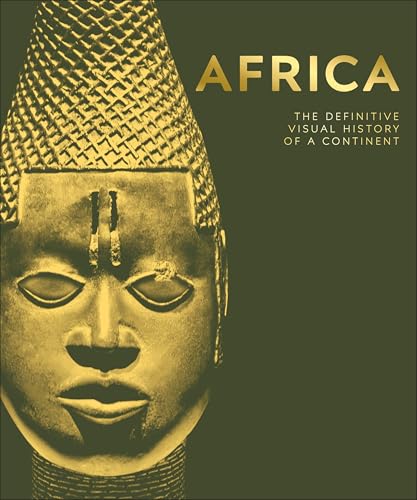

Africa : the definitive visual history of a continent / authors, Morenikeji Asaaju, Adidemi Babalola, Jane Bryce, Obert Mlambo, Patience Motsatsi, Butholezwe Mtombeni, Girma Negash, Raphael Chijioke Njoku, Philip Parker, Luke Pepera, Marilee Wood ; foreword by David Olusoga.
Idioma: Inglés Editor: New York, New York : DK Publishing, 2024Descripción: 400 pages : illustrations (chiefly color), color maps ; 29 cmTipo de contenido:- text
- still image
- unmediated
- volume
- 0744060109
- 9780744060102
- 0241509165
- 9780241509166
- 960.1 23
| Imagen de cubierta | Tipo de ítem | Biblioteca actual | Biblioteca de origen | Colección | Ubicación en estantería | Signatura topográfica | Materiales especificados | Info Vol | URL | Copia número | Estado | Notas | Fecha de vencimiento | Código de barras | Reserva de ítems | Prioridad de la cola de reserva de ejemplar | Reservas para cursos | |
|---|---|---|---|---|---|---|---|---|---|---|---|---|---|---|---|---|---|---|
| Libro Referencia ev | Biblioteca Encarnación Valdés Sala de Referencia bev | R 960.1 A2581 2024 (Navegar estantería(Abre debajo)) | Disponible | 80000002658576 |
Descripciones mejoradas de Syndetics:
Immerse yourself in Africa's vast and intricate story and discover Africa's true place in world history, written and authenticated by experts of African heritage.
Spanning more than 200,000 years, from the emergence of the first humans to the rise of megacities, Africa explores the history and cultures of the world's second-largest continent in vivid detail. It brings to life the stories that shaped Africa and the world around it, from powerful and influential empires and kingdoms such as Mali and Benin, through the struggle against colonization and the fight for independence to Africa's place on the global stage today.
You will meet some of Africa's most important political and military leaders, including Hannibal, Mansa Musa, Oba Ewuare, Queen Nzinga, Kwame Nkrumah, Nelson Mandela, and Ellen Sirleaf. Brilliant photography showcases the great art and architecture that African civilizations have created while engaging text written by experts of African heritage covers every facet of African cultures, from music and literature to oral traditions and languages. Specially commissioned CGI artworks recreate iconic buildings and life in lost cities like Timbuktu and Great Zimbabwe.
Explore the pages of this awe-inspiring African history book to discover: The whole story of the African continent, covering every aspect from culture and trade to politics and society Chapters explore developments in religion, languages, music, literature, and mythology. Biography sections portray the lives, impact, and legacy of influential figures in African history. Detailed maps set the main sites in context and showcase vast empires and key trade routes An Optional 80-page reference section provides a directory of the histories and cultures of all the sovereign states in Africa.
Beautifully illustrated and unparalleled in scope, Africa is the perfect book for anyone looking to deepen their understanding of Africa's vital and inspiring history.
Includes index.
African prehistory: 5 MYA-3500 BCE -- Early civilizations: 3000 BCE-600 CE -- African empires: 600-1900 CE -- European encounters: 1440-1914 -- The age of independence: 1914-1994 -- Contemporary Africa: 1994-.
Spanning more than 200,000 years, from the emergence of the first humans to the rise of megacities, Africa explores the history and cultures of the world's second-largest continent in vivid detail. It brings to life the stories that shaped Africa and the world around it, from powerful and influential empires and kingdoms such as Mali and Benin, through the struggle against colonization and the fight for independence to Africa's place on the global stage today.
Tabla de contenidos provista por Syndetics
- 1 African prehistory 5 MYA-3500 BCE
- African prehistory(14)
- Africa's environment(16)
- Namib Desert(18)
- The shifting Sahara(20)
- Cradle of humanity(22)
- The rise of sapiens(24)
- Stone tools(26)
- Out of Africa(28)
- Origins of human culture(30)
- Rock art(32)
- The development of agriculture(34)
- The Bantu migrations(36)
- 2 Early civilizations 3000 BCE-600 CE
- Early civilizations(40)
- The Age of the Pharaohs(42)
- Ramses II(44)
- The Ramesseum(46)
- Egyptian artifacts(48)
- Kerma and Kush(50)
- Nubian temple(52)
- Napata and Meroe(54)
- Taharqa(56)
- Writing systems(58)
- Nok terra-cotta figure(60)
- The Kingdom of Aksum(62)
- Carthage(64)
- Kingdoms of the northwest(66)
- Hannibal(68)
- Roman North Africa(70)
- The arrival of Islam(72)
- Christian states of the northeast(74)
- 3 African empires 600-1900 CE
- African empires(78)
- Languages(80)
- The development of East African trade(82)
- The rise and fall of Wagadou(84)
- Dogon settlement(86)
- Riches of the trade routes(88)
- The Empire of Mali(90)
- Mansa Musa(92)
- Djinguereber Mosque(94)
- Timbuktu manuscript(96)
- The Aghlabids and Fatimids(98)
- The Almoravid and Almohad dynasties(100)
- Koutoubia Mosque(102)
- The Songhai Empire(104)
- Askia Muhammad I(106)
- Kanem-Bornu(108)
- Rise of the Yoruba(110)
- The Oyo Empire(112)
- The Igbo states(114)
- Nri bronzes(116)
- Medieval Ethiopia(118)
- The splendor of Gondar(120)
- Bete Giyorgis, Lalibela(122)
- The Ayyubids, Mamluks, and Ottomans(124)
- Nomads: Bedouin, Tuareg, and Maasai(126)
- The Kingdom of Benin(128)
- Oba Ewuare(130)
- Benin Bronze with oba and attendants(132)
- Royal power(134)
- Great Zimbabwe(136)
- The Great Enclosure(138)
- The Mossi States(140)
- Kingdoms of the Luba, Lunda, and Lozi(142)
- Luba "memory board"(144)
- The East African Sultanates(146)
- The Eastern slave trade(148)
- Textiles(150)
- Pastoralists and hunter-gatherers(152)
- Mundari cattle camp, South Sudan(154)
- Mythology and folklore(156)
- 4 European encounters 1440-1914
- European encounters(160)
- The Atlantic slave trade(162)
- West African griots(164)
- Europe in Africa(166)
- Cape Town(168)
- Madagascar(170)
- Ranavalona I(172)
- Kingdoms of the Great Lakes(174)
- Rwanda and Burundi(176)
- The Kingdom of Dahomey(178)
- Njinga Mbande(180)
- The Kingdom of Kongo(182)
- Mangaaka power figure(184)
- The Sultanate of Zanzibar(186)
- Stone Town(188)
- The Asante Empire(190)
- Osei Tutu(192)
- The Sokoto Caliphate(194)
- The Tukulor Empire(196)
- West African art and craft(198)
- European explorers(200)
- Map of Bamum(202)
- Christian missionaries(204)
- Shaka and the Zulu Kingdom(206)
- Cetshwayo(208)
- The scramble for Africa(210)
- Congo Free State(212)
- The African diaspora(214)
- Colonial wars(216)
- Resistance and uprisings(218)
- Jaja of Opobo(220)
- Exploitation and administration(222)
- 5 The age of Independence 1914-1994
- The age of independence(226)
- Early independence movements(228)
- Africa and World War II(230)
- Pan-Africanism(232)
- Independence from France(234)
- Independence of Libya and Egypt(236)
- Gamal Abdel Nasser(238)
- Independence from Britain(240)
- Kwame Nkrumah(242)
- Capturing the new mood(244)
- Africa and the Cold War(246)
- Independence from Portugal(248)
- Samora Machel(250)
- The fight for Zimbabwe(252)
- South Africa and apartheid(254)
- Anti-apartheid poster(256)
- The legacy of colonization(258)
- A new political generation(260)
- The rise of the military(262)
- Civil wars(264)
- Africa's Great War(266)
- The end of apartheid(268)
- Nelson Mandela(270)
- 6 Contemporary Africa 1994-
- Contemporary Africa(274)
- Reclaiming cultures(276)
- Beadwork(278)
- Religions(280)
- Protecting environments(282)
- Lagos(284)
- Sports(286)
- Feminisms(288)
- Ellen Johnson Sirleaf(290)
- Cinema(292)
- Musical instruments(294)
- Popular music(296)
- Bottle-top sculptures(298)
- Art and activism(300)
- Writers(302)
- The future of Africa(304)
- National histories(306)
- Glossary(386)
- Index(388)
- Acknowledgments(398)
Notas de autor provistas por Syndetics
Dr. Nemata Blyden (consultant) is Professor of History and International Affairs at George Washington University. A product of many places in the Black world, she received her PhD from Yale University and now teaches and publishes on various aspects of African and African diaspora history, imperialism, colonialism, women, and gender. Her books include West Indians in West Africa, 1808-1880: A Diaspora in Reverse (2000) and African Americans and Africa: A New History (2019). She recently served as a consultant and contributor for DK''s The Black History Book: Big Ideas Simply Explained (2021).Dr. Morenikeji Asaaju is a Cadbury Postdoctoral Fellow in African Studies at the University of Birmingham. She received her PhD from the University of Bayreuth, and was a Leventis Scholar at SOAS and a Leventis Visiting Research Fellow at the University of Cambridge. She is a historian of Africa with research interests in gender, marriage, family, and social change; slavery, emancipation, and the slave trade; and political and legal changes in 20th-century Africa. She is currently working on her first book, which explores the social and cultural processes of heterosexual relationships as African societies confront changes imposed by the colonial order and by changing political regimes and conventions of masculinity and femininity.
Dr. Abidemi Babatunde Babalola received his PhD from Rice University and is a Smuts Research Fellow at the University of Cambridge and an Andrew Mellon Fellow at the British Museum. His research interests include African archaeology and prehistory, the emergence of complex societies, early craft production, landscape studies, material culture, cultural resource management, and African/ African diaspora studies. His recent publications include Glass Beads in West Africa in the Oxford Research Encyclopedia of Anthropology (2022); Creativity, Improvisation, Resilience, and Glassmaking in Early Ile-Ife in the International Journal of African Historical Studies (2021); and an essay in Caravans of Gold, Fragments in Time: Art, Culture, and Exchange Across Medieval Saharan Africa (2019).
Dr. Obert Mlambo is Associate Professor of Classical Studies and History at the University of Zimbabwe. He received his PhD from the University of Zimbabwe, and was a Humboldt Fellow at the University of Cologne''s Institute of African Studies and Egyptology and a Visiting Scholar at the university''s Global South Studies Center. His research and publications cover multidisciplinary perspectives and relate the Classics to African cultures and contexts. His most recent publications include Land Expropriation in Ancient Rome and Contemporary Zimbabwe: Veterans, Masculinity and War (2022) and chapters in Multidisciplinary Perspectives on Zimbabwe''s Liberation Struggle (2022) and (u)Mzantsi Classics: Dialogues in Decolonisation from Southern Africa (2022).
Patience Motsatsi studied sociology at the University of Pretoria and is now Junior Lecturer in Sociology at the University of South Africa, with interests in culture and identity, colonization and decolonization, and media studies.
Butholezwe Mtombeni is Lecturer in History at the University of South Africa, with research interests that include the political history of sub-Saharan Africa, agrarian history, land policy and its impact, and sports history. His publications include chapters in the Palgrave Handbook of African Women''s Studies (2021) and The Palgrave Handbook of Global Social Change (2022).
Dr. Raphael Chijioke Njoku is Professor of African History and Culture at Idaho State University. He received his PhD from Dalhousie University and specializes in African intellectual history, African social and political history, African philosophy, culture and development, democratization, social movements, and comparative politics. His books include West African Masking Tradition and Diaspora Masquerade Carnivals (2020), United States and African Relations: 1400 to the Present (2020), and The History of Somalia (2013). He recently served as a contributor to DK''s The Black History Book: Big Ideas Simply Explained (2021).
Philip Parker is a historian, consultant, and writer who specializes in ancient and medieval political and military systems. He studied history at the University of Cambridge and has written, edited, and contributed to several books for DK, Penguin, and other publishers, including The Empire Stops Here (2009), The Great Trade Routes (2012), the Sunday Times bestseller The Northmen''s Fury (2014), History of Britain in Maps (2016), History of World Trade in Maps (2020), History of War in Maps (2022), and the DK Eyewitness Companion Guide to World History (2010). As a publisher he ran The Times books list, including works on ancient civilizations and The Times History of the World .
Luke Pepera is an anthropologist, historian, writer, and broadcaster, and an expert on ancient and medieval African history and cultures, about which he has written and spoken extensively. He studied Archaeology and Anthropology at the University of Oxford and is currently working on his first book, Motherland: 500,000 Years of African History, Cultures, and Identity , due to be published in 2024. He recently served as a contributor to DK''s The Black History Book: Big Ideas Simply Explained (2021).
Dr. Girma Negash Ture is Associate Professor of History and the Chair of the Department of History at the University of Addis Ababa. His most recent publications include The Economics of Khat Trade and its Dynamic Institutions (2020) and The Education of Children Entangled in Khat Trade in Ethiopia (2019), which is focused on children trapped in the khat trade in Ethiopia.
Dr. Marilee Wood received her PhD from the University of Uppsala and is an Honorary Research Fellow at the School of Geography, Archaeology and Environmental Studies at the University of the Witwatersrand. She is a specialist in beadwork and glasswork and her primary research interests lie in African and Islamic beads (especially glass beads that were traded into Africa in the Islamic period between the 7th and 17th centuries) and trade patterns in Africa and the Indian Ocean. Her wider interests include regions where the beads traded into Africa may have been made, including India, Sri Lanka, the Middle East, the Persian Gulf, Southeast Asia, and China.