
| Imagen de cubierta | Tipo de ítem | Biblioteca actual | Biblioteca de origen | Colección | Ubicación en estantería | Signatura topográfica | Materiales especificados | Info Vol | URL | Copia número | Estado | Notas | Fecha de vencimiento | Código de barras | Reserva de ítems | Prioridad de la cola de reserva de ejemplar | Reservas para cursos | |
|---|---|---|---|---|---|---|---|---|---|---|---|---|---|---|---|---|---|---|
| NOVEDAD | Biblioteca Encarnación Valdés | Ej. | Disponible | 80000002660549 |
Descripciones mejoradas de Syndetics:
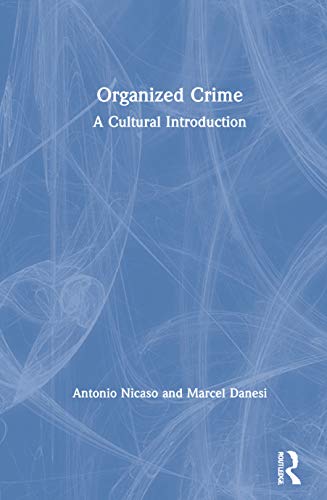
This book aims to describe and demystify what makes criminal gangs so culturally powerful. It examines their codes of conduct, initiation rites, secret communications methods, origin myths, symbols, and the like that imbue the gangsters with the pride and nonchalance that goes hand in hand with their criminal activities. Mobsters are everywhere in the movies, on television, and on websites. Contemporary societies are clearly fascinated by them. Why is this so? What feature and constituents of organized criminal gangs make them so emotionally powerful-to themselves and others? These are the questions that have guided the writing of this textbook, which is intended as an introduction to organized crime from the angle of cultural analysis. Key topics include:
* An historic overview of organized crime, including the social, economic, and cultural conditions that favour its development;
* A review of the type of people who make up organized gangs and the activities in which they engage;
* The symbols, rituals, codes and languages that characterize criminal institutions;
* The relationship between organized crime and cybercrime;
* The role of women in organized crime;
* Drugs and narco-terrorism;
* Media portrayals of organized crime.
Organized Crime includes case studies and offers an accessible, interdisciplinary approach to the subject of organized crime. It is essential reading for students engaged with organized crime across criminology, sociology, anthropology and psychology.
Reseñas proporcionadas por Syndetics
CHOICE Review
Nicaso (Queen's Univ.) and Danesi (Univ. of Toronto) provide a selective overview of organized crime, focusing on the Italian Mafias, Japanese Yakuza, Chinese Triads, outlaw motorcycle gangs, and Russian organized crime. In 18 concise chapters, these groups are described in terms of their organizational culture, communication and behavioral codes, and resources. Separate chapters are devoted to the role of women, strategic use of violence, mythic and symbolic traditions, and various modes of communication. Later chapters address the treatment of organized crime in popular culture, the impacts of cyberspace on criminal activity, and various older theories of organized crime. The text concludes with two chapters covering a brief history of criminal groups and a look at the future. References are provided at the end of each chapter focusing on older, more classic works. The discussion of the influence of organized crime in popular culture is a highlight (chapter 14). The primary focus of the book is on the behavior of organized crime, rather than the reaction to it. The underlying culture and operation of selected criminal groups are the central theme. Related titles include The Oxford Handbook of Organized Crime, edited by Letizia Paoli (2014), and Organized Crime, by Michael Lyman and Gary Potter (7th ed., 2019). Summing Up: Recommended. Lower- and upper-division undergraduates. General readers. --Jay S. Albanese, Virginia Commonwealth UniversityNotas de autor provistas por Syndetics
Antonio Nicasoteaches courses on social history of organized crime and Mafia culture at Queen's University. He is a leading expert on Mafia and Mafia-like criminal organizations in the world. He has published more than 30 books on organized crime, including many bestsellers.
Marcel Danesi is Full Professor of Anthropology at the University of Toronto, where he has been teaching since 1974. He has published extensively in the fields of linguistics, semiotics, and forensic semiotics.