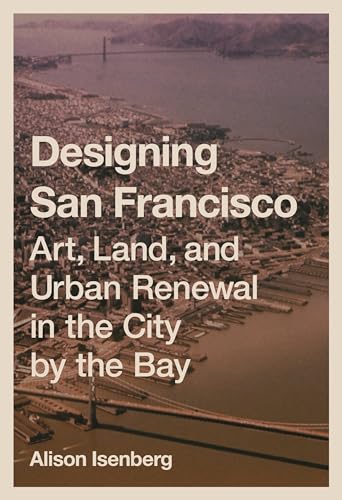

Designing San Francisco : art, land, and urban renewal in the City by the Bay. / Alison Isenberg. txt
Editor: Princeton : Princeton University Press, 2017Descripción: 436 pages ill. ; photo. ; 25 cmTipo de contenido:- text
- unmediated
- volume
- 9780691172545
- 1400888832
- 711/.40979461 23
- NA9127.S3 I84 2017
| Imagen de cubierta | Tipo de ítem | Biblioteca actual | Biblioteca de origen | Colección | Ubicación en estantería | Signatura topográfica | Materiales especificados | Info Vol | URL | Copia número | Estado | Notas | Fecha de vencimiento | Código de barras | Reserva de ítems | Prioridad de la cola de reserva de ejemplar | Reservas para cursos | |
|---|---|---|---|---|---|---|---|---|---|---|---|---|---|---|---|---|---|---|
| Libro | CARIBET Biblioteca Arquitectura Colección General CARIBET | General NA9127.S3 I84 2017 (Navegar estantería(Abre debajo)) | 1 | Disponible | 91000000053934 |
Descripciones mejoradas de Syndetics:
A major urban history of the design and development of postwar San Francisco
Designing San Francisco is the untold story of the formative postwar decades when U.S. cities took their modern shape amid clashing visions of the future. In this pathbreaking and richly illustrated book, Alison Isenberg shifts the focus from architects and city planners--those most often hailed in histories of urban development and design--to the unsung artists, activists, and others who played pivotal roles in rebuilding San Francisco between the 1940s and the 1970s.
Previous accounts of midcentury urban renewal have focused on the opposing terms set down by Robert Moses and Jane Jacobs--put simply, development versus preservation--and have followed New York City models. Now Isenberg turns our attention west to colorful, pioneering, and contentious San Francisco, where unexpectedly fierce battles were waged over iconic private and public projects like Ghirardelli Square, Golden Gateway, and the Transamerica Pyramid.
When large-scale redevelopment came to low-rise San Francisco in the 1950s, the resulting rivalries and conflicts sparked the proliferation of numerous allied arts fields and their professionals, including architectural model makers, real estate publicists, graphic designers, photographers, property managers, builders, sculptors, public-interest lawyers, alternative press writers, and preservationists. Isenberg explores how these centrally engaged arts professionals brought new ideas to city, regional, and national planning and shaped novel projects across urban, suburban, and rural borders. San Francisco's rebuilding galvanized far-reaching critiques of the inequitable competition for scarce urban land, and propelled debates over responsible public land stewardship. Isenberg challenges many truisms of this renewal era--especially the presumed male domination of postwar urban design, showing how women collaborated in city building long before feminism's impact in the 1970s.
An evocative portrait of one of the world's great cities, Designing San Francisco provides a new paradigm for understanding past and present struggles to define the urban future.
Includes bibliographical references and index.
Introduction Land and Landscape --
1 The Illustrated Pitch "Guys with Ideas" and the 1940s Vision for a Historic Waterfront District --
2 "Not Bound by an Instinct to Preserve" The Modernist Turn toward History --
3 "Culture-a-Go-Go" The Mermaid Sculpture Controversy and the Liberation of Civic Design --
4 Married Merchant-Builders From Home-Making to City Planning in the Postwar Suburban Boom --
5 Managing Property An "Iffy" Collaboration --
6 Movers and Shakers Publicists and the Writing of Real Estate --
7 "Urban Renewal with Paint" Graphic Design and the City --
8 Model Cities "Think Big, Build Small" --
9 "The Competition for Urban Land" Grady Clay's Lost 1962 Manuscript --
10 Skyscrapers, Street Vacations, and the Seventies --
Conclusion "Got Land Problems?" --
A major new urban history of the design and development of postwar San Francisco Designing San Francisco is the untold story of the formative postwar decades when U.S. cities took their modern shape amid clashing visions of the future. In this pathbreaking and richly illustrated book, Alison Isenberg shifts the focus from architects and city planners--those most often hailed in histories of urban development and design--to the unsung artists, activists, and others who played pivotal roles in rebuilding San Francisco between the 1940s and the 1970s. Previous accounts of midcentury urban renewal have focused on the opposing terms set down by Robert Moses and Jane Jacobs - put simply, development versus preservation - and have followed New York City models. Now Isenberg turns our attention west to colorful, pioneering, and contentious San Francisco, where unexpectedly fierce battles were waged over iconic private and public projects like Ghirardelli Square, Golden Gateway, and the Transamerica Pyramid. When large-scale redevelopment came to low-rise San Francisco in the 1950s, the resulting rivalries and conflicts sparked the proliferation of numerous allied arts fields and their professionals, including architectural model makers, real estate publicists, graphic designers, photographers, property managers, builders, sculptors, public-interest lawyers, alternative press writers, and preservationists. Isenberg explores how these centrally engaged arts professionals brought new ideas to city, regional, and national planning and shaped novel projects across urban, suburban, and rural borders.
Tabla de contenidos provista por Syndetics
- Introduction: Land and Landscape(p. 7)
- 1 The Illustrated Pitch: "Guys with Ideas" and the 1940s Vision for a Historic Waterfront District(p. 26)
- 2 "Not Bound by an Instinct to Preserve": The Modernist Turn toward History(p. 62)
- 3 "Culture-a-Go-Go": The Mermaid Sculpture Controversy and the Liberation of Civic Design(p. 86)
- 4 Married Merchant-Builders: From Home-Making to City Planning in the Postwar Suburban Boom(p. 114)
- 5 Managing Property: An "Iffy" Collaboration(p. 142)
- 6 Movers and Shakers: Publicists and the Writing of Real Estate(p. 168)
- 7 "Urban Renewal with Paint": Graphic Design and the City(p. 196)
- 8 Model Cities: "Think Big, Build Small"(p. 230)
- 9 "The Competition for Urban Land": Grady Clay's Lost 1962 Manuscript
- 10 Skyscrapers, Street Vacations, and the Seventies(p. 300)
- Conclusion: "Got Land Problems?"(p. 344)
- Acknowledgements(p. 366)
- Abbreviations(p. 370)
- Notes(p. 371)
- List of Archives Consulted(p. 419)
- List of Interviews by the Author(p. 420)
- Index(p. 421)
- Image Credits(p. 433)