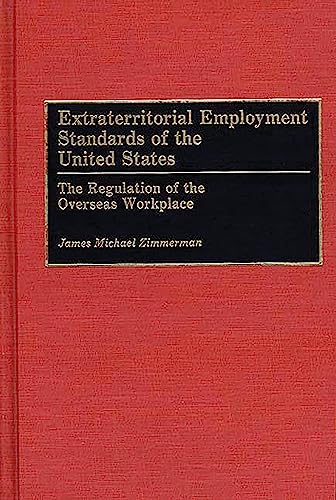

Extraterritorial employment standards of the United States the regulation of the overseas workplace James Michael Zimmerman.
Series Includes bibliographical references and indexDetalles de publicación: Westport, Conn. Greenwood Publishing Group 1992.Descripción: 206 p. 24 cmISBN:- 0899304982
| Imagen de cubierta | Tipo de ítem | Biblioteca actual | Biblioteca de origen | Colección | Ubicación en estantería | Signatura topográfica | Materiales especificados | Info Vol | URL | Copia número | Estado | Notas | Fecha de vencimiento | Código de barras | Reserva de ítems | Prioridad de la cola de reserva de ejemplar | Reservas para cursos | |
|---|---|---|---|---|---|---|---|---|---|---|---|---|---|---|---|---|---|---|
| Libro | Biblioteca de Derecho Mons. Fremiot Torres Oliver Colección General biblioteca derecho | KF 3321 .Z56 1992 (Navegar estantería(Abre debajo)) | Disponible | 70000000458864 |
Descripciones mejoradas de Syndetics:
This book offers an exhaustive analysis of extraterritorial employment standards. Part I addresses the U.S. role in the enforcement of internationally recognized worker rights in the world community. Worker rights include the right of association; the right to organize and bargain collectively; a prohibition on the use of any form of forced or compulsory labor; a minimum age for the employment of children; acceptable conditions of work with respect to minimum wages, hours of work, and occupational safety and health; and the right to work in an environment free from discrimination. By using economic coercion in the form of preferential trade benefits, investment incentives, and trade sanctions, the United States attempts to encourage foreign governments and employers, both local and transnational, to abandon exploitative working conditions for employment standards recognized by the world community. Part II is an exhaustive review of employment standards for U.S. citizens employed abroad, including equal employment opportunity standards. It also addresses extraterritorial wage and hour regulation and federal statutes establishing worker compensation standards to persons employed at military installations or in areas where the risk of war hazards are prevalent. Part III is a discussion of the policy concerns and implications of extraterritorial employment standards. These standards impact domestic producers, domestic workers and their representative organizations, consumers, exporters and importers, as well as multinational enterprises and their employees. This book is indispensable for managers, legal counsel for employers and employees, and policy makers and labor leaders in any industry having contact with the global economy.
Tabla de contenidos provista por Syndetics
- Introduction
- U.S. Enforcement of Internationally Recognized Worker Rights
- Development of International Fair Labor Standards Preferential Duty
- Programs and Overseas Worker Rights Investment Guarantee
- Programs and Overseas Worker Rights Trade Sanctions, Import Restrictions, and Overseas Worker Rights
- Fair Employment Codes of Conduct, Import Restrictions, and Overseas Operations
- U.S. Fair Employment Standards and Citizens Employed
- Abroad Historical Overview of Extraterritorial Fair Employment Standards
- Extraterritorial Wage and Hour Regulation Overseas
- Equal Employment Opportunity
- Extraterritorial Worker Compensation Programs Implications and Policy Concerns
- Extraterritorial Employment Standards: Implications and Policy Concerns
- Selected Bibliography
- Index