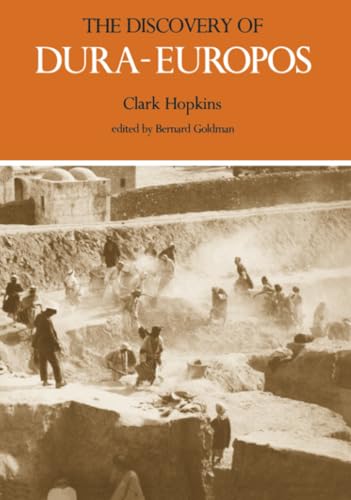

The discovery of dura-europos
Detalles de publicación: New Haven;London Yale University Press c1979.Edición: 1 st edDescripción: xxiv;308 p. illISBN:- 0300022883
| Imagen de cubierta | Tipo de ítem | Biblioteca actual | Biblioteca de origen | Colección | Ubicación en estantería | Signatura topográfica | Materiales especificados | Info Vol | URL | Copia número | Estado | Notas | Fecha de vencimiento | Código de barras | Reserva de ítems | Prioridad de la cola de reserva de ejemplar | Reservas para cursos | |
|---|---|---|---|---|---|---|---|---|---|---|---|---|---|---|---|---|---|---|
| Libro | Biblioteca de Mayagüez Colección General mb | DS 99 .D8 H66 1979 (Navegar estantería(Abre debajo)) | Disponible | 50000002025004 |
Descripciones mejoradas de Syndetics:
From the third century A.D. until the 1920s, the ancient city of Dura, which the Greeks called Europos, lay covered by the sands of time. Today, hardly a book that touches on the ancient Eastern Mediterranean or on the development of art and religion in the West is without reference to the spectacular discoveries made at this site on the western bank of the Euphrates River. The Parthian Temple, the painted Christian Chapel, and the standing Jewish Synagogue with its four walls covered with paintings from the Old Testament are vital sources for the understanding of pagan religions, Judaism in the early centuries of the Christian Era, and early Christianity.
The chance discovery of Dura by British troops in 1920 and its subsequent study of French and American archaeologists resulted in one of the most famous archaeological recoveries of the twentieth century. Scholarly publication of the finds at Dura has been copious, but here the exciting story of the actual campaigns is revealed. As Dura's riches are gradually uncovered through these chapters, a deeper understanding of their meaning emerges.
Includes bibliographical references (p.295-308 ) and index.