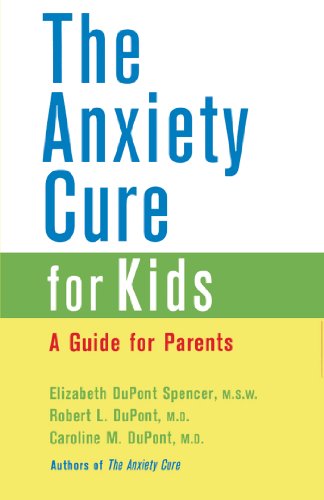

The anxiety cure for kids a guide for parents Elizabeth DuPont Spencer, Robert L. DuPont, Caroline M. DuPont.
Detalles de publicación: Hoboken, N.J. J. Wiley 2003.Descripción: xv, 224 p. ill. 23 cmISBN:- 0471263613 (pbk.)
- 618.9285223 S7451a 21
- RJ506.A58 S66 2003
| Imagen de cubierta | Tipo de ítem | Biblioteca actual | Biblioteca de origen | Colección | Ubicación en estantería | Signatura topográfica | Materiales especificados | Info Vol | URL | Copia número | Estado | Notas | Fecha de vencimiento | Código de barras | Reserva de ítems | Prioridad de la cola de reserva de ejemplar | Reservas para cursos | |
|---|---|---|---|---|---|---|---|---|---|---|---|---|---|---|---|---|---|---|
| Libro | Biblioteca Encarnación Valdés Colección General bev | 618.9285223 S7451a (Navegar estantería(Abre debajo)) | Disponible | 80000002402462 |
Descripciones mejoradas de Syndetics:
The up-to-date, practical guide for helping your child deal with anxiety
Fear, worry, stomach pains, self-doubt--these are classic symptoms of anxiety in children. Using kid-friendly concepts and real-life examples, this reassuring guide helps adults and children understand the powerful ways in which anxiety works and how to overcome its negative effects. This revised edition includes all-new chapters on food phobia; the relationship between anxiety and other illnesses and problems such as ADHD, depression, and autism; and anxiety in teens.
The lessons in The Anxiety Cure for Kids have helped many children break free from anxiety. By making changes little by little, any child with anxiety can get well and stay well.
Provides up-to-date, practical guidance for helping both younger children and teenagers deal with anxiety issues Shows how to recognize the symptoms of anxiety, evaluate a child's need for medication and/or therapy, assess the role of the family in anxiety disorders, and take concrete steps to find solutions Explains how to communicate effectively with your child, help him or her confront fear, and boost your child's feelings of accomplishment and self-esteem Addresses a range of anxiety disorders, such as food phobia and anxieties about terrorism, as well as the relationship between anxiety and other illnesses Also includes advice that can be used by teachers, coaches, doctors, therapists, school nurses, and others who work with anxious kidsIncludes bibliographical references and index.
Foreword by Karen Dineen Wagner -- Introduction and guide to this book -- Acknowledgments -- Foreword: a letter to kids with anxiety -- Part I: All about anxiety -- 1. Understanding anxiety and fear-the dragon -- 2. The history and diagnostic categories of anxiety disorders in children and adults -- 3. Treatment-the wizard -- 4. Evaluating your child's need for medication and therapy -- Part II: Five stories for kids, five steps for parents -- 5. Step 1: Ben's story-understanding your child's dragon -- 6. Step 2: Julie's story-shrink the dragon with practice and cognitive restructuring -- 7. Step 3: William's story-using medication and relaxation -- 8. Step 4: Rebecca's story-school anxiety and school refusal -- 9. Step 5: Rebecca's story one year later: set goals for the future, including having a plan if the anxiety comes back -- Part III: Beyond anxiety -- 10. Assessing your family's role in anxiety disorders -- 11. Anxiety, terrorism, and other extraordinary threats to children -- 12. Advice for teachers, coaches, doctors, therapists, school nurses, and others who work with anxious kids -- Vocabulary -- Appendix: diagnostic criteria (from the dsm-iv) -- Resources about anxiety disorders for parents and children.
Tabla de contenidos provista por Syndetics
- Foreword(p. ix)
- Acknowledgments(p. xi)
- A Letter to Kids with Anxiety Problems(p. xiii)
- Introduction and Guide to This Book(p. 1)
- Part 1 All about Anxiety
- Chapter 1 Understanding Anxiety and Fear: The Dragon(p. 7)
- Chapter 2 The History and Diagnostic Categories of Anxiety Disorders in Children and Adults(p. 23)
- Chapter 3 Treatment: The Wizard(p. 47)
- Chapter 4 Evaluating Your Child's Need for Medication and Therapy(p. 59)
- Part 2 Five Stories for Kids, Five Steps for Parents
- Chapter 5 Step 1: Ben's Story--Understanding Your Child's Dragon(p. 81)
- Chapter 6 Step 2: Julie's Story--Shrink the Dragon with Practice and Cognitive Restructuring(p. 103)
- Chapter 7 Step 3: William's Story--Using Medication and Relaxation(p. 115)
- Chapter 8 Step 4: Rebecca's Story--School Anxiety and School Refusal(p. 131)
- Chapter 9 Step 5: Rebecca's Story One Year Later--Set Goals for the Future, Including a Plan If the Anxiety Problem Comes Back(p. 159)
- Part 3 Beyond Anxiety
- Chapter 10 Assessing Your Family's Role in Anxiety Disorders(p. 169)
- Chapter 11 Anxiety, Terrorism, and Other Extraordinary Threats to Children(p. 177)
- Chapter 12 Advice for Teachers, Coaches, Doctors, Therapists, School Nurses, and Others Who Work with Anxious Kids(p. 191)
- Appendix Diagnostic Criteria for Anxiety Disorders (from the DSM-IV)(p. 203)
- Glossary(p. 213)
- Suggested Additional Reading(p. 215)
- Anxiety Disorders Resources for Parents and Children(p. 217)
- Index(p. 219)
Notas de autor provistas por Syndetics
Elizabeth DuPont Spencer, M.S.W., is a mother and social worker who deals primarily with anxiety disorders in her private practice and researchRobert L. DuPont, M.D., has practiced psychiatry for thirty-three years. He was the founding president of the Anxiety Disorders Association of America as well as the first director of the National Institute on Drug Abuse
Caroline M. DuPont, M.D., is a psychiatrist and the President of DuPont Clinical Research. She is also on the faculty of the Johns Hopkins School of Medicine