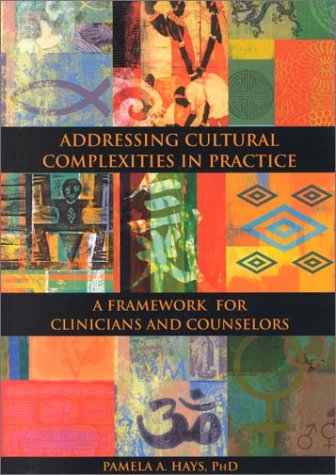

Addressing cultural complexities in practice a framework for clinicians and counselors Pamela A. Hays.
Detalles de publicación: Washington, DC American Psychological Association c2001.Edición: 1st edDescripción: 239 p. ill. 26 cmISBN:- 1557987688
- 158.3 H425a 21
- BF637.C6 H367 2001
- 2001 J-645
- WM 420
| Imagen de cubierta | Tipo de ítem | Biblioteca actual | Biblioteca de origen | Colección | Ubicación en estantería | Signatura topográfica | Materiales especificados | Info Vol | URL | Copia número | Estado | Notas | Fecha de vencimiento | Código de barras | Reserva de ítems | Prioridad de la cola de reserva de ejemplar | Reservas para cursos | |
|---|---|---|---|---|---|---|---|---|---|---|---|---|---|---|---|---|---|---|
| Libro | Biblioteca Encarnación Valdés Colección General bev | 158.3 H425a (Navegar estantería(Abre debajo)) | Disponible | 80000002134735 |
Descripciones mejoradas de Syndetics:
A guide for therapists, designed to help them understand the multiplicity of cultural influences that work to form each of us. Pamela A. Hays offers the ADDRESSING framework for helping readers understand identity as a multidimensional combination of Age, Developmental and acquired Disabilities, Religion, Ethnicity, Socioeconomic status, Sexual orientation, Indigenous heritage, Native origin, and Gender. The book should be useful to counsellors, clinicians, and any professional working with clients from a variety of diverse backgrounds.
Includes bibliographical references (p. 197-222) and indexes.
Seeing the forest and the trees: the complexities of culture in practice -- Becoming a culturally responsive therapist -- Looking into the clinician's mirror: cultural self-assessment -- Entering another's world: understanding clients' identities and contexts -- Making meaningful connections: establishing respect and rapport -- Sorting things out: culturally responsive assessment -- Putting culture to the test: considerations with standardized testing -- Making sense and moving on: culturally responsive diagnosis and the DSM-IV -- How to help best: culturally responsive therapy -- Practice doesn't make perfect, but it sure does help: a final case example -- Addressing the other in each of us.
Tabla de contenidos provista por Syndetics
- I Introduction(p. 1)
- Chapter 1. Seeing the Forest and the Trees: The Complexities of Culture in Practice(p. 3)
- II Self-Assessment(p. 17)
- Chapter 2. Becoming a Culturally Responsive Therapist(p. 19)
- Chapter 3. Looking Into the Clinician's Mirror: Cultural Self-Assessment(p. 35)
- III Connecting with Your Client(p. 53)
- Chapter 4. Entering Another's World: Understanding Clients' Identities and Contexts(p. 55)
- Chapter 5. Making Meaningful Connections: Establishing Respect and Rapport(p. 71)
- IV Culturally Responsive Assessment and Diagnosis(p. 87)
- Chapter 6. Sorting Things Out: Culturally Responsive Assessment(p. 89)
- Chapter 7. Putting Culture to the Test: Considerations With Standardized Testing(p. 111)
- Chapter 8. Making Sense and Moving On: Culturally Responsive Diagnosis and the DSM-IV(p. 129)
- V Culturally Responsive Practice(p. 151)
- Chapter 9. How to Help Best: Culturally Responsive Therapy(p. 153)
- Chapter 10. Practice Doesn't Make Perfect, But It Sure Does Help: A Final Case Example(p. 177)
- Chapter 11. Conclusion: Addressing the Other in Each of Us(p. 189)
- References(p. 197)
- Author Index(p. 223)
- Subject Index(p. 231)
- About the Author(p. 239)