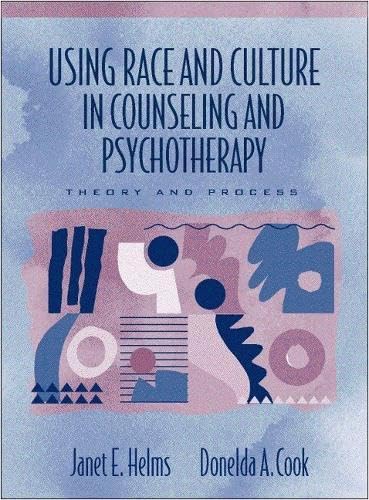

Using race and culture in counseling and psychotherapy theory and process Janet E. Helms, Donelda A. Cook.
Detalles de publicación: Boston Allyn and Bacon c1999.Descripción: ix, 374 p. ill. 25 cmISBN:- 0205285651 (alk. paper)
- 616.8914 H481u 21
- RC451.5.A2 H45 1999
- 1999 C-735
- WM 420
- 77.72
| Imagen de cubierta | Tipo de ítem | Biblioteca actual | Biblioteca de origen | Colección | Ubicación en estantería | Signatura topográfica | Materiales especificados | Info Vol | URL | Copia número | Estado | Notas | Fecha de vencimiento | Código de barras | Reserva de ítems | Prioridad de la cola de reserva de ejemplar | Reservas para cursos | |
|---|---|---|---|---|---|---|---|---|---|---|---|---|---|---|---|---|---|---|
| Libro | Biblioteca Encarnación Valdés Colección General bev | 616.8914 H481u (Navegar estantería(Abre debajo)) | Disponible | 80000002285073 |
Descripciones mejoradas de Syndetics:
This book deals with the importance of issues of race and culture in psychological interventions and provides the reader with the tools necessary for this kind of work, combining a theoretical background with practical exercises. The book is divided into three parts: Part 1, Who enters the process describes the theory and history of the importance of becoming a race and culture sensitive therapist. Part 2, The process, discusses nuances and themes across different counseling situations like group interventions and career counseling. Part 3, Observing the process, looks back at the effectiveness of race and culture sensitivity in counseling and therapy. Integrates racial/cultural issues into traditional counseling theories (chs. 7 and 8). Integrates racial/cultural issues throughout the therapy process (chs. 6, 9 and 10). Applies racial/cultural constructs to various aspects of counseling and therapy (chs 10, 11 and 13). For counselors and clinical psychology practitioners with an interest in the issues of race and culture.
Includes bibliographical references and index.
Tabla de contenidos provista por Syndetics
- Preface
- 1 Introduction
- I Who Enters The Process?
- 2 Becoming a Race- and Culture-Sensitive Therapist
- 3 Applications of Racial and Cultural Terminology to Therapy
- 4 The Sociopolitical Histories of the Original Socioracial Groups
- 5 The Sociopolitical Histories of the Culture-Based Socioracial Groups
- 6 Models of Racial Oppression and Sociorace
- 7 Aspects of Culture in Personhood
- II The Process
- 8 The Therapy Process: Theoretical Orientations
- 9 Beginning the Therapy Process
- 10 Racial and Cultural Nuances in the Therapy Process
- 11 Racial and Cultural Themes in Career Counseling
- 12 Racial and Cultural Dynamics of Group Interventions
- 13 Collaborating with Indigenous Healers and Helpers
- III Observing The Process
- 14 Using Race and Culture in Therapy Supervision
- 15 Race and Culture in Therapy Research
- 16 Answers to Questions We've Been Asked
- Appendix A Ethical Principles of Psychologists and Code of Conduct
- Appendix B Guidelines for Providers of Psychological Services to Ethnic, Linguistic, and Culturally Diverse Populations
- Index