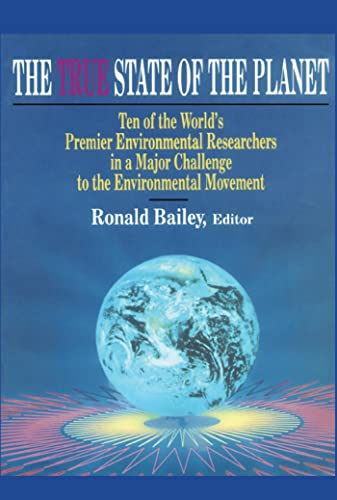
Imagen de portada de Amazon
Imagen de Amazon.com
Imagen de cubierta Syndetics
Portada de Syndetics
Imagen de OpenLibrary

The True state of the planet Ronald Bailey, editor.

Colaborador(es): Detalles de publicación: New York Free Press c1995.Descripción: viii, 472 p. ill. 23 cmISBN:
  • 0028740106
Tema(s): Clasificación CDD:
  • 363.7 20
Clasificación LoC:
  • GE195 .B35 1995
Valoración
    Valoración media: 0.0 (0 votos)
Existencias
Imagen de cubierta Tipo de ítem Biblioteca actual Biblioteca de origen Colección Ubicación en estantería Signatura topográfica Materiales especificados Info Vol URL Copia número Estado Notas Fecha de vencimiento Código de barras Reserva de ítems Prioridad de la cola de reserva de ejemplar Reservas para cursos
Libro Biblioteca de Mayagüez Colección General mb GE195 .B35 1995 (Navegar estantería(Abre debajo)) Disponible 50000001811834
Total de reservas: 0

Descripciones mejoradas de Syndetics:

In the 25 years since the first Earth Day in 1970, the environmental movement has spawned a new generation of scientists asking vital questions about the true state and fate of the planet. But, surprisingly, some of their answers -- and even the questions themselves -- contradict the movement's deepest beliefs. Why are reserves of oil, precious metals, and other natural resources more plentiful than ever before? Why has the population growth of the twentieth century brought rising standards of living for nearly all? In The True State of the Planet ten premier scholars shatter the myths of overpopulation, food, global warming, and pesticides, while redirecting environmentalists' concerns to the far more urgent problems of fisheries, fresh water, and third-world pollution -- and the political causes behind them.

"A project of the Competitive Enterprise Institute."

Includes bibliographical references and index.

Reseñas proporcionadas por Syndetics

CHOICE Review

This compilation of ten environmental essays has a prologue about the environmental movement in the 21st century by editor Baily, and an epilogue by Fred L. Smith Jr. that provides a historical comment about the doomsayers and the new challenges for individuals and institutions to improve the environment and promote sustainable development. Obviously, the word "true" in the title provides sharp contrast with the bulk of activist behavior and the regulatory practices that have evolved since the first Earth Day 25 years ago. Two waves of modern environmentalism are identified: the first, from 1970 to the present; and the second, from here on. Some acknowledgments are made of the environmental movement's first-wave accomplishments. But the movement is identified as one of exaggerations, misguided priorities, and erroneous theoretical frameworks, especially because it supposedly subscribed to Malthusian concepts and hierarchial, imposed, wasteful regulations. The second wave places greater trust in private owners as the best protectors of any further environmental degradation and in an enlightened focus on certain ecological issues heretofore not given appropriate attention during the first wave. The ten second-wave authors offer detailed presentations, with each article opening with a page of concisely informative highlights on that particular topic. The pressing problems of ocean fisheries, Third World polluting, and adequate freshwater are given particular attention. Suitable for all levels of readers. J. N. Muzio; CUNY Kingsborough Community College

Booklist Review

Bailey, the noted (or notorious, to some ecologists) author of Eco-Scam! (1993), here enlists a dozen scientists to explain what is and isn't known about the changing environment. Contrary to this year's silver jubilee of Earth Day sloganeering, the atmosphere is cooling, not warming; world population is not outstripping food production or most material resources; however, the activists are correct about tropical deforestation and overfished oceans. The question is how to ameliorate problems. The prominent green organizations adhere to regulatory and prohibitionist principles; whereas this set of writers favor the private management of resources, believing that to be the path to green benefits and material wealth. Prescriptions aside, this info-rich work is crammed with tabular data about biodiversity, pesticides, and air quality and is supported by a guarded, footnoted text. As its views compete with those published by the Sierra Club and Worldwatch Institute, among others, libraries may want to include this book in their acquisition plans, which BKL's Earth Day feature [Ap 1 95] might guide. --Gilbert Taylor

Notas de autor provistas por Syndetics

Ronald Bailey is producer of the national weekly public television series Think Tank with Ben Wattenberg and author of Eco-Scam: The False Prophets of Ecological Apocalypse.
Compartir
logopucpr-y-vive

Contáctanos

¡Queremos saber de ti!

Tel. 787.841.2000 Ext. 1801

bibliotecavaldes@pucpr.edu

⁣Búscanos en las redes

© 2026 Desarrollado por Ignite Online • All Rights Reserved • Powered by Koha.