Imagen de portada de Amazon
Imagen de Amazon.com
Imagen de cubierta Syndetics
Portada de Syndetics
Imagen de OpenLibrary

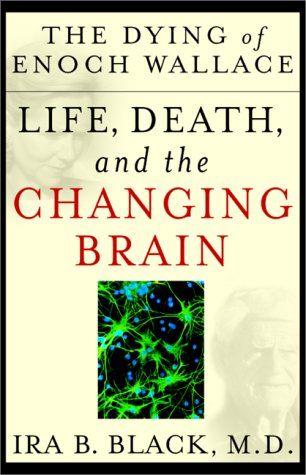
The dying of Enoch Wallace life, death, and the changing brain Ira B. Black.

Por: Detalles de publicación: New York McGraw-Hill 2001.Descripción: xii, 260 p. 24 CMISBN:
  • 0071362088
Tema(s): Clasificación CDD:
  • 612.822 B628d 2001
Clasificación LoC:
  • QP376 .B6235 2001
Valoración
    Valoración media: 0.0 (0 votos)
Existencias
Imagen de cubierta Tipo de ítem Biblioteca actual Biblioteca de origen Colección Ubicación en estantería Signatura topográfica Materiales especificados Info Vol URL Copia número Estado Notas Fecha de vencimiento Código de barras Reserva de ítems Prioridad de la cola de reserva de ejemplar Reservas para cursos
Libro Biblioteca de Mayagüez Colección General mb QP376 .B6235 2001 (Navegar estantería(Abre debajo)) Disponible 50000002123833
Total de reservas: 0

Descripciones mejoradas de Syndetics:

"In The Dying of Enoch Wallace, neuroscientist Ira Black tells the story of modern neuroscience, drawing us into the world of discovery and scientists, with all their color, idiosyncrasies, and genius. A tale spanning a century and multiple continents, it moves from fascist Italy, with the discovery of neuronal growth factor (NGF) by a young scientist working in a secret, makeshift laboratory in her bedroom, and progresses to current experiments in which transplanted, laboratory-grown cells lead to recovery of function in damaged brain regions. To bridge the gap between abstract concepts and real-world experience, Dr. Black draws upon his work as a clinical neurologist to provide a second dramatic account - the fictionalized story of a successful investment banker's battle with Alzheimer's disease - that vividly complements the main narrative. From his first fleeting memory lapses to his final descent into dementia, each fateful step in Enoch's tragic decline becomes a window onto another aspect of brain function and the latest groundbreaking neuroscientific research."--BOOK JACKET.Title Summary field provided by Blackwell North America, Inc. All Rights Reserved

Includes bibliographical references (p. 249-256) and index.

Reseñas proporcionadas por Syndetics

Library Journal Review

Black, a prominent neuroscientist and clinical neurologist (Robert Wood Johnson Medical Sch. and Rutgers Univ.), chronicles a half-century of discoveries that have revolutionized the approach to neuropsychiatric disease. Foremost among the principal players in this unfolding drama is Rita Levi-Montalcini, who, 50 years ago, identified a hormone that promoted neuronal growth outside the brain. The subsequent search to define how this nerve growth factor functions in the nervous system led to the realization that many growth and survival factors operate within the brain and the peripheral nervous system. Perhaps even more dramatic was the discovery that, contrary to former belief, neurons can be produced in the adult brain. These and related discoveries have forced a reevaluation of brain function and treatment. To illuminate this unfolding research in more practical human terms, Black offers the story of Enoch Wallace, a fictionalized character whose downward spiral into the grips of Alzheimer's disease is told with remarkable sensitivity. Reminiscent of Ian Robertson's Mind Sculpture (LJ 6/15/00), this book describes a mind that literally can grow and change as it interacts with the environment. An extremely gifted writer, Black has produced an account that should have enormous appeal among educated readers in all libraries.DLaurie Bartolini, Illinois State Lib., Springfield (c) Copyright 2010. Library Journals LLC, a wholly owned subsidiary of Media Source, Inc. No redistribution permitted.

CHOICE Review

Black (Robert Wood Johnson Medical School) tells the fascinating story of modern neuroscience via the discoveries and scientists involved. He traverses the time from the 1930s in Italy, with the discovery of NGF (nerve growth factor), to the present-day experiments in which transplanted lab-grown cells lead to recovery of brain lesions. This is done in parallel with the fictional story of Enoch Wallace, a successful investment banker, who progresses through the stages of Alzheimer's disease. This interesting approach allows readers to appreciate how nature's tragic experiments of disease help stimulate scientists to discover the mysteries of molecules, neurons, and brains. Though there is not a one-to-one correspondence between Enoch's disease progression and the neuroscience in each chapter, the two stories do progress in parallel throughout. Enoch's episodes are also followed by additional clinical vignettes relevant to the neuroscience topics discussed in each chapter. Most enjoyable and fascinating reading for anyone interested in the development of modern neuroscience. General readers; upper-division undergraduates through professionals. J. Kushner James Madison University
Compartir
logopucpr-y-vive

Contáctanos

¡Queremos saber de ti!

Tel. 787.841.2000 Ext. 1801

bibliotecavaldes@pucpr.edu

⁣Búscanos en las redes

© 2026 Desarrollado por Ignite Online • All Rights Reserved • Powered by Koha.