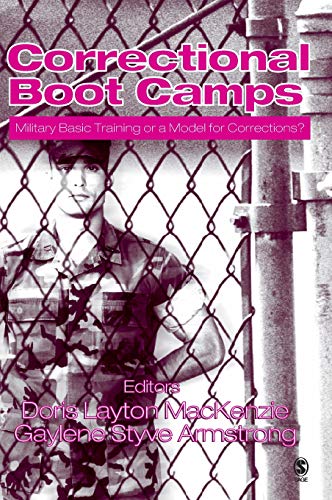

Correctional boot camps military basic training or a model for corrections? editors, Doris Layton MacKenzie, Gaylene Styve Armstrong.
Detalles de publicación: Thousand Oaks, Calif. Sage 2004.Descripción: 339 p. 26 cmISBN:- 076192938X (cloth)
- 9780761929383 (cloth)
- 0761929398 (pbk.)
- 9780761929390 (pbk.)
- 365.34 C8244 22
- HV9278.5 .C683 2004
| Imagen de cubierta | Tipo de ítem | Biblioteca actual | Biblioteca de origen | Colección | Ubicación en estantería | Signatura topográfica | Materiales especificados | Info Vol | URL | Copia número | Estado | Notas | Fecha de vencimiento | Código de barras | Reserva de ítems | Prioridad de la cola de reserva de ejemplar | Reservas para cursos | |
|---|---|---|---|---|---|---|---|---|---|---|---|---|---|---|---|---|---|---|
| Libro | Biblioteca Mons. Iñaki Mallona (Arecibo) Colección General ab | 365.34 C8244 (Navegar estantería(Abre debajo)) | Disponible | 60000010030580 |
Descripciones mejoradas de Syndetics:
Boot camps have developed over the past two decades into a program that incorporates a military regimen to create a structured environment. While some critics of this method of corrections suggest that the confrontational nature of the program is antithetical to treatment, authors Doris Layton MacKenzie and Gaylene Styve Armstrong present research knowledge and personal discussions with community leaders that offer insight into both the strengths and weaknesses of this controversial form of corrections.
Correctional Boot Camps: Military Basic Training or a Model for Corrections? provides the most up-to-date assessment of the major perspectives and issues related to the current state of boot camps. The book goes beyond cursory examinations of the effectiveness of boot camps, presenting an in-depth view of a greater variety of issues. Correctional Boot Camps examines empirical evidence on boot camps drawn from diverse sources including male, female, juvenile, and adult programs from across the nation.
The book explores empirical research on both the punitive and rehabilitative components of the boot camp model and the effectiveness of the "tough on crime" aspects of the programs that are often thought of as punishment or retribution, in lieu of a longer sentence in a traditional facility. Thus, offenders earn their way back to the general public more quickly because they have paid their debt to society by being punished in a short-term, but strict, boot camp.
Correctional Boot Camps is a comprehensive textbook for undergraduate and graduate students studying corrections and juvenile justice. The book is also a valuable resource for correctional professionals interacting with offenders.
Includes bibliographical references and index.
1. Introduction / Doris Layton MacKenzie -- pt. I. The boot camp model -- 2. Boot camps as a correctional option / Gaylene S. Armstrong -- 3. Boot camps for young adult offenders / Doris Layton MacKenzie, Dale G. Parent -- 4. Correctional boot camps for juveniles / Doris Layton MacKenzie, Andre B. Rosay -- pt. II. The debate about boot camps -- 5. Shock incarceration : rehabilitation or retribution? / Doris Layton MacKenzie ... [et al.] -- 6. A "Machiavellian" perspective on the development of boot camp prisons : a debate / Doris Layton MacKenzie, Claire Souryal -- pt. III. The environment of boot camps -- 7. Performance-based standards for juvenile corrections / Doris Layton MacKenzie, Gaylene J. Styve, Angela R. Gover -- 8. Perceived conditions of confinement : a national evaluation of boot camps and traditional facilities / Gaylene J. Styve ... [et al.] -- 9. Boot camps and traditional correctional facilities for juveniles : a comparison of the participants, daily activities and environments / Angela R. Gover, Doris Layton MacKenzie, Gaylene J. Styve -- 10. The environment and working conditions in juvenile boot camps and traditional facilities / Ojmarrh Mitchell ... [et al.] -- pt. IV. Inmate adjustment and change during incarceration -- 11. The impact of boot camps and traditional institutions on juvenile residents : perceptions, adjustment, and change / Doris Layton MacKenzie ... [et al.] -- 12. Inmates' attitude change during incarceration : a comparison of boot camp with traditional prison / Doris Layton MacKenzie, Claire Souryal -- pt. V. Impact on future criminal activities -- 13. Boot camp prisons and recidivism in eight states / Doris Layton MacKenzie ... [et al.] -- 14. Effects of correctional boot camps on offending / Doris Layton MacKenzie, David B. Wilson, Suzanne B. Kider -- pt. VI. Adjustment in the community -- 15. Shock incarceration and positive adjustment during community supervision / Doris Layton MacKenzie, Robert Brame -- 16. Characteristics associated with successful adjustment to supervision : a comparison of parolees, probationers, shock participants, and shock dropouts / Doris Layton MacKenzie, James W. Shaw, Claire Souryal -- pt. VII. Special offender populations in boot camps -- 17. Boot camp prisons for women offenders / Doris Layton MacKenzie, Heidi Donaldson -- 18. Shock incarceration and its impact on the lives of problem drinkers / James W. Shaw, Doris Layton MacKenzie -- 19. The one-year community supervision performance of drug offenders and Louisiana DOC-identified substance abusers graduating from shock incarceration / James W. Shaw, Doris Layton MacKenzie -- pt. VIII. System-level impacts -- 20. The impact of shock incarceration programs on prison crowding / Doris Layton MacKenzie, Alex Piquero -- pt. IX. Boot camps in the future -- 21. Where do we go from here? : boot camps in the future / Doris Layton MacKenzie, Gaylene S. Armstrong.
Tabla de contenidos provista por Syndetics
- Chapter 01 Introduction
- Section I The Boot Camp Model
- Chapter 02 Boot Camps as a Correctional Option
- Chapter 03 Boot Camp Prisons for Young Offenders
- Chapter 04 Correctional Boot Camps for Juveniles
- Section II The Debate About Boot Camps
- Chapter 05 Shock incarceration: Rehabilitation or retribution?
- Chapter 06 A "Machiavellian" perspective on the development of boot camp prisons: A debate
- Section III The Environment of Boot Camps
- Chapter 07 Performance Based Standards for Juvenile Corrections
- Chapter 08 Perceived Conditions of Confinement: A National Evaluation of Boot Camps and Traditional Facilities
- Chapter 09 Boot Camps and Traditional Correctional Facilities for Juveniles: A Comparison of the Participants, Daily Activities and Environments
- Chapter 10 The Environment and Working Conditions in Juvenile Boot Camps and Traditional Facilities
- Section IV Inmate Adjustment and Change during Incarceration
- Chapter 11 The Impact of Boot Camps and Traditional Institutions on Juvenile Residents: Perceptions, Adjustment, and Change
- Chapter 12 Inmate Attitude Change During Incarceration: A Comparison of Boot Camp with Traditional Prison
- Section V Impact on Future Criminal Activities
- Chapter 13 Boot Camp Prisons and Recidivism in Eight States
- Chapter 14 Effects of Correctional Boot Camps on Offending
- Section VI Adjustment in the Community
- Chapter 15 Shock Incarceration and Positive Adjustment during Community Supervision
- Chapter 16 Characteristics Associated with Successful Adjustment to Supervision
- Section VII Special Offender Populations in Boot Camps
- Chapter 17 Boot Camp Prisons for Women Offenders
- Chapter 18 Shock Incarceration and Its Impact on the Lives of Problem Drinkers
- Chapter 19 The One-Year Community Supervision Performance of Drug Offenders and Louisiana DOC-Identified Substance Abusers Graduation from Shock Incarceration
- Section VIII System Level Impacts
- Chapter 20 The Impact of Shock Incarceration Programs on Prison Crowding
- Section IX The Future
- Chapter 21 Where Do We Go From Here?