Imagen de Amazon.com

Portada de Syndetics
Imagen de OpenLibrary
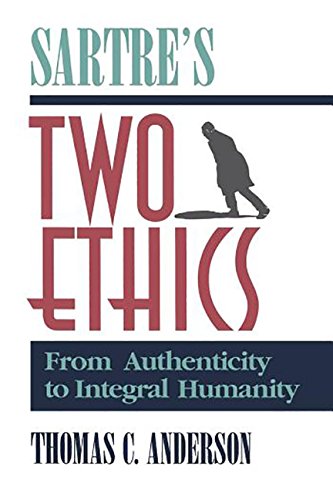
Sartre's two ethics from authenticity to integral humanity Thomas C. Anderson.
Detalles de publicación: Chicago, Il Open Court Trade and Academic Books c1993.Descripción: 215 p. 24 cmISBN:- 0812692322
| Imagen de cubierta | Tipo de ítem | Biblioteca actual | Biblioteca de origen | Colección | Ubicación en estantería | Signatura topográfica | Materiales especificados | Info Vol | URL | Copia número | Estado | Notas | Fecha de vencimiento | Código de barras | Reserva de ítems | Prioridad de la cola de reserva de ejemplar | Reservas para cursos | |
|---|---|---|---|---|---|---|---|---|---|---|---|---|---|---|---|---|---|---|
| Libro | Biblioteca de Mayagüez Colección General mb | B2430 .S34 A753 1993 (Navegar estantería(Abre debajo)) | Disponible | 50000002066180 |
Total de reservas: 0
Descripciones mejoradas de Syndetics:
"Sartre's Two Ethics surpasses my high expectations. It is a truly remarkable achievement, an extraordinarily fine book. For the first time it is possible for a reader to grasp in its totality the gradual formulation of an ethical position which Sartre devoted a lifetime to working out."
--Hazel Barnes
University of Colorado
Includes bibliographical references and index.
Tabla de contenidos provista por Syndetics
- Abbreviations of Frequently Cited Works of Jean-Paul Sartre(p. ix)
- Preface(p. xi)
- 1 Introduction(p. 1)
- 2 Human Reality and Freedom in Being and Nothingness(p. 11)
- 3 Human Relations and Ethics in Being and Nothingness(p. 27)
- 4 The First Ethics--Ontological Foundations and Supreme Value(p. 43)
- 5 The Social Dimension of Sartre's First Ethics(p. 65)
- 6 Critique of Dialectical Reason(p. 87)
- 7 The Second Ethics(p. 111)
- 8 The Second Ethics Continued: After the Rome Lecture(p. 129)
- 9 Comparison of Sartre's Two Ethics(p. 147)
- Appendix Sketches of the Third Ethics(p. 169)
- Notes(p. 173)
- Bibliography(p. 195)
- Index(p. 203)