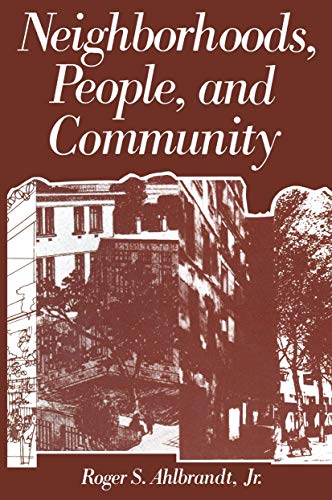

Neighborhoods, people, and community Roger S. Ahlbrandt, Jr.
Series Environment, development and public policy. Cities and developmentDetalles de publicación: New York Plenum Press c1984.Descripción: xvii, 238 p. ill. 22 cmISBN:- 0306415429
- 307/.3362/0974886 19
- HN80.P6 A35 1984
| Imagen de cubierta | Tipo de ítem | Biblioteca actual | Biblioteca de origen | Colección | Ubicación en estantería | Signatura topográfica | Materiales especificados | Info Vol | URL | Copia número | Estado | Notas | Fecha de vencimiento | Código de barras | Reserva de ítems | Prioridad de la cola de reserva de ejemplar | Reservas para cursos | |
|---|---|---|---|---|---|---|---|---|---|---|---|---|---|---|---|---|---|---|
| Libro | Biblioteca de Mayagüez Colección General mb | HN 80 .P6 A36 1984 (Navegar estantería(Abre debajo)) | Disponible | 50000001800118 |
Descripciones mejoradas de Syndetics:
This book focuses on neighborhoods and the people living in them. It describes differences among neighborhoods in terms of their social and institutional structure, attitudes of the residents, quality of life, and the characteristics of the residents. The book is based on the results of a survey of almost 6,000 residents living throughout the city of Pittsburgh. As such it provides the basis for examining groups of people as well as whole neighborhoods. The communal aspects of urban living are discussed in Chapters 1 and 2; attachment toward the neighborhood in Chapter 3; importance of reli gion, life cycle, and race in Chapter 4; various aspects of individual social support systems and neighborhood social fabric in Chapters 5, 6, and 7; the contextual aspects of the neighborhood environment in Chapters 8 and 9; and the implications for urban policy in Chapter 10. The results of the analysis described in the book pro vide a detailed understanding of differences in the struc ture and composition of urban neighborhoods, and they show why some groups of people are drawn into their neighborhoods whereas others rely more upon the wider community to meet a variety of needs. The analysis pro vides the framework in which to address the implications for urban policy, particularly with respect to mental health prevention and neighborhood and community renewal."
Includes index.
Bibliography: p. 223-228.