Introduction to forensic anthropology -- Applications and basic terminology -- Recovery procedures -- Biological profile : age -- Biological profile : race/ancestry, sex, and stature -- Assessing trauma and time since death -- Analytical challenges -- Positive identification -- Conclusion.
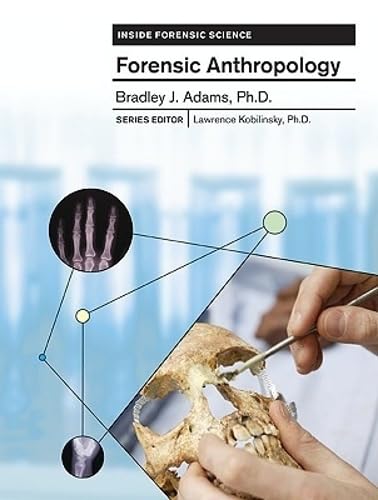
Forensic anthropologists may be consulted when human remains are found at an archaeological excavation or at a crime scene. Here's a look at how anthropologists analyze skeletal remains to learn about the deceased--their age and gender, how they may have lived, and their overall state of health prior to death.
Includes bibliographical references (p. 90-96) and index.
Introduction to forensic anthropology -- Applications and basic terminology -- Recovery procedures -- Biological profile : age -- Biological profile : race/ancestry, sex, and stature -- Assessing trauma and time since death -- Analytical challenges -- Positive identification -- Conclusion.
Tabla de contenidos provista por Syndetics
1 Introduction to Forensic Anthropology(p. 1)
2 Applications and Basic Terminology(p. 8)
3 Recovery Procedures(p. 22)
4 Biological Profile: Age(p. 31)
5 Biological Profile: Race/Ancestry, Sex, and Stature(p. 42)
6 Assessing Trauma and Time Since Death(p. 50)
7 Analytical Challenges(p. 65)
8 Positive identification(p. 76)
9 Conclusion(p. 82)
Notes(p. 84)
Glossary(p. 86)
Bibliography(p. 90)
Further Reading(p. 94)
Index(p. 98)
Extracto provisto por Syndetics
Forensic anthropologists may be consulted when human remains are found at an archaeological excavation or at a crime scene. Here's a look at how anthropologists analyze skeletal remains to learn about the deceased--their age and gender, how they may have lived, and their overall state of health prior to death. Featuring full-color photographs from actual forensic cases, this book provides specific information on procedures, tools of the trade, and the science behind this fascinating field, as well as the challenges faced by today's practitioners. Excerpted from Forensic Anthropology by Bradley J. Adams All rights reserved by the original copyright owners. Excerpts are provided for display purposes only and may not be reproduced, reprinted or distributed without the written permission of the publisher.
Reseñas proporcionadas por Syndetics
School Library Journal Review
Gr 10 Up-Adams's subject matter is fairly sophisticated. It focuses on how skeletal remains are often used in cases where the victim has been dead a long time or those in which the body is too ravaged to identify. He offers a fairly detailed look at how bone scientists study remains to determine everything from sex to height to facial characteristics. There is a great deal of discussion of various bones and growth patterns; how bodies decompose and are ravaged by the environment, insects, and time; and how the different types of trauma that can cause death are evidenced in skeletal remains. Advanced biology students will appreciate the details, but less-informed students might find the reading frustrating. Sapse focuses on the court system itself, detailing the steps in the legal system, discussing the various types of crimes and punishments, various pleas, and how forensics fits into the larger legal picture. The title might be misleading as readers are likely to expect more information on how various forensic techniques are used in the courtroom. While there is a chapter on that topic, the majority of the book deals in a very general way with our basic court system. Useful books, but not for your average readers.-Lynn Evarts, Sauk Prairie High School, Prairie du Sac, WI (c) Copyright 2010. Library Journals LLC, a wholly owned subsidiary of Media Source, Inc. No redistribution permitted.
Booklist Review
Part of the Inside Forensic Science series, this offers an overview of the field. Written by a forensic anthropologist who works for the New York City medical examiner, the book begins with the basics, explaining what forensic anthropology is and introducing its professional subdivisions, applications, and terminology. Subsequent chapters go into greater detail about specific topics, including how skeletal remains are analyzed. The challenging but readable text is accompanied by diagrams, color illustrations, and sidebars. Extensive end matter includes a helpful glossary and a list of book and Web resources. A solid introduction to a high-interest topic. --Ed Sullivan Copyright 2007 Booklist
Notas de autor provistas por Syndetics
Bradley J. Adams , Ph.D., provides specific information on procedures, tools of the trade, and the science behind this fascinating field, as well as the challenges faced by today's practitioners.
Forensic anthropology
APA
Adams B. J., . (2007). Forensic anthropology. New York: Chelsea House.
Chicago
Adams Bradley J, . 2007. Forensic anthropology. New York: Chelsea House.
Harvard
Adams B. J., . (2007). Forensic anthropology. New York: Chelsea House.
MLA
Adams Bradley J, . Forensic anthropology. New York: Chelsea House. 2007.