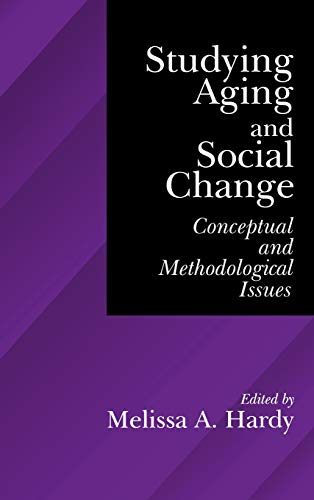

Studying aging and social change conceptual and methodological issues edited by Melissa A. Hardy.
Detalles de publicación: Thousand Oaks Sage Publications c1997.Descripción: ix, 229 p. ill. 24 cmISBN:- 0761905901 (cloth : acid-free paper)
- 076190591X (pbk. : acid-free paper)
- 303.4/01 21
- HM104 .S76 1997
| Imagen de cubierta | Tipo de ítem | Biblioteca actual | Biblioteca de origen | Colección | Ubicación en estantería | Signatura topográfica | Materiales especificados | Info Vol | URL | Copia número | Estado | Notas | Fecha de vencimiento | Código de barras | Reserva de ítems | Prioridad de la cola de reserva de ejemplar | Reservas para cursos | |
|---|---|---|---|---|---|---|---|---|---|---|---|---|---|---|---|---|---|---|
| Libro | Biblioteca Encarnación Valdés Colección General bev | 303.401 S9339 1997 (Navegar estantería(Abre debajo)) | Disponible | 80000002535220 |
Descripciones mejoradas de Syndetics:
What if the world population consisted of a single generation that lived forever? Or what if each successive generation came into being all at once and then perished before the next generation came into existence? How would the absence of many different generations sharing pieces of the same time-line alter how we think about the linked processes of aging and social change? In this book, editor Melissa Hardy presents a collection of strategies for conceptualizing and analyzing the connections between intra-vidual and societal change. Studying Aging and Social Change questions the boundaries between self and society and change and stability. The book includes classic treatments on generations and cohorts by Karl Mannheim and Norman Ryder and presents a new theoretical contribution that explores the meaning of aging as a social process. Each of the six new essays develops a central theoretical concept, linking that concept to issues of research design and analysis. By reexamining the assumptions that underlie our approaches to the study of change, this volume provides key insights into how we can understand fundamental social processes such as human development and socialization, the formation of public opinion and political identity, and the shaping of collective action and group behavior. This enlightening volume will be a valuable resource for academics and students in the fields of social work, gerontology, sociology, and family studies.
Includes bibliographical references (p. 206-223) and index.
Tabla de contenidos provista por Syndetics
- Doing Time
- Reconciling Biography with History in the Study of Social Change
- The Problem of Generations
- The Cohort as a Concept in the Study of Social Change
- On the Importance of Age
- Beyond Trajectories
- Multiple Concepts for Analyzing Long-Term Process
- Using Repeated Surveys To Study Aging and Social Change
- Aging, Social Change and Conservatism
- The Link between Historical and Biographical Time in the Study of Political Identities
- Establishing a Reference Frame against Which To Chart Age-Related Changes