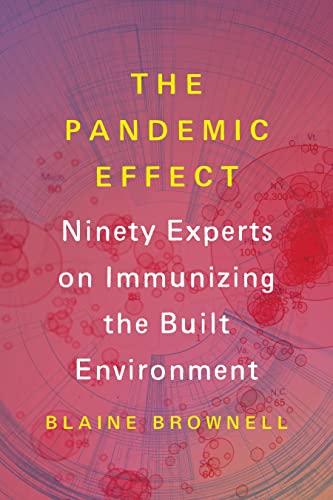

The pandemic effect : ninety experts on immunizing the built environment. / Blaine Brownell. txt
Editor: New York : Princeton Architectural Press, 2022Edición: First editionDescripción: 208 p. : ill. ; plans ; 23 cmTipo de contenido:- text
- unmediated
- volume
- 9781648961649
- 9781648961922
- 23 362.1/042
- RA566.7 P36 2022
| Imagen de cubierta | Tipo de ítem | Biblioteca actual | Biblioteca de origen | Colección | Ubicación en estantería | Signatura topográfica | Materiales especificados | Info Vol | URL | Copia número | Estado | Notas | Fecha de vencimiento | Código de barras | Reserva de ítems | Prioridad de la cola de reserva de ejemplar | Reservas para cursos | |
|---|---|---|---|---|---|---|---|---|---|---|---|---|---|---|---|---|---|---|
| Libro Col. General CARIBET | CARIBET Biblioteca Arquitectura Colección General CARIBET | General RA566.7 P36 2022 (Navegar estantería(Abre debajo)) | 1 | Disponible | 91000000753509 |
Descripciones mejoradas de Syndetics:
In The Pandemic Effect, 90 leading architects, designers, materials scientists, and health officials reflect on the influence of COVID-19 on buildings and cities--and propose solutions to safeguard the built environment from future pandemics, viruses, and contagious diseases on every scale, from surfaces to society.
Safety and sustainability in buildings and cities have taken on new meaning during the COVID -19 pandemic. Buildings became magnifiers of contagion instead of shelters for protection. In this essential resource for both practitioners and students of architecture, interior design, and urban design, 90 of the world's leading experts investigate a variety of approaches to future-proof architecture and buildings against widespread disease.
These inoculation strategies are organized into five chapters: "Histories" offers an overview of past pandemics and prior architectural approaches; "Inside / Outside" addresses the roles of building envelopes and mechanical systems in improving indoor environmental quality; "Interventions" consists of contemporary methods for direct prevention and control; "New Strategies" consists of various architectural analyses and proposals for design changes; and "The Public Realm" considers the urban landscape and related social questions. This broad collection of perspectives explores the transformations underway in the built environment--and offers design strategies to limit the severity of subsequent pandemics.
Includes bibliographical references (pages194-201) and index.
24 Introduction --
32 Chapter One: HISTORIES --
Past responses to pandemics and the reconsideration of traditional design approaches --
60 Chapter Two: INSIDE / OUTSIDE --
Interior-exterior relationships and the influences of indoor environmental quality on human health --
92 Chapter Three: INTERVENTIONS --
Prevention and control methods to monitor, protect, and adapt postpandemic spaces --
124 Chapter Four: NEW STRATEGIES --
Updated approaches to designing spaces and systems for pandemic-influenced human activities --
160 Chapter Five: THE PUBLIC REALM --
Pandemic-responsive cities, landscapes, and infrastructure that support public health and environmental justice --
192 Acknowledgments --
194 Notes --
202 Index --
207 Image credits --
"Leading architects, designers, materials scientists, and health officials reflect on the influence of COVID-19 on buildings and cities-and propose solutions to safeguard the built environment from future pandemics"--