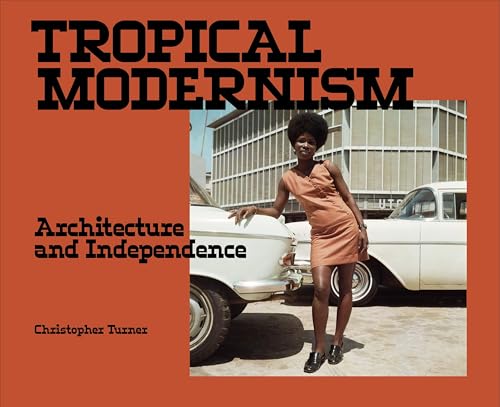

Tropical modernism : architecture and independence. / Turner, Christopher, 1972- author, interviewer. txt
London : V&A Publishing, 2024Descripción: 224 p. : ill. ; col. ; maps ; portraits ; 22 x 27 cmTipo de contenido:- text
- unmediaded
- volume
- 9781838510558
- 1838510559
- ARCHITECTURE / General
- Architecture and Planning
- Architecture, Modern -- 20th century -- Exhibitions
- Architecture, Tropical -- 20th century -- Exhibitions -- History -- Africa, West
- Architecture, Tropical -- 20th century -- Exhibitions -- History -- India
- Exhibition catalogs
- History
- Interviews
- Modern movement Architecture -- Exhibitions
- India
- Africa, French-speaking West
- NA2542.T7 T87 2024
| Imagen de cubierta | Tipo de ítem | Biblioteca actual | Biblioteca de origen | Colección | Ubicación en estantería | Signatura topográfica | Materiales especificados | Info Vol | URL | Copia número | Estado | Notas | Fecha de vencimiento | Código de barras | Reserva de ítems | Prioridad de la cola de reserva de ejemplar | Reservas para cursos | |
|---|---|---|---|---|---|---|---|---|---|---|---|---|---|---|---|---|---|---|
| Libro Col. General CARIBET | CARIBET Biblioteca Arquitectura Colección General CARIBET | General NA2542.T7 T87 2024 (Navegar estantería(Abre debajo)) | 1 | Disponible | 91000000753186 |
Descripciones mejoradas de Syndetics:
Pioneering and sometimes problematic Tropical Modernism is an essential subject for fans of Le Corbusier and Bauhaus
Emerging in the death throes of colonial rule, the story of Tropical Modernism is one of politics and power, decolonization and defiance. Its leading proponents, British architects Jane Drew and Maxwell Fry, adapted a utopian Bauhaus-derived Modernist aesthetic to hot and humid conditions. After Independence, Tropical Modernism was championed by leaders including Jawaharlal Nehru and Kwame Nkrumah as a symbol of freedom, progressiveness and internationalism in monumental projects such as Chandigarh in Punjab planned by Le Corbusier and Black Star Square in Accra designed by Victor Adegbite. Scrutinizing the colonial narratives surrounding Tropical Modernism, and foregrounding the experience of African and Indian practitioners, this book reassesses an architectural style which has increasing relevance in today's changing climate.
Includes bibliography and index.
7 Foreword Tristam Hunt --
9 Introduction Architecture and Power in West Africa and India --
17 The Invention of Tropical Modernism: The African Experiment --
20 Interview: Ola Uduku --
58 Interview: Samia Nkrumah --
65 Chandigarh: Temples of a New India --
68 Interview: Vikramaditya Prakash --
106 Interview: Jeet Malhotra --
113 ‘Africa Must Unite or Perish!’: Beacons for a Free Africa --
116 Interview: Henry Wellington --
150 Interview: John Owusu Addo --
157 Nehruvian Modernism: A Tool for National Regeneration --
160 Interview: Ram Rahman --
192 Interview: Raj Rewal --
201 Epilogue --
A Future for Tropical Modernism --
214 Notes --
216 Bibliography --
219 Acknowledgements --
223 Picture Credits --
"Emerging in the death throes of colonial rule, the story of Tropical Modernism is one of politics and power, decolonization and defiance. Its leading proponents, British architects Jane Drew and Maxwell Fry, adapted a utopian Bauhaus-derived Modernist aesthetic to hot and humid conditions. After Independence, Tropical Modernism was championed by leaders including Jawaharlal Nehru and Kwame Nkrumah as a symbol of freedom, progressiveness and internationalism in monumental projects such as Chandigarh in Punjab planned by Le Corbusier and Black Star Square in Accra designed by Victor Adegbite. Scrutinizing the colonial narratives surrounding Tropical Modernism, and foregrounding the experience of African and Indian practitioners, this book reassesses an architectural style which has increasing relevance in today's changing climate." -- Provided by publisher
Tabla de contenidos provista por Syndetics
- Foreword(7)
- Introduction(9)
- Architecture and Power in West Africa and India
- The Invention of Tropical Modernism: The African Experiment(17)
- Interview(20)
- Interview(58)
- Chandigarh: Templese of a New India(65)
- Interview(68)
- Interview(106)
- 'Africa Must Unite or Perish!': Beacons for a Free Africa(113)
- Interview(116)
- Interview(150)
- Nehruvian Modernism: A Tool for National Regeneration(157)
- Interview(160)
- Interview(192)
- Epilogue(201)
- A Future for Tropical Modernism
- Notes(214)
- Bibliography(216)
- Acknowledgements(219)
- Picture Credits(223)