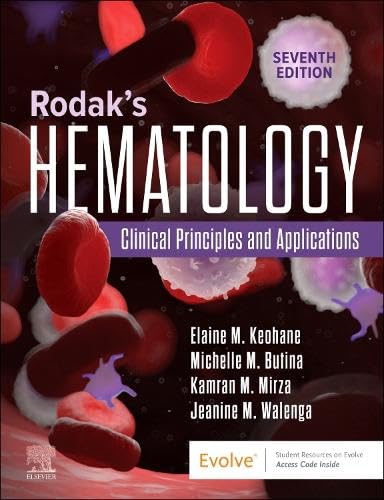
Imagen de portada de Amazon
Imagen de Amazon.com
Imagen de cubierta Syndetics
Portada de Syndetics
Imagen de OpenLibrary

Rodak's hematology : clinical principles and applications / Elaine M. Keohane, Kamran M. Mirza, Michelle Montgomery Butina, Jeanine M. Walenga.

Por: Colaborador(es): Editor: St. Louis, Missouri : Elsevier, [2025]Edición: Seventh editionDescripción: xiv, 911 pages : illustrations (chiefly color) ; 29 cmTipo de contenido:
  • text
Tipo de medio:
  • unmediated
Tipo de soporte:
  • volume
ISBN:
  • 9780323936507
Títulos uniformes: Tema(s): Clasificación LoC:
  • RB45 .D49 2025
Contenidos:
Part I. Introduction to Hematology -- 1. An Overview of Clinical Laboratory Hematology -- 2. Patient Safety in Hematology and Hemostasis -- 3. Quality Assurance in Hematology and Hemostasis Testing -- Part II. Blood Cell Production, Structure, and Function -- 4. Cell Structure and Function -- 5. Hematopoiesis -- 6. Erythrocyte Production and Destruction -- 7. Erythrocyte Metabolism and Membrane Structure and Function -- 8. Hemoglobin Metabolism -- 9. Iron Kinetics and Laboratory Assessment -- 10. Leukocyte Development, Kinetics, and Functions -- 11. Platelet Production, Structure, and Function -- Part III. Laboratory Evaluation of Blood Cells -- 12. Manual, Semiautomated, and Point-of-Care Testing in Hematology -- 13. Automated Blood Cell Analysis -- 14. Examination of the Peripheral Blood Film and Correlation With the Complete Blood Count -- 15. Bone Marrow Examination -- Part IV. Erythrocyte Disorders -- 16. Anemias: Red Blood Cell Morphology and Approach to Diagnosis -- 17. Disorders of Iron Kinetics and Heme Metabolism -- 18. Anemias Caused by Defects of DNA Metabolism -- 19. Bone Marrow Failure -- 20. Introduction to Increased Destruction of Erythrocytes -- 21. Intrinsic Defects Leading to Increased Erythrocyte Destruction -- 22. Extrinsic Defects Leading to Increased Erythrocyte Destruction—Nonimmune Causes -- 23. Extrinsic Defects Leading to Increased Erythrocyte Destruction—Immune Causes -- 24. Hemoglobinopathies (Structural Defects in Hemoglobin) -- 25. Thalassemias -- Part V. Leukocyte Disorders -- 26. Nonmalignant Leukocyte Disorders -- 27. Introduction to Hematologic Neoplasms -- 28. Flow Cytometric Analysis in Hematologic Disorders -- 29. Molecular Diagnostics in Hematopathology -- 30. Cytogenetics -- 31. Acute Leukemias -- 32. Myeloproliferative Neoplasms -- 33. Myelodysplastic Neoplasms -- 34. Mature Lymphoid Neoplasms -- Part VI. Hemostasis and Thrombosis -- 35. Normal Hemostasis -- 36. Hemorrhagic Disorders and Laboratory Assessment -- 37. Qualitative Disorders of Platelets and Vasculature -- 38. Quantitative Disorders of Platelets: Thrombocytopenia and Thrombocytosis -- 39. Thrombotic Disorders and Laboratory Assessment -- 40. Antithrombotic Therapies and Laboratory Assessment Thrombosis and Antithrombotic Therapy -- 41. Laboratory Evaluation of Hemostasis -- 42. Hemostasis and Coagulation Instrumentation -- Part VII. Hematology and Hemostasis in Selected Populations -- 43. Hematology and Hemostasis in the Pediatric, Pregnant, Geriatric, and Transgender Populations -- APPENDICES (EVOLVE) -- INDEX -- Hematology/Body Fluids/Hemostasis Reference Intervals.
Resumen: Make sure you are thoroughly prepared to work in a clinical laboratory. Rodak’s Hematology: Clinical Principles and Applications, 7th Edition uses hundreds of full-color photomicrographs to help you understand the essentials of hematology and hemostasis. This new edition details the parts and functions of the cell; shows how to accurately identify cells; covers normal hematopoiesis through diseases of erythroid, myeloid, lymphoid, and megakaryocytic origins; and simplifies hemostasis and thrombosis concepts and disorders. Easy to follow and understand, this book also covers key topics, including working in the hematology and hemostasis laboratory; complementary testing areas such as flow cytometry, cytogenetics, and molecular diagnostics; and laboratory testing of blood cells and body fluid cells.
Valoración
    Valoración media: 0.0 (0 votos)
Existencias
Imagen de cubierta Tipo de ítem Biblioteca actual Biblioteca de origen Colección Ubicación en estantería Signatura topográfica Materiales especificados Info Vol URL Copia número Estado Notas Fecha de vencimiento Código de barras Reserva de ítems Prioridad de la cola de reserva de ejemplar Reservas para cursos
Libro Biblioteca de Mayagüez Colección General mb RB45 .D49 2025 (Navegar estantería(Abre debajo)) c. 1 Disponible 50000003297867
Total de reservas: 0

Descripciones mejoradas de Syndetics:

**Selected for 2026 Doody's Core Titles in Laboratory Medicine**

Make sure you are thoroughly prepared to work in a clinical laboratory. Rodak's Hematology: Clinical Principles and Applications, 7th Edition uses hundreds of full-color photomicrographs to help you understand the essentials of hematology and hemostasis. This new edition details the parts and functions of the cell; shows how to accurately identify cells; covers normal hematopoiesis through diseases of erythroid, myeloid, lymphoid, and megakaryocytic origins; and simplifies hemostasis and thrombosis concepts and disorders. Easy to follow and understand, this book also covers key topics, including working in the hematology and hemostasis laboratory; complementary testing areas such as flow cytometry, cytogenetics, and molecular diagnostics; and laboratory testing of blood cells and body fluid cells.

Content throughout the text reflects the latest information on hematology and hemostasis Hematology and hemostasis instruments are described, compared, and contrasted More than 700 full-color illustrations and photomicrographs make it easier to visualize hematology concepts and show what you'll encounter in the laboratory Instructions for laboratory procedures include detailed figures and sources of errors Case studies in each chapter provide opportunities to apply hematology concepts to real-life scenarios Hematology and hemostasis reference intervals are listed on the inside front and back covers for quick reference Bulleted chapter summaries make it easy for you to review important points Learning objectives begin each chapter and indicate what you should achieve, with review questions appearing at the end Appendices provide easy access to a list of key formulas, abbreviations, and a detailed glossary to complement learning New to this edition NEW! Chapter on Patient Safety in Hematology and Hemostasis NEW! Section on hematology and hemostasis in transgender populations UPDATED! White blood cell chapters are current with the 2022 World Health Organization (WHO) Classification of Haematolymphoid Tumours NEW! Changes in laboratory results associated with COVID-19 and other viral infections NEW! Content and figures on plasma transport, cell communication, and signal transduction NEW! Coverage of CRISPR technology for treatment of hemoglobinopathies and thalassemia UPDATED! Major revision of the Automated Blood Cell Analysis chapter

Includes bibliographical references and index.

Part I. Introduction to Hematology -- 1. An Overview of Clinical Laboratory Hematology -- 2. Patient Safety in Hematology and Hemostasis -- 3. Quality Assurance in Hematology and Hemostasis Testing -- Part II. Blood Cell Production, Structure, and Function -- 4. Cell Structure and Function -- 5. Hematopoiesis -- 6. Erythrocyte Production and Destruction -- 7. Erythrocyte Metabolism and Membrane Structure and Function -- 8. Hemoglobin Metabolism -- 9. Iron Kinetics and Laboratory Assessment -- 10. Leukocyte Development, Kinetics, and Functions -- 11. Platelet Production, Structure, and Function -- Part III. Laboratory Evaluation of Blood Cells -- 12. Manual, Semiautomated, and Point-of-Care Testing in Hematology -- 13. Automated Blood Cell Analysis -- 14. Examination of the Peripheral Blood Film and Correlation With the Complete Blood Count -- 15. Bone Marrow Examination -- Part IV. Erythrocyte Disorders -- 16. Anemias: Red Blood Cell Morphology and Approach to Diagnosis -- 17. Disorders of Iron Kinetics and Heme Metabolism -- 18. Anemias Caused by Defects of DNA Metabolism -- 19. Bone Marrow Failure -- 20. Introduction to Increased Destruction of Erythrocytes -- 21. Intrinsic Defects Leading to Increased Erythrocyte Destruction -- 22. Extrinsic Defects Leading to Increased Erythrocyte Destruction—Nonimmune Causes -- 23. Extrinsic Defects Leading to Increased Erythrocyte Destruction—Immune Causes -- 24. Hemoglobinopathies (Structural Defects in Hemoglobin) -- 25. Thalassemias -- Part V. Leukocyte Disorders -- 26. Nonmalignant Leukocyte Disorders -- 27. Introduction to Hematologic Neoplasms -- 28. Flow Cytometric Analysis in Hematologic Disorders -- 29. Molecular Diagnostics in Hematopathology -- 30. Cytogenetics -- 31. Acute Leukemias -- 32. Myeloproliferative Neoplasms -- 33. Myelodysplastic Neoplasms -- 34. Mature Lymphoid Neoplasms -- Part VI. Hemostasis and Thrombosis -- 35. Normal Hemostasis -- 36. Hemorrhagic Disorders and Laboratory Assessment -- 37. Qualitative Disorders of Platelets and Vasculature -- 38. Quantitative Disorders of Platelets: Thrombocytopenia and Thrombocytosis -- 39. Thrombotic Disorders and Laboratory Assessment -- 40. Antithrombotic Therapies and Laboratory Assessment Thrombosis and Antithrombotic Therapy -- 41. Laboratory Evaluation of Hemostasis -- 42. Hemostasis and Coagulation Instrumentation -- Part VII. Hematology and Hemostasis in Selected Populations -- 43. Hematology and Hemostasis in the Pediatric, Pregnant, Geriatric, and Transgender Populations -- APPENDICES (EVOLVE) -- INDEX -- Hematology/Body Fluids/Hemostasis Reference Intervals.

Make sure you are thoroughly prepared to work in a clinical laboratory. Rodak’s Hematology: Clinical Principles and Applications, 7th Edition uses hundreds of full-color photomicrographs to help you understand the essentials of hematology and hemostasis. This new edition details the parts and functions of the cell; shows how to accurately identify cells; covers normal hematopoiesis through diseases of erythroid, myeloid, lymphoid, and megakaryocytic origins; and simplifies hemostasis and thrombosis concepts and disorders. Easy to follow and understand, this book also covers key topics, including working in the hematology and hemostasis laboratory; complementary testing areas such as flow cytometry, cytogenetics, and molecular diagnostics; and laboratory testing of blood cells and body fluid cells.

Compartir
logopucpr-y-vive

Contáctanos

¡Queremos saber de ti!

Tel. 787.841.2000 Ext. 1801

bibliotecavaldes@pucpr.edu

⁣Búscanos en las redes

© 2026 Desarrollado por Ignite Online • All Rights Reserved • Powered by Koha.