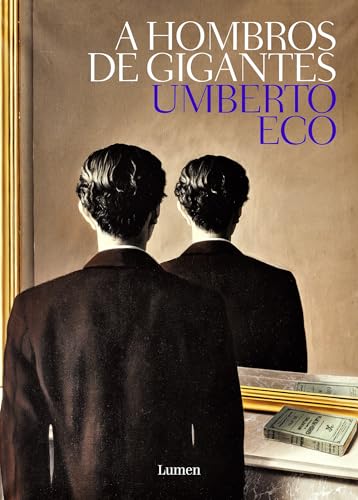

A hombros de gigante / Umberto Eco; traducido del italiano por Maria Pons Irazazábal
Idioma: Español Lenguaje original: Italiano Series Ensayo (Lumen)Editor: Barcelona, España : Lumen; Penguin Random House Grupo Editorial, 2018Descripción: 396 páginas : ilustraciones; facsímilesTipo de contenido:- texto
- no mediado
- volumen
- 9788426405449
- 23 853.914
| Imagen de cubierta | Tipo de ítem | Biblioteca actual | Biblioteca de origen | Colección | Ubicación en estantería | Signatura topográfica | Materiales especificados | Info Vol | URL | Copia número | Estado | Notas | Fecha de vencimiento | Código de barras | Reserva de ítems | Prioridad de la cola de reserva de ejemplar | Reservas para cursos | |
|---|---|---|---|---|---|---|---|---|---|---|---|---|---|---|---|---|---|---|
| Libro | Biblioteca Encarnación Valdés Colección General bev | 853.914 E1929s E (Navegar estantería(Abre debajo)) | Disponible | 80000002643685 |
Descripciones mejoradas de Syndetics:
Eco inédito.
Las brillantes clases magistrales que Umberto Eco pronunciaba en la universidad, junto con una que no llegó a pronunciar.
«Somos como enanos que están a hombros de gigantes, de modo que podemos ver más lejos que ellos, no tanto por nuestra estatura o nuestra agudeza visual, sino porque, al estar sobre sus hombros, estamos más altos que ellos.».- Bernardo de Chartres
A hombros de gigantes representa para los lectores de Eco un evento festivo. Lejos de las aulas universitarias, de las conferencias académicas y de las ceremonias de honor Eco escribe estos textos a lo largo de tres lustros, para entretener a los numerosísimos espectadores de la Milanesiana, el festival creado y dirigido por Elisabetta Sgarbi.
Son textos que se inspiran a menudo en el tema central elegido cada año en la Milanesiana, pero que luego recorren ríos de repertorios que beben de la filosofía, la literatura, la estética, la ética y los medios de comunicación para devolvernos, en un lenguaje afable, imbuido de ironía, a veces lúdico o mordaz, la quintaesencia del universo de Eco.
ENGLISH DESCRIPTION
Never before published texts by Umberto Eco. These are the Master Classes that Umberto Eco offered at universities, along with one class that he was not able to offer.
On the Shoulders of Giants represents a great festive event for readers of Uberto Eco. Far from university classrooms, academic conferences, and award ceremonies, Eco writes these texts over the course of three decades, to entertain the many spectators of La Milanesiana, a literary festival created and directed by Elisabetta Sgarbi.
They are texts that were often inspired by the central theme chosen each year in La Milanesiana festival, but in it, he also delves into many other various themes like: philosophy, literature, aesthetics, ethics, and the media, to offer his readers, through a gregarious language, filled with irony and sarcasm, the quintessence of the Eco universe.
"To fit ten centuries into a single phrase, that is the Eco method. On the Shoulders of Giants is one of the most brilliant and grandiose collection of writings that a university course could ever offer." - Paolo di Paolo, La Repubblica
Título original: Sulle spalle dei giganti : lezioni alla Milanesiana 2001-2015
Incluye referencias bibliográficas e índice.
Notas de autor provistas por Syndetics
Umberto Eco was born in Alessandria, Italy on January 5, 1932. He received a doctorate of philosophy from the University of Turin in 1954. His first book, Il Problema Estetico in San Tommaso, was an extension of his doctoral thesis on St. Thomas Aquinas and was published in 1956. His first novel, The Name of the Rose, was published in 1980 and won the Premio Strega and the Premio Anghiar awards in 1981. In 1986, it was adapted into a movie starring Sean Connery. His other works include Foucault's Pendulum, The Island of the Day Before, Baudolino, The Prague Cemetery, and Numero Zero. He also wrote children's books and more than 20 nonfiction books including Serendipities: Language and Lunacy. He taught philosophy and then semiotics at the University of Bologna. He also wrote weekly columns on popular culture and politics for L'Espresso. He died from cancer on February 19, 2016 at the age of 84.(Bowker Author Biography)