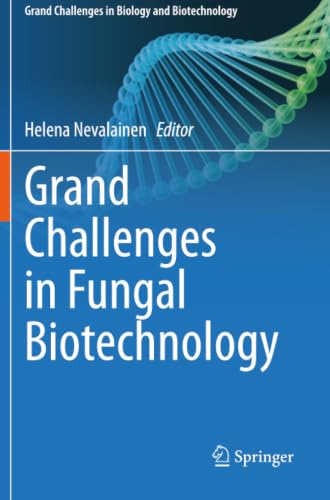

Grand challenges in fungal biotechnology / Helena Nevalainen
Detalles de publicación: Sydney, New South Wales, Australia : Springer, 2020.Descripción: ix, 535 pages : illustrations ; 24 cmTipo de contenido:- 9783030295431
| Imagen de cubierta | Tipo de ítem | Biblioteca actual | Biblioteca de origen | Colección | Ubicación en estantería | Signatura topográfica | Materiales especificados | Info Vol | URL | Copia número | Estado | Notas | Fecha de vencimiento | Código de barras | Reserva de ítems | Prioridad de la cola de reserva de ejemplar | Reservas para cursos | |
|---|---|---|---|---|---|---|---|---|---|---|---|---|---|---|---|---|---|---|
| Libro | Biblioteca Mons. Iñaki Mallona (Arecibo) Colección General ab | 579.5 G751 (Navegar estantería(Abre debajo)) | 1 | Disponible | 60000010177662 |
Descripciones mejoradas de Syndetics:
This volume provides a comprehensive overview of the major applications and potential of fungal biotechnology. The respective chapters report on the latest advances and opportunities in each topic area, proposing new and sustainable solutions to some of the major challenges faced by modern society. Aimed at researchers and biotechnologists in academia and industry, it represents essential reading for anyone interested in fungal biotechnology, as well as those working within the broader area of microbial biotechnology. Written in an accessible language, the book also offers a valuable reference resource for decision-makers in government and at non-governmental organizations who are involved in the development of cleaner technologies and the global bioeconomy.
The 21st century is characterized by a number of critical challenges in terms of human health, developing a sustainable bioeconomy, facilitating agricultural production, and establishing practices that support a cleanerenvironment. While there are chemical solutions to some of these challenges, developing bio-based approaches is becoming increasingly important.
Filamentous fungi, 'the forgotten kingdom,' are a group of unique organisms whose full potential has yet to be revealed. Some key properties, such as their exceptional capacity to secrete proteins into the external environment, have already been successfully harnessed for the production of industrial enzymes and cellulosic biofuels. Many further aspects discussed here -such as feeding the hungry with fungal protein, and the potential applications of the various small molecules produced by fungi -warrant further exploration.
In turn, the book covers the use of fungal cell factories to produce foreign molecules, e.g. for therapeutics. Strategies including molecular approaches to strain improvement, and recent advances in high-throughput technologies, which are key to finding better products and producers, are also addressed. Lastly, the book discusses the advent of synthetic biology, which is destined to greatly expand the scope of fungal biotechnology.
The chapter "Fungal Biotechnology in Space: Why and How?" is available open access under a Creative Commons Attribution 4.0 International License at link.springer.com.
Includes bibliographical references.
Notas de autor provistas por Syndetics
Professor Helena Nevalainen is one of the pioneers in Fungal Biotechnology and has published widely on the topic. She has worked both in industry and academia in Finland and Australia, which has provided her a unique view of Fungal Biotechnology and challenges in the field globally. She has extensive experience from a number of Biotechnology Program steering committees and as an expert consultant to industry. She is currently Professor of Biotechnology at Macquarie University in Australia where she has acted as Director of Masters in Biotechnology Program and graduated several postgraduate students who have since moved on to leading positions nationally and internationally. She has active collaborations with several distinguished scientists and has also acted as an editor and guest editor in Fungal Biotechnology book series and specialist journals.