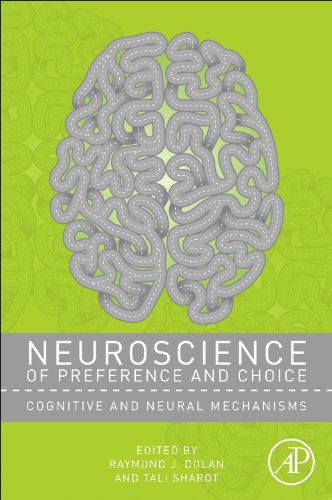

Neuroscience of Preference and Choice : Cognitive and Neural Mechanisms / edited by Raymond J. Dolan and Tali Sharot.
Editor: San Diego : Elsevier Science & Technology, 2012Fecha de copyright: ©2012Descripción: 1 online resource (357 pages)Tipo de contenido:- text
- computer
- online resource
- 9780123814326
- 612.8
- BF611 .N48 2012
| Imagen de cubierta | Tipo de ítem | Biblioteca actual | Biblioteca de origen | Colección | Ubicación en estantería | Signatura topográfica | Materiales especificados | Info Vol | URL | Copia número | Estado | Notas | Fecha de vencimiento | Código de barras | Reserva de ítems | Prioridad de la cola de reserva de ejemplar | Reservas para cursos | |
|---|---|---|---|---|---|---|---|---|---|---|---|---|---|---|---|---|---|---|
| Libro electrónico | Biblioteca de Mayagüez Acceso en línea | BF611 .N48 2012 (Navegar estantería(Abre debajo)) | Ebook c. 1 | Disponible | 50000003289518 | |||||||||||||
| Libro electrónico | Biblioteca Encarnación Valdés Acceso en línea | 612.8 (Navegar estantería(Abre debajo)) | Disponible | EBC787250 |
Descripciones mejoradas de Syndetics:
One of the most pressing questions in neuroscience, psychology and economics today is how does the brain generate preferences and make choices? With a unique interdisciplinary approach, this volume is among the first to explore the cognitive and neural mechanisms mediating the generation of the preferences that guide choice. From preferences determining mundane purchases, to social preferences influencing mating choice, through to moral decisions, the authors adopt diverse approaches to answer the question. Chapters explore the instability of preferences and the common neural processes that occur across preferences. Edited by one of the world's most renowned cognitive neuroscientists, each chapter is authored by an expert in the field, with a host of international contributors.- Emphasis on common process underlying preference generation makes material applicable to a variety of disciplines - neuroscience, psychology, economics, law, philosophy, etc.- Offers specific focus on how preferences are generated to guide decision making, carefully examining one aspect of the broad field of neuroeconomics and complementing existing volumes- Features outstanding, international scholarship, with chapters written by an expert in the topic area
Front Cover -- Neuroscience of Preference and Choice -- Copyright Page -- Contents -- Preface -- Contributors -- I: MECHANISMS -- 1. The Neurobiology of Preferences -- Introduction -- Concepts Of Choice And Preference -- What are the Potential Neural Mechanisms underlying preference -- Conclusion -- References -- 2. Models of Value and Choice -- Introduction -- Reinforcement Learning -- Controllers -- Combination -- Discussion -- Acknowledgments -- References -- 3. Predicting Emotional Reactions: Mechanisms, Bias and Choice -- Introduction -- How We Predict Emotional Reactions -- Biases in Predicting Emotional Reactions -- Conclusion -- Acknowledgments -- References -- II: CONTEXTUAL FACTORS -- 4. The Evolution of Our Preferences: Insights from Non-human Primates -- Introduction -- How Choice Changes Preferences in Adult Humans -- The Origins of Choice-Based Preference Reversals -- How Framing Affects Choice in Adult Humans -- Framing Effects in Capuchin Monkeys -- How Studies of the Origin of Choice Biases Inform Adult Human Decision-Making -- Acknowledgments -- References -- 5. The Effect of Context on Choice and Value -- Introduction -- Brief Historical Overview -- Effect of Context on Choices -- Effect of Context on Values -- The Neurobiology of Loss Aversion -- Conclusions -- Acknowledgments -- References -- 6. Preference Change through Choice -- Introduction -- Choice Blindness -- Choice Blindness and Preference Change for Faces -- Choice Blindness and Preference Change for Risky Choices -- Choice Blindness and Preference Change for Political Opinion -- Discussion -- Acknowledgment -- References -- 7. Set-Size Effects and the Neural Representation of Value -- Introduction -- The Paradox of Choice -- Context-Dependent Choice Behavior -- The Neural Basis of Decision-Making -- Neural Activity and the Effect of Alternatives.
Set-Size Effects and the Neural Representation of Subjective Value -- Conclusion -- References -- III: SOCIAL FACTORS -- 8. Social Factors and Preference Change -- Introduction -- The Presence of Others -- The Behavior and Experience of Others -- The Minds of Others -- Conclusions -- Acknowledgments -- References -- 9. Social and Emotional Factors in Decision-Making: Appraisal and Value -- Introduction -- Emotional Factors -- Social Factors and Emotional Influences -- Conclusions -- References -- IV: PERCEPTUAL FACTORS -- 10. Auditory Preferences and Aesthetics: Music, Voices, and Everyday Sounds -- Introduction -- Annoying Sounds -- Pleasant Environmental Sounds -- Voices -- Music -- Conclusions -- Acknowledgments -- References -- 11. The Flexibility of Chemosensory Preferences -- Introduction -- Needs, Goals and Values in the Flexibility of Chemosensory Preferences -- The Role of Learning and Exposure Factors in the Flexibility of Chemosensory Preferences -- The Role of Other Sensory Inputs and Cognitive Factors in the Flexibility of Chemosensory Preferences -- Conclusion -- References -- 12. Dynamic Preference Formation via Gaze and Memory -- Gaze and Preference -- Novelty Versus Familiarity -- How Does Gaze Interact With Memory in Preference Decision? -- Dynamic and Time-Evolving Process Towards Preference Decision -- References -- V: IMPLICATIONS, APPLICATION AND FUTURE DIRECTION -- 13. Choice Sets as Percepts -- Introduction -- Samuelson Meets Weber -- Search and the Choice Process -- The Drift-Diffusion Model and Small Choice Sets -- Next Steps -- Acknowledgments -- References -- 14. Preferences and Their Implication for Policy, Health and Wellbeing -- Introduction -- Routes to Behavior Change -- Systems for Self-Control -- Behavior Change Interventions -- Conclusion -- Acknowledgments -- References -- Index.
One of the most pressing questions in neuroscience, psychology and economics today is how does the brain generate preferences and make choices? With a unique interdisciplinary approach, this volume is among the first to explore the cognitive and neural mechanisms mediating the generation of the preferences that guide choice. From preferences determining mundane purchases, to social preferences influencing mating choice, through to moral decisions, the authors adopt diverse approaches to answer the question. Chapters explore the instability of preferences and the common neural processes that occur across preferences. Edited by one of the world's most renowned cognitive neuroscientists, each chapter is authored by an expert in the field, with a host of international contributors. Emphasis on common process underlying preference generation makes material applicable to a variety of disciplines - neuroscience, psychology, economics, law, philosophy, etc. Offers specific focus on how preferences are generated to guide decision making, carefully examining one aspect of the broad field of neuroeconomics and complementing existing volumes Features outstanding, international scholarship, with chapters written by an expert in the topic area.
Description based on publisher supplied metadata and other sources.
Electronic reproduction. Ann Arbor, Michigan : ProQuest Ebook Central, 2021. Available via World Wide Web. Access may be limited to ProQuest Ebook Central affiliated libraries.