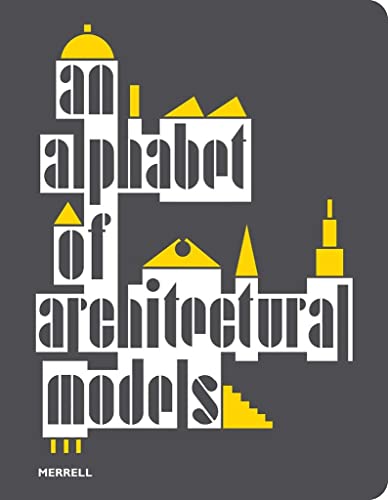

An alphabet of architectural models. / edited by Olivia Horsfall Turner, Simona Valeriani, Matthew Wells, Teresa Fankhänel. txt
Editor: London ; New York : Merrell Publishers, 2021Descripción: 127 p. : ill. ; col. ; 23 cmTipo de contenido:- text
- still image
- unmediated
- volume
- 9781858946979
- 1858946972
- Shaping space. txt
- 23 720.228
- NA2790 A46 2021
| Imagen de cubierta | Tipo de ítem | Biblioteca actual | Biblioteca de origen | Colección | Ubicación en estantería | Signatura topográfica | Materiales especificados | Info Vol | URL | Copia número | Estado | Notas | Fecha de vencimiento | Código de barras | Reserva de ítems | Prioridad de la cola de reserva de ejemplar | Reservas para cursos | |
|---|---|---|---|---|---|---|---|---|---|---|---|---|---|---|---|---|---|---|
| Libro | CARIBET Biblioteca Arquitectura Colección General CARIBET | General NA2790 A46 2021 (Navegar estantería(Abre debajo)) | 1 | Disponible | 91000000067330 |
Descripciones mejoradas de Syndetics:
For thousands of years, architects have used models to invent, experiment and communicate. A world in miniature, such models are even more varied in their purposes and materials than their full-scale counterparts. This beautifully designed book explores the uniquely fascinating nature of the architectural model through 26 illustrated essays, one for each letter of the alphabet - from A for 'Ancient' (on the world's oldest models) to Z for 'Zoom' (on the photography of models). Unbound by the practicalities of life-size construction, models allow architects the flexibility and freedom to think in three dimensions. Whether made for purely speculative exercises or to solve a specific problem, they are aids to the imagination. Equally, they can be used as detailed and accurate representations of particular places (either built or as yet unrealized) in order to convey information to patrons or the public. Models can be made in a wide variety of media, from paper, cork and wood to such ephemeral materials as sugar and jelly. Most recently, the advent of digital technologies has transformed possibilities for prototyping, which in turn has greatly influenced architectural design. Models also have a vibrant life beyond the design process. Souvenir models collected on the Grand Tour, 1:1 scale plaster models of architectural fragments displayed in museums, and architectural toys that have delighted children and adults alike are just some of their manifestations outside the architect's office. Written by architects, model-makers, curators, conservators and scholars, the texts in this absorbing Alphabet explore such varied but fundamental issues as modelling materials and techniques, scale, and the role of the model in the design process. They also go beyond conventional accounts to look at models under the X-ray machine, their use in film, and edible models. The result is a wide-ranging, insightful and original account of the multiple lives of the architectural model.
"Published on the occasion of the exhibition 'Shaping space: architectural models revealed', The Building Centre, London ... 24 September 2021-28 January 2022" -- Seite 128.
Includes index.
Bibliography; pages 117-120.
4 Introduction Olivia Horsfall Turner, Simona Valeriani, Matthew Wells and Teresa Fankheinel --
13 A for Ancient Ulrike Fauerbach --
17 B for Building Biba Dow and Alun Jones --
21 C for Cork Helen Dorey --
25 D for Digital Angel Fernando Lara Moreira --
29 E for Exhibition Spencer de Grey --
33 F for Film Sarine Waltenspiil --
37 G for Gypsum Mari Lending --
41 H for Hand Oliver Elser --
45 I for Inspiration Roz Barr --
49 J for Junk Martin Hartung --
53 K for Kit Vanessa Norwood --
57 L for Landscape Isabelle Warmoes --
61 M for Making George Rome Innes --
65 N for Narrative Nikos Magouliotis --
69 0 for One to One Mary S. Morgan --
73 P for Paper Giovanni Santucci --
77 Q for Quick Rawden Pettitt --
81 R for Representation Ralf Liptau --
85 S for Simulation Hermann Schlimme --
89 T for Toys Charles Hind --
93 U for Urban Patrick Mckeogh --
97 V for Virtual ScanLAB Projects --
101 W for Wood Barnabas Calder --
105 X for X-ray Lisa Nash --
109 Y for Yummy Mark Morris -
113 Z for Zoom Davide Deriu --
117 Select Bibliography --
121 Biographies --
126 Index --
"For thousands of years, architects have used models to invent, experiment and communicate. A world in miniature, such models are even more varied in their purposes and materials than their full-scale counterparts. This elegant book explores the fascinating nature of the architectural model through 26 illustrated essays, one for each letter of the alphabet. Unbound by the practicalities of life-size construction, models allow architects the flexibility and freedom to think in three dimensions. Whether made for purely speculative exercises or to solve a specific problem, they are aids to the imagination. Equally, they can be used as detailed representations of particular places, either built or as yet unrealized, in order to convey information to patrons or the public. Models also have a vibrant life outside the architect's office, including as souvenirs, architectural fragments displayed in museums, and toys for children and adults alike. Written by architects, model-makers, curators, conservators and scholars, the texts in this absorbing Alphabet explore such fundamental issues as modelling materials and techniques, scale, and the role of the model in the design process. They also go beyond conventional accounts to look at models under the X-ray machine, their use in film, and edible models. The result is a wide-ranging, original account of the multiple lives of the architectural model."--Provided by publisher.