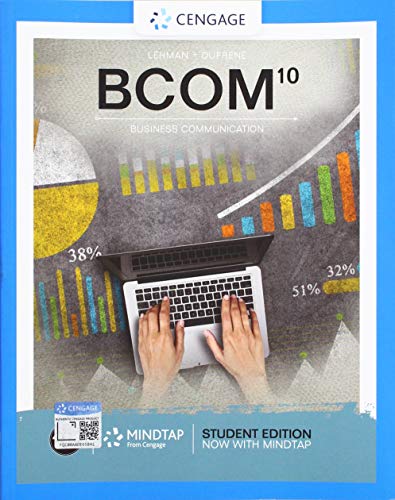

Bcom 10 / Carol Lehman, Debbie DuFrene, Robyn Walker.
Editor: Mason, MA : Cengage Learning, 2020Edición: Tenth editionDescripción: viii, 327 pages : illustrations ; 28 cmTipo de contenido:- text
- unmediated
- volume
- 9780357026595
- Business Communication
- HF5718 .L44 2020
| Imagen de cubierta | Tipo de ítem | Biblioteca actual | Biblioteca de origen | Colección | Ubicación en estantería | Signatura topográfica | Materiales especificados | Info Vol | URL | Copia número | Estado | Notas | Fecha de vencimiento | Código de barras | Reserva de ítems | Prioridad de la cola de reserva de ejemplar | Reservas para cursos | |
|---|---|---|---|---|---|---|---|---|---|---|---|---|---|---|---|---|---|---|
| Libro | Biblioteca de Mayagüez Colección General mb | HF5718 .L44 2020 (Navegar estantería(Abre debajo)) | c. 1 | Disponible | 50000003281390 |
Descripciones mejoradas de Syndetics:
Learn business communications YOUR way with Lehman/DuFrene/Walker's BCOM, 10E from 4LTR Press. This inviting, easy-reference textbook and online digital learning support guide you through mastering today's business communication concepts and skills. Visually engaging chapters offer helpful study tools like Chapter Review Cards that consolidate review material into a ready-made study tool. BCOM's MindTap allows you to learn with the printed book or completely online, on your terms. Read or listen to the book and study with the aid of instructor notifications, flashcards and practice quizzes. When it's time to review, you can easily gather everything you've flagged or noted into a guide you organize. Track your scores so you know where to focus your efforts and stay motivated in reaching your learning and business communication goals.
Includes bibliographical references (pages 315-318) and index.
1. Establishing a Framework for Business Communication -- 2. Focusing on Interpersonal and Group Communication -- 3. Planning and Decision Making -- 4. Preparing Written Messages -- 5. Communicating Electronically -- 6. Delivering Good- and Neutral-News Messages -- 7. Delivering Bad-News Messages -- 8. Delivering Persuasive Messages -- 9. Understanding the Report Process and Research Methods -- 10. Managing Data and Using Graphics -- 11. Organizing and Preparing Reports and Proposals -- 12. Designing and Delivering Business Presentations -- 13. Preparing Resumes and Application Messages -- 14. Interviewing for a Job and Preparing Employment Messages -- Grammar and Usage Appendix -- Style appendix -- References -- Index.
Based on continuous research into students’ workflows and preferences, Lehman/DuFrene/Walker's BCOM, 10E from 4LTR Press offers a unique learning experience for mastering business communication today. BCOM, 10E combines an easy-reference, concise printed text with numerous learning features and Chapter Review Cards and an innovative online experience -- all at an affordable price. New for this edition, MindTap digital learning solution powers students from memorization to mastery of business communication skills. You gain complete control of your course with the ability to provide engaging content, to challenge every individual and to build their confidence. BCOM with MindTap also reintroduces Aplia chapter assignments and includes Concept Check Quizzes and Adaptive Test Prep activities. Empower your business communication students to accelerate their progress with BCOM, 10E and MindTap.
Tabla de contenidos provista por Syndetics
- Part 1 Communication Foundations(p. 2)
- 1 Establishing a Framework for Business Communication(p. 2)
- 1-1 Value of Communication(p. 2)
- 1-2 The Communication Process(p. 3)
- 1-3 Communicating Within Organizations(p. 4)
- 1-3a Communication Flow in Organizations(p. 5)
- 1-3b Levels of Communication(p. 8)
- 1-4 Contextual Forces Influencing Business Communication(p. 8)
- 1-4a Legal and Ethical Constraints(p. 9)
- 1-4b Diversity Challenges(p. 12)
- 1-4c Changing Technology(p. 15)
- 1-4d Team Environment(p. 17)
- 2 Focusing Interpersonal and Group Communication(p. 22)
- 2-1 Behavioral Theories That Impact Communication(p. 22)
- 2-1a Recognizing Human Needs(p. 22)
- 2-1b Stroking(p. 23)
- 2-1c Exploring the Johan Window(p. 23)
- 2-1d Contrasting Management Styles(p. 24)
- 2-2 Nonverbal Communication(p. 25)
- 2-2a Metacommunication(p. 25)
- 2-2b Kineslc Messages(p. 25)
- 2-2c Other Nonverbal Messages(p. 26)
- 2-26 Understanding Nonverbal Messages(p. 27)
- 2-3 Listening as a Communication Skill(p. 28)
- 2-3a Listening for a Specific Purpose(p. 28)
- 2-3b Bad Listening Habits(p. 29)
- 2-4 Group Communication(p. 30)
- 2-4a Increasing Focus on Groups(p. 30)
- 2-4b Characteristics of Effective Groups(p. 32)
- 2-4c Group Roles(p. 33)
- 2-4d From Groups to Teams(p. 33)
- 2-4e Decision Making(p. 35)
- 2-5 Meeting Management(p. 37)
- 2-5a Face-to-Face Meetings(p. 38)
- 2-5b Electronic Meetings(p. 39)
- 2-5c Suggestions for Effective Meetings(p. 39)
- Part 2 Communication Analysis(p. 42)
- 3 Planning and Decision Making(p. 42)
- 3-1 Step 1: Consider the Applicable Contextual Forces(p. 43)
- 3-7a Organizational Culture(p. 43)
- 3-1b Dimensions of Context(p. 44)
- 3-2 Step 2: Determine the Purpose, and Select an Appropriate Channel and Medium(p. 45)
- 3-2a Selecting the Channel and Medium(p. 45)
- 3-3 Step 3: Envision the Audience(p. 47)
- 3-4 Step 4: Adapt the Message to the Audience's Needs and Concerns(p. 51)
- 3-4a Focus on the Audience's Point of View(p. 51)
- 3-4b Communicate Ethically and Responsibly(p. 51)
- 3-5 Step 5: Organize the Message(p. 53)
- 3-5a Outline to Benefit the Sender and the Audience(p. 53)
- 3-5b Sequence Ideas to Achieve Desired Goals(p. 53)
- 4 Preparing Written Messages(p. 58)
- 4-1 The Genre of Business Writing(p. 58)
- 4-2 Effective Introductions, Coherent Paragraphs, and Powerful Sentences(p. 60)
- Step 6 Prepare the First Draft(p. 60)
- 4-2a Select the Type of Introduction(p. 61)
- 4-2b Develop Coherent Paragraphs(p. 61)
- 4-2c Craft Powerful Sentences(p. 64)
- 4-2d Select the Appropriate Conclusion(p. 65)
- 4-3 Revise to Grab Your Audience's Attention(p. 66)
- 4-3a Cultivate a Frame of Mind for Effective Revising and Proofreading(p. 66)
- 4-3b Apply Visual Enhancements to Improve Readability(p. 67)
- 4-4 Improve Readability(p. 68)
- Step 7 Revise for Style and Tone(p. 68)
- 4-4a Improve Readability(p. 68)
- 4-4b Eliminate Outdated Expressions(p. 69)
- 4-4c Curb Clichés(p. 69)
- 4-4d Eliminate Profanity(p. 69)
- 4-4e Use Simple, Informal Words(p. 71)
- 4-4f Communicate Concisely(p. 71)
- 4-4g Project a Positive, Tactful Tone(p. 73)
- 4-4h Use Euphemisms Cautiously(p. 74)
- 4-4i Avoid Condescending or Demeaning Expressions(p. 75)
- 4-4j Use Connotative Tone Cautiously(p. 75)
- 4-4k Use Specific Language Appropriately(p. 76)
- 4-4l Use Bias-Free Language(p. 77)
- 4-5 Proofread and Revise(p. 78)
- Part 3 Communication Through Voice, Electronic, and Written Messages(p. 82)
- 5 Communicating Electronically(p. 82)
- 5-1 Data Security(p. 82)
- 5-2 Appropriate Use of Technology(p. 83)
- 5-2a Determine the Purpose of the Message(p. 83)
- 5-2b Determine Whether the Information Is Personal or Confidential(p. 84)
- 5-2c Decide Whether Positive Human Relations Are Sacrificed(p. 84)
- 5-3 Electronic Mail Communication(p. 84)
- 5-3a Advantages of Email(p. 84)
- 5-3b Guidelines for Preparing Email Messages(p. 84)
- 5-3c Effective Use of Email(p. 86)
- 5-3d Instant and Text Messaging(p. 88)
- 5-3e Text Messaging(p. 89)
- 5-3f Electronic Messages and the Law(p. 90)
- 5-4 Web Page Communication and Social Media(p. 91)
- 5-4a Writing for a Website(p. 92)
- 5-4b Social Media(p. 93)
- 5-5 Voice and Wireless Communication(p. 95)
- 5-5a Voice Mail Communication(p. 95)
- 5-5b Cellphone Communication(p. 95)
- 5-6 Collaborating in Virtual Teams(p. 97)
- 5-6a Channels of Virtual Collaboration(p. 97)
- 5-6b Virtual Team Collaboration Tools(p. 98)
- 6 Delivering Good- and Neutral-News Messages(p. 100)
- 6-1 Deductive Organizational Pattern(p. 100)
- 6-2 Good-News Messages(p. 101)
- 6-2a Positive News(p. 102)
- 6-2b Thank-You and Appreciation Messages(p. 102)
- 6-3 Routine Claims(p. 105)
- 6-3a Claim Message(p. 105)
- 6-3b Favorable Response to a Claim Message(p. 105)
- 6-4 Routine Requests(p. 107)
- 6-4a Requests for Information(p. 107)
- 6-4b Favorable Response to a Routine Request(p. 108)
- 6-4c Positive Response to a Favor Request(p. 108)
- 6-4d Form Messages for Routine Responses(p. 109)
- 6-5 Routine Messages About Orders and Credit(p. 111)
- 6-5a Acknowledging Customer Orders(p. 111)
- 6-5b Providing Credit Information(p. 112)
- 6-5c Extending Credit(p. 112)
- 6-6 Procedural Messages(p. 114)
- 7 Delivering Bad-News Messages(p. 118)
- 7-1 Choosing an Appropriate Channel and Organizational Pattern(p. 118)
- 7-1a Channel Choice and Commitment to Tact(p. 118)
- 7-1b Use of the Inductive Approach to Build Goodwill(p. 119)
- 7-1c Exceptions to the Inductive Approach(p. 120)
- 7-2 Developing a Bad-News Message(p. 121)
- 7-2a Writing the Introductory Paragraph(p. 121)
- 7-2b Presenting the Facts, Analysis, and Reasons(p. 122)
- 7-2c Writing the Bad-News Statement(p. 122)
- 7-2d Offering a Counterproposal or "Silver Lining" Idea(p. 123)
- 7-2e Closing Positively(p. 124)
- 7-3 Refusing a Request(p. 125)
- 7-4 Denying a Claim(p. 127)
- 7-5 Denying Credit(p. 129)
- 7-6 Delivering Constructive Criticism(p. 130)
- 7-7 Communicating Negative Organizational News(p. 132)
- 7-7a Breaking Bad News(p. 132)
- 7-7b Responding to Crisis Situations(p. 135)
- 8 Delivering Persuasive Messages(p. 138)
- 8-1 Persuasion Strategies(p. 138)
- 8-1a Plan Before You Write(p. 138)
- 8-1b Use the inductive Approach(p. 140)
- 8-1c Apply Sound Writing Principles(p. 140)
- 8-2 Sales Messages(p. 141)
- 8-2a Gain Attention(p. 141)
- 8-2b Focus on a Central Selling Feature(p. 142)
- 8-2c Use an Original Approach(p. 142)
- 8-2d Generate Interest by Introducing the Product, Service, or Idea(p. 143)
- 8-2e Create Desire by Providing Convincing Evidence(p. 144)
- 8-2f Motivate Action(p. 146)
- 8-3 Persuasive Requests(p. 147)
- 8-3a Making a Claim(p. 147)
- 8-3b Asking a Favor(p. 147)
- 8-3c Requesting Information(p. 150)
- 8-3d Persuading Within an Organization(p. 150)
- Part 4 Communication Through Reports and Business Presentations(p. 156)
- 9 Understanding the Report Process and Research Methods(p. 156)
- 9-1 Characteristics of Reports(p. 156)
- 9-1a Types of Reports(p. 157)
- 9-1b Proposals(p. 159)
- 9-2 Basis for Reports: The Problem-Solving Process(p. 159)
- 9-2a Recognizing and Defining the Problem(p. 159)
- 9-3 Selecting a Method of Gathering Information(p. 161)
- 9-3a Secondary Research(p. 161)
- 9-3b Primary Research(p. 163)
- 9-4 Collecting and Organizing the Data(p. 164)
- 9-4a Collecting Secondary Data(p. 164)
- 9-4b Collecting Data Through Surveys(p. 165)
- 9-4c Avoiding Data-Gathering Errors(p. 169)
- 9-4d Documenting Sources of Information(p. 169)
- 9-5 Arriving at an Answer(p. 170)
- 9-5a Analyzing the Data(p. 170)
- 9-5b Interpreting the Data(p. 172)
- 10 Managing Data and Using Graphics(p. 174)
- 10-1 Communicating Quantitative Information(p. 174)
- 10-2 Using Graphics(p. 175)
- 10-2a Effective and Ethical Use of Graphics(p. 176)
- 10-3 Types of Graphic Aids(p. 177)
- 10-3a Tables(p. 178)
- 10-3b Bar Charts(p. 178)
- 10-3c Line Charts(p. 180)
- 10-3d Pie Charts(p. 181)
- 10-3e Maps(p. 181)
- 10-3f Flowcharts(p. 181)
- 10-3g Other Graphics(p. 183)
- 10-4 Including Graphics in Text(p. 183)
- 10-4a Positioning Graphics in Text(p. 185)
- 11 Organizing and Preparing Reports and Proposals(p. 186)
- 11-1 Parts of a Formal Report(p. 186)
- 11-1a Preliminary Parts of a Report(p. 187)
- 11-1b Report Text(p. 190)
- 11-1c Report Addenda(p. 190)
- 11-2 Organization of Formal Reports(p. 191)
- 11-2a Writing Convincing and Effective Reports(p. 191)
- 11-3 Choosing a Writing Style for Formal Reports(p. 194)
- 11-3a Enhancing Credibility(p. 195)
- 11-4 Short Reports(p. 195)
- 11-4a Memorandum, Email, and Letter Reports(p. 195)
- 11-4b Form Reports(p. 195)
- 11-5 Proposals(p. 201)
- 11-5a Proposal Structure(p. 201)
- 11-5b Proposal Preparation(p. 203)
- 12 Designing and Delivering Business Presentations(p. 206)
- 12.1 Planning an Effective Business Presentation(p. 206)
- 12-1a Identify Your Purpose and Consider the Channel(p. 207)
- 12-1b Know Your Audience and Consider the Context(p. 208)
- 12-2 Organizing the Content(p. 209)
- 12-2a Introduction(p. 209)
- 12-2b Body(p. 210)
- 12-2c Closing(p. 212)
- 12-3 Designing Compelling Presentation Visuals(p. 212)
- 12-3a Designing Presentation Visuals(p. 213)
- 12-3b Adding Multimedia to PowerPoint Presentations(p. 215)
- 12-3c Design Tips for Audience Handouts and Notes Pages(p. 217)
- 12-4 Refining Your Delivery(p. 217)
- 12-4a Delivery Method(p. 217)
- 12-4b Vocal Qualities(p. 217)
- 12-4c Delivery Style(p. 219)
- 12-5 Adapting to Alternate Delivery Situations(p. 222)
- 12-5a Culturally Diverse Audiences(p. 222)
- 12-5b Team Presentations(p. 224)
- 12-5c Distance Presentations(p. 226)
- 12-5d Crisis Communication(p. 227)
- Part 5 Communication for Employment(p. 230)
- 13 Preparing Résumés and Application Messages(p. 230)
- 13-1 Preparing for the Job Search(p. 230)
- 13-1a Gathering Essential Information(p. 230)
- 13-1b Identifying Potential Career Opportunities(p. 231)
- 13-2 Planning a Targeted Résumé(p. 235)
- 13-2a Standard Parts of a Résumé(p. 236)
- 13-2b Types of Résumés(p. 240)
- 13-3 Preparing Résumés for Print and Electronic Delivery(p. 241)
- 13-3a Preparing a Print (Designed) Resume(p. 242)
- 13-3b Preparing Electronic Resume Submissions(p. 244)
- 13-4 Supplementing a Resume(p. 250)
- 13-4a Professional Portfolios(p. 250)
- 13-4b Employment Video(p. 252)
- 13-5 Composing Application Messages(p. 252)
- 13-5a Persuasive Organization(p. 254)
- 13-5b General Writing Guidelines(p. 256)
- 13-5c Finishing Touches(p. 257)
- 14 Interviewing for a Job and Preparing Employment Messages(p. 260)
- 14-1 Understanding Types of Employment Interviews(p. 260)
- 14-1a Structured Interviews(p. 260)
- 14-1b Unstructured Interviews(p. 261)
- 14-1c Stress Interviews(p. 262)
- 14-1d Series Interviews(p. 262)
- 14-1e Phone interviews(p. 262)
- 14-1f Virtual Interviews(p. 262)
- 14-2 Preparing for an Interview(p. 263)
- 14-2a Research the Company(p. 263)
- 14-2b Study Yourself(p. 263)
- 14-2c Plan Your Appearance(p. 264)
- 14-2d Plan Your Time and Materials(p. 264)
- 14-2e Practice(p. 264)
- 14-3 Conducting a Successful Interview(p. 264)
- 14-3a The Opening Formalities(p. 264)
- 14-3b The Information Exchange(p. 265)
- 14-3c The Closing(p. 270)
- 14-3d Additional Considerations for Phone Interviews(p. 270)
- 14-4 Preparing Other Employment Messages(p. 270)
- 14-4a Application Forms(p. 270)
- 14-4b Follow-Up Messages(p. 270)
- 14-4c Thank-You Messages(p. 271)
- 14-4d Job-Acceptance Messages(p. 272)
- 14-4e Job-Refusal Messages(p. 272)
- 14-4f Resignation Messages(p. 272)
- 14-4g Recommendation Requests(p. 274)
- Grammars & Usage Appendix(p. 276)
- Style Appendix(p. 300)
- References(p. 315)
- Index(p. 319)