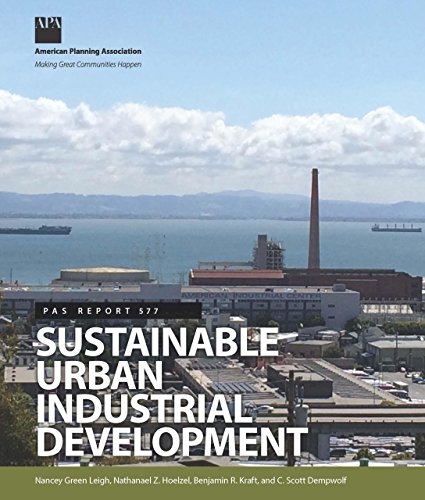

Sustainable urban industrial development. Nancey Green Leigh, Nathanael Z. Hoelzel, Benjamin R. Kraft, and C. Scott Dempwolf. txt
Series Report (American Planning Association. Planning Advisory Service). 577 Chicago, IL : American Planning Association, 2014Descripción: 68 p. ill. 26 cmTipo de contenido:- text
- unmediaded
- volume
- 9781611901252
- 1611901251
- 23 307.1416
- NA9108 A545 2014
| Imagen de cubierta | Tipo de ítem | Biblioteca actual | Biblioteca de origen | Colección | Ubicación en estantería | Signatura topográfica | Materiales especificados | Info Vol | URL | Copia número | Estado | Notas | Fecha de vencimiento | Código de barras | Reserva de ítems | Prioridad de la cola de reserva de ejemplar | Reservas para cursos | |
|---|---|---|---|---|---|---|---|---|---|---|---|---|---|---|---|---|---|---|
| Libro | CARIBET Biblioteca Arquitectura Colección General CARIBET | General NA9108 A545 2014 (Navegar estantería(Abre debajo)) | 1 | Disponible | 91000000043240 |
Descripciones mejoradas de Syndetics:
For many communities, promoting job creation is job one. How can city planners stoke the employment engine of industry while keeping their communities green and clean?
Sustainable Urban Industrial Development makes the case for local industrial policies geared to the needs of cities and suburbs. Authors Leigh and Hoelzel set forth strategies for selecting sites where people who need the work can get to the jobs. The report covers best practices for job training, industrial incubators, and support for entrepreneurs, including women and minorities. Economic development planners will learn how they can expect manufacturing to affect local tax revenues and the cost of city services. And city planners will find fresh ways of thinking about brownfields and the place of industry in smart growth.
Case studies show how innovation and inspiration have paid off for large cities and smaller urban areas across the United States. Readers will come away with a better understanding of the planner's role in putting industrial development to work.
Includes bibliographical references.
CHAPTER 1. INTRODUCTION --
Characterizing Twenty-First Century Industry --
A Note on the Geographic Scope --
Motivation and Conceptual Framework --
CHAPTER 2. ANALYZING LOCAL CONDITIONS --
Industrial Land Inventory --
Surveys, Focus Groups, and Workshops --
Real Estate Market Analyses --
Fiscal Impact Analyses --
Economic Impact Analyses --
Industrial Market Analyses and Supply Chain Analyses --
Recommendations --
CHAPTER 3. MOVING FROM ANALYSIS TO PLANNING: ESTABLISHING AN INDUSTRIAL STRATEGY --
Land-Use Controls for Industrial Land-Use Preservation --
Emphasizing Industrial Land Preservation in Area Planning --
Using National Resources and Aligning with Federal Manufacturing Policy --
CHAPTER 4. STRATEGIES AND TOOLS FOR INDUSTRIAL REDEVELOPMENT --
Design and Siting Strategies for Industrial Land and Buildings --
Infrastructure --
Brownfields --
Financing --
Business Improvement Districts --
An Opportunity for Equitable Economic Development --
CHAPTER 5. RESOURCES AND PARTNERSHIPS FOR A HOLISTIC INDUSTRIAL STRATEGY --
Fostering Industrial Entrepreneurship --
Industrial Business Retention and Expansion --
Education and Workforce Development --
Industry and the "Green" Economy --
Industrial Support and Collaboration --
Resources and Planning --
CHAPTER 6. CASE STUDIES OF SUSTAINABLE INDUSTRIAL URBAN DEVELOPMENT --
San Jose, California --
Menomonee Valley, Milwaukee --
Philadelphia --
Case Study Summary --
CHAPTER 7. CONCLUSION --
REFERENCES --
For many communities, promoting job creation is job one. How can city planners stoke the employment engine of industry while keeping their communities green and clean?
Sustainable Urban Industrial Developmentmakes the case for local industrial policies geared to the needs of cities and suburbs. Authors Leigh and Hoelzel set forth strategies for selecting sites where people who need the work can get to the jobs. The report covers best practices for job training, industrial incubators, and support for entrepreneurs, including women and minorities. Economic development planners will learn how they can expect manufacturing to affect local tax revenues and the cost of city services. And city planners will find fresh ways of thinking about brownfields and the place of industry in smart growth.
Case studies show how innovation and inspiration have paid off for large cities and smaller urban areas across the United States. Readers will come away with a better understanding of the planner's role in putting industrial development to work.
Notas de autor provistas por Syndetics
Nancey Green Leigh is a professor and director of the Ph.D. program in city and regional planning at the Georgia Institute of Technology in Atlanta.
Nathanael Z. Hoelzel is a past manager of Cleveland's industrial-commercial land bank and brownfield redevelopment programs.