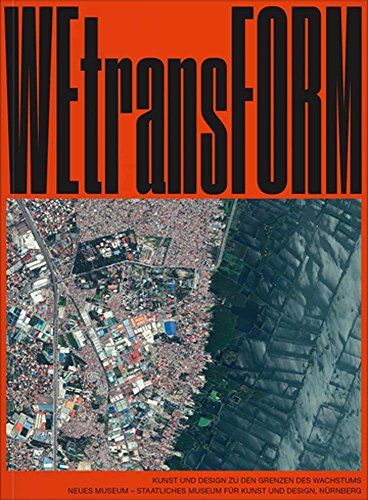

WeTransform : Kunst und design zu den Gretzen des Wachstums. / txt
Alemania : Wien Verlag , 2016Descripción: 121p. ill. ; 23cmTipo de contenido:- text
- unmediaded
- volume
- 9783903131262
- N6350 K738 2016
| Imagen de cubierta | Tipo de ítem | Biblioteca actual | Biblioteca de origen | Colección | Ubicación en estantería | Signatura topográfica | Materiales especificados | Info Vol | URL | Copia número | Estado | Notas | Fecha de vencimiento | Código de barras | Reserva de ítems | Prioridad de la cola de reserva de ejemplar | Reservas para cursos | |
|---|---|---|---|---|---|---|---|---|---|---|---|---|---|---|---|---|---|---|
| Libro | CARIBET Biblioteca Arquitectura Colección General CARIBET | General N6350 K738 2016 (Navegar estantería(Abre debajo)) | 1 | Disponible | Pres. 2016-2017 | 91000000060004 |
Descripciones mejoradas de Syndetics:
WEtransFORM brings together more than 30 internationally renowned artists and designers from around the world on such alarming themes as the rapidly dwindling natural reserves of drinking water, fossil fuels (especially oil), food and soil, or the use of rare earth elements by the global computer industry.This publication combines statements on our species' striking ecological footprint with works on the growing islands of plastic in the oceans and mountains of rubbish on land. It assesses the situation with pictures of the way humans have reshaped Earth's surface: the way we alter our world brings endless new suggestions for improvements and approaches to solving problems we ourselves have created.As well as dystopian scenarios, WEtransFORM also offers insights into the intensive search for alternatives and presents new dialogues between humankind and nature: counter-models to traditional energy sources, examples of fair production, action taken to reduce consumption and renounce status symbols, personal guidelines for environmentally friendly lifestyles, and models for fairer distribution of resources.Featuring the work of Mark Dion, Richard Buckminster Fuller, Tue Greenfort, SUPERFLEX, and many others.Classic environmentalist literature is usefully referenced throughout the resource-index of this publication. Titles include: Walden (Henry David Thoreau), Silent Spring (Rachel Carson), Small is Beautiful (E.F. Schumacher), and the Whole Earth Catalog.Published on the occasion of the exhibition WEtransFORM at Neues Museum Nürnberg, 18 March - 19 June 2016.English and German text
Index:
Art and Design on the Limits to Growth Eva Kraus and Martina Fineder 4 --
Kunst und Design zu den Grezen des Wachstums Eva Kraus and Martina Fineder 5 --
Between Dystopia and Utopia Marina Fineder 10 --
Zwischen Dystopie und Utopie Martina Fineder 11 --
1. Do not Fly. 29 --
2. Recycle 38 --
3. Use a bicycle or public transportation instead of a car. 39 --
4. Avoid any products with plastic packages 52 --
5. Avoid heating and air conditioning, if possible 53 --
6. Avoid any products that come from far away 62 --
7. If you’re not really sure you need it, don’t buy it. 63 --
8. Do not produce more than 2 children 78 --
9. Do not cultivate, build on or otherwise consume virgin land or water. 79 --
10. Make all these steps easy and cheap for yourself and others to achieve 96 --
Tons - Temple of No Shopping 98 --
Tons - Temple of No Shopping 99 --
Raumplan / Index 100 --
A - Weltbilder Der Globalisierung / Images of Globalization 101 --
B - Werkzeuge Für Die Designrevolution / Tools for the Design Revolution 104 --
C - Gestalten Für Die Wirkliche Welt / Designing for the actual World 106 --
D – Walden 108 --
E - Welt Ernähren / Feeding The World 110 --
F - Müllplanet / Planet Trash 112 --
G – Die Erde Wird Geplündert / Plundering The Earth 115 --
Acknowledgements 118 --
Danksgung 119 --
Impressium / Imprint and Ausstellung / Exhibition 120 --
Mitarbeiter / Staff 121 --
Fotocredits / Photocredits and Vertrieb / Distribution 122 --
WEtransFORM brings together more than thirty internationally renowned artists and designers from around the world on such alarming themes as the rapidly dwindling natural reserves of drinking water, fossil fuels (especially oil), food and soil, or the use of rare earth elements by the global computer industry --