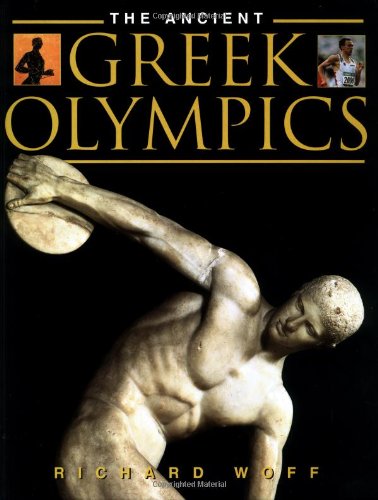

The ancient Greek Olympics Richard Woff.
Detalles de publicación: New York Oxford University Press 1999.Descripción: 32 p. ill. (some col.) 29 cmISBN:- 0195215818
- 796.48 21
- GV23 .W64 1999
| Imagen de cubierta | Tipo de ítem | Biblioteca actual | Biblioteca de origen | Colección | Ubicación en estantería | Signatura topográfica | Materiales especificados | Info Vol | URL | Copia número | Estado | Notas | Fecha de vencimiento | Código de barras | Reserva de ítems | Prioridad de la cola de reserva de ejemplar | Reservas para cursos | |
|---|---|---|---|---|---|---|---|---|---|---|---|---|---|---|---|---|---|---|
| Libro | Biblioteca de Mayagüez Colección General mb | GV23 .W64 1999 (Navegar estantería(Abre debajo)) | Disponible | 50000003206520 |
Descripciones mejoradas de Syndetics:
The ancient Greeks were famous for their love of competition and athleticism. Their most important sporting festival, held at Olympia and honoring Zeus, became the inspiration for our modern Olympic games. It was open to the citizens of every Greek polis, and became so important, that all warfare had to be suspended for its duration. This book runs through the entire five-day session of the ancient games. The athletes' training and the actual sporting events--some familiar, some quite strange to the modern reader--are described in vivid detail and illustrated with both classical art from the collections of the British Museum and photographs of the modern Games. Day Two, for instance, starts with morning activities (a procession into the hippodrome, chariot and horse races), followed by the afternoon pentathlon events (discus, javelin, running, jumping, and wrestling), and ends with the evening celebration (winners' parade, victory hymns, feast, and revels). Supplemental sidebars--such as Homer's description of Odysseus' triumphant discus throw and an explanation of why athletes and trainers had to appear naked--add lively, colorful detail. Commentary on the modern Games and a running comparison of modern and ancient athletic events is scattered throughout the book, providing an important historical perspective on today's Olympics. Three supplemental chapters--"Women at the Olympics," "Games Elsewhere in Greece," and "The End of the Olympics"--complete this fascinating look at ancient Greek customs, competitive spirit, and character.
Includes bibliographical references (p. 32) and index.
Describes the history, traditions, and competitive events connected with the Olympic games held in ancient Greece.