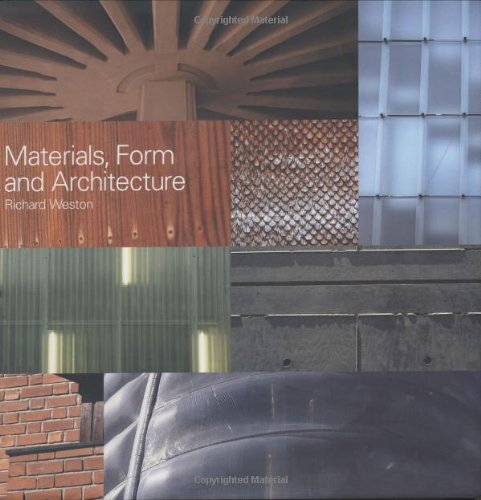

Materials, Form and Architecture/ Richard Weston
Idioma: Español Detalles de publicación: New Haven Conn Yale University Press 2003Descripción: 1v.On paged ill. (chiefly col) 26cmISBN:- 0300095791
- TA403.6 .W48 2003
| Imagen de cubierta | Tipo de ítem | Biblioteca actual | Biblioteca de origen | Colección | Ubicación en estantería | Signatura topográfica | Materiales especificados | Info Vol | URL | Copia número | Estado | Notas | Fecha de vencimiento | Código de barras | Reserva de ítems | Prioridad de la cola de reserva de ejemplar | Reservas para cursos | |
|---|---|---|---|---|---|---|---|---|---|---|---|---|---|---|---|---|---|---|
| Libro | CARIBET Biblioteca Arquitectura Colección General CARIBET | TA403.6.W48 2003 (Navegar estantería(Abre debajo)) | Disponible | 91000000007138 |
Descripciones mejoradas de Syndetics:
After a century largely dominated by discussions of space and form, there is now renewed interest in the material and tectonic aspects of architecture. This richly illustrated and handsomely designed book takes a detailed and timely look at the importance of materials in architecture, focusing particularly on modern and contemporary buildings. Noted architecture expert Richard Weston begins with a brief cultural history of major building materials--such as timber, earth, stone, steel, and glass--exploring how they have been produced, considered, worked, and used in a variety of buildings and cultures. He then explores the ways that architects, theorists, and critics have articulated the relationship between materials and architectural forms and spaces throughout modern history. Other featured topics include the importance of place, time, junctions, finish, and meaning; the proposition that in an increasingly global and virtual world, many architects emphasize the material qualities of buildings to ensure a heightened sense of reality; and a comprehensive survey of current and prospective developments in materials, from refinements of such familiar materials as fiber-reinforced concrete and "intelligent" glass to new synthetic compounds and working methods. Together, these varied perspectives on the material art of building offer fascinating insights into the impact that the type and treatment of materials has on how buildings can be constructed and designed, how they function, and how they fare over time.
Include bibliographical references.