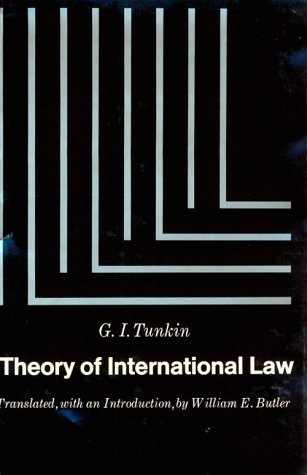

Theory of international law G. I. Tunkin ; translated with an introd. by William E. Butler.
Detalles de publicación: Cambridge, Mass. Harvard University Press 1974.Descripción: xxv, 497 p. 24 cmISBN:- 0674880013
| Imagen de cubierta | Tipo de ítem | Biblioteca actual | Biblioteca de origen | Colección | Ubicación en estantería | Signatura topográfica | Materiales especificados | Info Vol | URL | Copia número | Estado | Notas | Fecha de vencimiento | Código de barras | Reserva de ítems | Prioridad de la cola de reserva de ejemplar | Reservas para cursos | |
|---|---|---|---|---|---|---|---|---|---|---|---|---|---|---|---|---|---|---|
| Libro | Biblioteca de Derecho Mons. Fremiot Torres Oliver Colección General biblioteca derecho | KZ 3405 .T87 A3813 1974 (Navegar estantería(Abre debajo)) | Disponible | 70000000008289 |
Descripciones mejoradas de Syndetics:
The 1970s promised important readjustments in relations among the great powers, perhaps a reconstituted Europe and Asia, as well as a possible new role for third world countries. National attitudes toward the law of nations both shaped and reflected developments of this nature. As a great power, the Soviet Union was a principal actor in what transpired, but until now there has been no systematic exposition in the English language of how Soviet jurists regarded the world legal order.The present volume, published in Moscow in 1970, is the most profound and comprehensive study of international legal theory yet produced by a Soviet jurist. Its author, who holds the Chair of International Law at Moscow State University and for many years was the legal adviser to the USSR Ministry of Foreign Affairs, is widely credited with elaborating the juridical underpinnings of peaceful coexistence in the USSR from the mid-1950s. This book, earlier versions of which have appeared in Eastern and Western Europe, contains the fullest statement of his views.Tunkin traces the development and shaping of international law since 1917, the processes of forming and modifying international legal rules, and the nature of state responsibility under the law of nations. Of special interest to the general reader and specialist in international affairs will be Tunkin's extensive discussion of the interaction among international law, foreign policy, and diplomacy; of the legal nature of international organizations; of the principal factors at work in international politics; and of the nature of legal ties among socialist countries. The latter has been a special concern following the Czechoslovak events of 1968 and the adoption of a comprehensive program for economic integration among socialist states.For this American edition, Tunkin has brought his book up to date and Dr. Butler has supplied an introduction, a translation note, a list of the author's publications, and a glossary of Russian international legal terms.
Translation of Teorii︠a︡ mezhdunarodnogo prava.
Previously classified under: JX 1245 .T8113 1974
Includes bibliographical references and indexes.
Tabla de contenidos provista por Syndetics
- Introduction
- Translation Note
- Part I The Development of International Law Since The Great October Socialist Revolution
- Chapter 1 The International Legal Ideas of the October Revolution and the Making of Contemporary International Law
- A The Principles of Socialist Internationalism
- B The Principles of Equality and of Self-Determination of Nations
- C The Principles of Peaceful Coexistence
- Chapter 2 Peaceful Coexistence and General International Law. The Influence of the Breakup of the Colonial System
- A The Unfoundedness of the Theory That the Developmental Base of International Law Is Contracting
- B Peaceful Coexistence of States with Different Social Systems and GeneralInternational Law
- Chapter 3 Modification of the Fundamental Principles of International Law During the Period of Coexistence of the Two Systems
- A The Emergence of New Principles of International Law
- (1) The principle of nonaggression
- (2) The principle of peaceful settlement of disputes
- (3) The principle of self-determination of peoples
- (4) The principle of peaceful coexistence
- (5) The principle of disarmament
- (6) The principle of respect for human rights
- (7) The prohibition of war propaganda
- B The Development and Strengthening of the Old Democratic Principles of International Law
- Part II The Process of Forming Norms of Contemporary General International Law
- Chapter 4 The Basic Processes of Forming Norms of International Law
- A International Treaties
- (1) Treaties between states
- (2) Treaties between states concluded within the framework of international organizations
- (3) Regulations adopted by specialized international organizations
- (4) Treaties of international organizations
- B International Custom
- (1) Elements of a customary norm of international law
- (2) A customary norm as the result and embodiment of tacit consent. The operative sphere of a customary norm
- C Treaty and Custom in Contemporary International Law
- (1) The predominant role of the treaty in the development of international law
- (2) The international treaty and general international law
- (3) The interaction of treaty and custom
- D The Principles of Jus Cogens
- Chapter 5 Subsidiary Processes of Forming Norms of International Law
- A Resolutions of the United Nations General Assembly
- B Recommendations of Specialized International Organizations
- C Decisions of the International Court and of International Arbitration Tribunals
- D National Legislation and Decisions of National Judicial Instances
- Chapter 6 Doctrine and the Opinions of Social Organizations
- A International Legal Doctrine
- B Opinions and Resolutions of Social and Scientific Organizations
- Chapter 7 The Problem of "General Principles of Law"
- Part III The Legal Nature and Essence of Contemporary General International Law
- Chapter 8 The Legal Nature of Agreement as the Mode of Creating Norms of International Law
- A The Bourgeois Doctrine of "Agreement"
- B Agreement as the Result and the Embodiment of the Concordance of the Wills of States
- C The International Legal Positions of States and Concordant Wills Reflected in Norms of International Law
- D The Unfoundedness of the Concept of the "Fundamental Norm"
- Chapter 9 The Character and Essence of Contemporary General International Law
- A Bourgeois Science on the Social Nature of International Law
- B The Societal Laws of the Development of International Law
- (1) The laws of societal development and international law
- (2) The unfoundedness of the bourgeois concept of ubi societas ibi jus
- (3) International law and international organization
- C Modification of the Character and Essence of General International Law During the Past Half-Century
- (1) Fundamental changes in general international law since the Great October Socialist Revolution
- (2) The position of bourgeois practice and doctrine on the question of changes in international law
- D The Question of an "Intermediate Status" Between War and Peace
- Part IV International Law, Foreign Policy, and Diplomacy
- Chapter 10 The Influence of Foreign Policy and Diplomacy Upon the Development of International Law
- Chapter 11 The Influence of International Law on Foreign Policy and Diplomacy
- Chapter 12 International Law as a Support for Foreign Policy
- Part V The Legal Nature of Contemporary General International Organizations
- Chapter 13 The Laws of Societal Development and International Organizations
- A The Internationalization of Economic Life and International Organizations
- B Coexistence of the Two Opposed Social Systems and International Organizations
- C The Breakup of the Colonial System and International Organizations
- D The Existence of Sovereign States and International Organizations
- Chapter 14 The Basic Features of the Legal Nature of General International Organizations. The Charter as the Basis of an Organization's Activity
- A Charters of International Organizations: Treaties or Constitutions?
- B The Jurisdiction of International Organizations
- (1) The concept of "inherent jurisdiction"
- (2) The concept of "implied powers"
- C Amending the Charters of International Organizations
- Chapter 15 The Basic Features of the Legal Nature of Contemporary General International Organizations (continued)
- A The Interstate Character of General International Organizations
- (1) The principle of the equality of states in international organizations
- (2) The right to withdraw from an international organization
- B International Organizations as Organs of Peaceful Coexistence
- C The International Legal Personality of International Organizations
- (1) The legal basis and extent of the legal personality of international organizations
- (2) The legal personality of international organizations and third states
- Chapter 16 The Problem of a World State and Prospects for the Development of International Organizations
- A Bourgeois Concepts of a World State
- B Marxism and the Problem of a World State
- C Ways of Strengthening the United Nations
- Part VI The General Character and Forms of State Responsibility Under International Law
- Chapter 17 The Character of State Responsibility Under International Law Before the Great October Socialist Revolution
- Chapter 18 State Responsibility Under Contemporary International Law
- A The Concept of the International Legal Criminal Responsibility of a State
- B Some New Aspects of State Responsibility
- (1) Prohibition of the use of force and state responsibility
- (2) Subjects of legal relations in instances of international legal state responsibility
- (3) Types and forms of state responsibility in contemporary international law
- Part VII International Law in Relations Between the Countries of the World System of Socialism
- Chapter 19 Socialist International Legal Principles and Norms
- Chapter 20 Principles and Norms of General International Law in Relations Between States of the World Socialist System
- Bibliography of Published Works of G. I. Tunkin: 1938-1973
- Glossary of International Legal Terms
- Table of Treaties and of United Nations General Assembly Resolutions
- Index