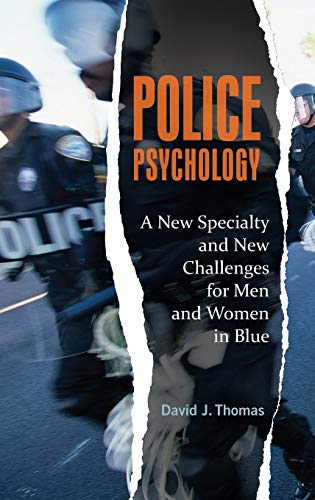

Police psychology a new specialty and new challenges for men and women in blue David J. Thomas.
Series Forensic psychologyDetalles de publicación: Santa Barbara, Calif. Praeger c2011.Descripción: ix, 171 p. ill. 25 cmISBN:- 9780313387289 (hard copy : alk. paper)
- 9780313387296 (ebook)
- 363.2019 T4541p 22
- HV7936.P75 T46 2011
| Imagen de cubierta | Tipo de ítem | Biblioteca actual | Biblioteca de origen | Colección | Ubicación en estantería | Signatura topográfica | Materiales especificados | Info Vol | URL | Copia número | Estado | Notas | Fecha de vencimiento | Código de barras | Reserva de ítems | Prioridad de la cola de reserva de ejemplar | Reservas para cursos | |
|---|---|---|---|---|---|---|---|---|---|---|---|---|---|---|---|---|---|---|
| Libro | Biblioteca Encarnación Valdés Colección General bev | 363.2019 T4541p (Navegar estantería(Abre debajo)) | Disponible | 80000002463639 |
Descripciones mejoradas de Syndetics:
Go behind the scenes of police work with this unique book that opens the door to the psychological side of policing.
Police Psychology: A New Specialty and New Challenges for Men and Women in Blue offers readers the opportunity to examine two different aspects of police psychology: psychology as it pertains to the personality of police officers and the application of psychology in police practices. The book takes readers inside the lives of real officers struggling with the daily quest to remain mentally healthy in the face of often-gruesome crime scenes. The actual experience of police work is illustrated through case studies and vignettes, and the text offers a template of best practices for those who practice police psychology.
Other insights in this book reveal the practical side of policing, examining the use of psychology in hostage negotiation, interview and interrogation, threat assessment, and criminal profiling. Readers go behind the scenes to watch as police apply psychological principles in actual cases, and then are given the opportunity to match wits with a simulated foe themselves.
Includes bibliographical references and index.
The history and application of police psychology -- The police personality -- Police trauma, critical incidents, and stressors -- Critical incident stress management/psychological services -- Hostage negotiation -- Interview and interrogation -- The psychology of threat assessment -- The psychology of profiling -- Conclusion.
Tabla de contenidos provista por Syndetics
- 1 The History and Application of Police Psychology(p. 1)
- A Brief History of Police Psychology(p. 1)
- Defining Police Psychology(p. 3)
- 2 The Police Personality(p. 7)
- Why Would Anyone Want to Be a Police Officer?(p. 8)
- The Socialization Process(p. 9)
- The Field‐Training Officer (FTO) Program(p. 11)
- A Brief History of Bias in Policing(p. 13)
- Camaraderie of the Badge(p. 14)
- The Police Personality(p. 18)
- The Impact of Generational Differences(p. 19)
- 3 Police Trauma, Critical Incidents, and Stressors(p. 27)
- Psychological Trauma and Critical Incidents(p. 27)
- Case Studies(p. 30)
- Sense of Powerlessness(p. 42)
- 4 Critical Incident Stress Management/Psychological Services(p. 45)
- The Police Personality(p. 45)
- Psychotraumatology(p. 46)
- Police Suicide(p. 50)
- Critical Incident Stress Management(p. 51)
- The Role of EAPs in Policing(p. 53)
- The Role of Police Psychology(p. 54)
- Agency Responsibility(p. 56)
- Agency Best Practices(p. 57)
- 5 Hostage Negotiation(p. 61)
- A Brief History of Hostage Negotiations(p. 61)
- Team Member Selection and Structure(p. 63)
- Team Diversity(p. 64)
- Negotiator Skill Sets(p. 65)
- The Importance of Training(p. 69)
- The Psychology of Hostage Negotiation(p. 72)
- The Psychology of Hostage Takers(p. 74)
- 6 Interview and Interrogation(p. 81)
- Interview versus Interrogation(p. 81)
- The Miranda Decision(p. 82)
- The Investigative Interview(p. 84)
- The Psychology of Interviewing(p. 87)
- False Confessions(p. 91)
- Eyewitness Testimony(p. 92)
- 7 The Psychology of Threat Assessment(p. 97)
- Targeted Violence(p. 98)
- Motivations(p. 98)
- Terrorism(p. 99)
- Stalking(p. 105)
- School Shootings(p. 110)
- Threat Assessment(p. 114)
- 8 The Psychology of Profiling(p. 125)
- What Is Criminal Profiling?(p. 125)
- Understanding the Criminal Mind(p. 126)
- Motivations(p. 131)
- Case Studies(p. 132)
- Crime Scene Behavior(p. 138)
- Constructing a Profile(p. 145)
- 9 Conclusion(p. 155)
- A New Specialty: Defining Services(p. 155)
- The Application of Psychology to Policing(p. 156)
- The Future(p. 157)
- Appendix A Triple Homicide Interview(p. 159)
- Appendix B Criminal Profile of the Mack(p. 163)
- Index(p. 169)
- About the Author(p. 173)