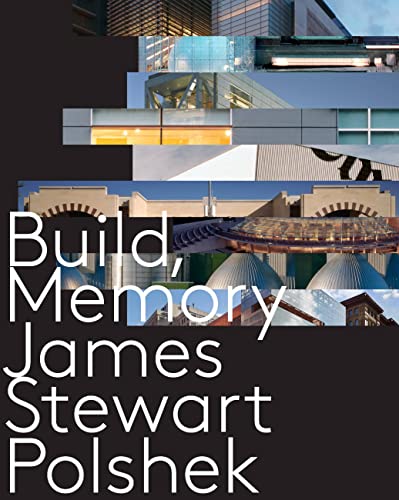
Imagen de portada de Amazon
Imagen de Amazon.com
Imagen de cubierta Syndetics
Portada de Syndetics
Imagen de OpenLibrary

Build memory. James Stewart Polshek. txt

Por: Colaborador(es): Idioma: Inglés New York : Monacelli Press , 2014Edición: 1st editionDescripción: 512 p. ill. ;col. ;plans. ; 26 cmTipo de contenido:
  • text
Tipo de medio:
  • unmediaded
Tipo de soporte:
  • volume
ISBN:
  • 9781580933629
  • 1580933629
Tema(s): Clasificación CDD:
  • 23 720.9730904
Clasificación LoC:
  • NA737.P55 A4 2014
Contenidos:
Teijin Institute for Biomedical Research; Teijin Applied Textile Science Center / Hino, Tokyo; Ibaraki, Osaka, Japan 1962-1965 -- New York State Bar Center / Albany, New York 1968-1971 -- Quinco Regional Mental Health Center / Columbus, Indiana 1969-1973 -- Carnegie Hall / New York, New York 1978-2003 -- United States Embassy, Oman / Muscat, Oman 1981-1991 -- Brooklyn Museum / Brooklyn, New York 1986-2004 -- Seamen's Church Institute / New York, New York 1988-1991 -- Santa Fe Opera / Santa Fe, New Mexico 1988-1998 -- Newtown Creek Wastewater Treatment Plant / Brooklyn, New York 1990-2014 -- New York Times Printing Plant, College Point / New York 1993-1997 -- Rose Center for Earth and Space, American Museum of Natural History / New York, New York 1994-2000 -- Scandinavia House / New York, New York 1997-2000 -- William J. Clinton Presidential Center / Little Rock, Arkansas 1999-2004 -- National Museum of American Jewish History / Philadelphia, Pennsylvania 1999-2010 -- Lycée Français de New York / New York, New York 2000-2003 -- Newseum/Freedom Forum Foundation World Headquarters / Washington, D.C. 2000-2008 --
Resumen: A look at a life in architecture from the architect of the Rose Center at the American Museum of Natural History in New York and the Newseum in Washington, D.C. James Stewart Polshek has witnessed changing architectural tastes, worked with numerous high-profile personalities, and designed many of America’s most prominent buildings. His notable and immediately recognizable projects include the William J. Clinton Presidential Center in Little Rock, Arkansas, and the renovation and expansion of Carnegie Hall in New York City. Committed to principles of community, history, and environment, Polshek has devoted his fifty-plus-year career to serving the common good. In Build, Memory, he surveys his life’s work in an accessible personal narrative, with a focus on the process of designing a building and working with clients to implement their vision. A lively narrative and abundant imagery guide the reader through the sixteen diverse and important structures that Polshek has named the highlights of his active and impressive career, revealing details about the history and development of these buildings along the way.
Valoración
    Valoración media: 0.0 (0 votos)
Existencias
Imagen de cubierta Tipo de ítem Biblioteca actual Biblioteca de origen Colección Ubicación en estantería Signatura topográfica Materiales especificados Info Vol URL Copia número Estado Notas Fecha de vencimiento Código de barras Reserva de ítems Prioridad de la cola de reserva de ejemplar Reservas para cursos
Libro CARIBET Biblioteca Arquitectura Colección General CARIBET General NA737.P55 A4 2014 (Navegar estantería(Abre debajo)) 1 Disponible 91000000044636
Total de reservas: 0

Descripciones mejoradas de Syndetics:

A look at a life in architecture from the architect of the Rose Center at the American Museum of Natural History in New York and the Newseum in Washington, D.C. James Stewart Polshek has witnessed changing architectural tastes, worked with numerous high-profile personalities, and designed many of America's most prominent buildings. His notable and immediately recognizable projects include the William J. Clinton Presidential Center in Little Rock, Arkansas, and the renovation and expansion of Carnegie Hall in New York City. Committed to principles of community, history, and environment, Polshek has devoted his fifty-plus-year career to serving the common good. In Build, Memory, he surveys his life's work in an accessible personal narrative, with a focus on the process of designing a building and working with clients to implement their vision. A lively narrative and abundant imagery guide the reader through the sixteen diverse and important structures that Polshek has named the highlights of his active and impressive career, revealing details about the history and development of these buildings along the way.

Include index

Teijin Institute for Biomedical Research; Teijin Applied Textile Science Center / Hino, Tokyo; Ibaraki, Osaka, Japan 1962-1965 --
New York State Bar Center / Albany, New York 1968-1971 --
Quinco Regional Mental Health Center / Columbus, Indiana 1969-1973 --
Carnegie Hall / New York, New York 1978-2003 --
United States Embassy, Oman / Muscat, Oman 1981-1991 --
Brooklyn Museum / Brooklyn, New York 1986-2004 --
Seamen's Church Institute / New York, New York 1988-1991 --
Santa Fe Opera / Santa Fe, New Mexico 1988-1998 --
Newtown Creek Wastewater Treatment Plant / Brooklyn, New York 1990-2014 --
New York Times Printing Plant, College Point / New York 1993-1997 --
Rose Center for Earth and Space, American Museum of Natural History / New York, New York 1994-2000 --
Scandinavia House / New York, New York 1997-2000 --
William J. Clinton Presidential Center / Little Rock, Arkansas 1999-2004 --
National Museum of American Jewish History / Philadelphia, Pennsylvania 1999-2010 --
Lycée Français de New York / New York, New York 2000-2003 --
Newseum/Freedom Forum Foundation World Headquarters / Washington, D.C. 2000-2008 --

A look at a life in architecture from the architect of the Rose Center at the American Museum of Natural History in New York and the Newseum in Washington, D.C.
James Stewart Polshek has witnessed changing architectural tastes, worked with numerous high-profile personalities, and designed many of America’s most prominent buildings. His notable and immediately recognizable projects include the William J. Clinton Presidential Center in Little Rock, Arkansas, and the renovation and expansion of Carnegie Hall in New York City.
Committed to principles of community, history, and environment, Polshek has devoted his fifty-plus-year career to serving the common good. In Build, Memory, he surveys his life’s work in an accessible personal narrative, with a focus on the process of designing a building and working with clients to implement their vision. A lively narrative and abundant imagery guide the reader through the sixteen diverse and important structures that Polshek has named the highlights of his active and impressive career, revealing details about the history and development of these buildings along the way.

Reseñas proporcionadas por Syndetics

Library Journal Review

Starred Review. Arguably, this is the most impressive professional memoir ever written by an architect. It relentlessly records the Polshek's accurate memories of his 50-year architectural career starting in Japan in 1962 and including the renovation/restoration of the old Carnegie Hall in New York City and the design/construction of the new American embassy in Muscat, Oman. The book's title validates for the architecture profession Vladimir Nabokov's famous title Speak, Memory, thereby justifying the complete motility of postmodernism, which elided Polshek's career. A second volume is in preparation, which will offer 20 more memorial designs in print. Polshek started as a premed student in middle America but switched to design as an undergraduate. His career was launched upon his graduation from the Yale School of Architecture in 1955, and he served as dean of the Columbia University School of Architecture for 15 years from 1972 to 1987. The book is fascinating, informative, intriguing, amusing, dramatic, richly illustrative, and highly instructive for all students of architecture and design. Unfortunately, there is no index or bibliography; presumably, these will appear in the second volume. The scholarship is mostly memory: fostered, enriched, and augmented by the architect's wife of 60 years, Ellyn, a lawyer to whom this book is dutifully dedicated. VERDICT For all design libraries and students of postmodernism.-Peter S. Kaufman, Boston Architectural Ctr., MA (c) Copyright 2014. Library Journals LLC, a wholly owned subsidiary of Media Source, Inc. No redistribution permitted.

Notas de autor provistas por Syndetics

James Stewart Polshek founded James Stewart Polshek Architect in 1963 and led the firm, later known as the Polshek Partnership, until 2005. A former dean of the Columbia University Graduate School of Architecture, Planning and Preservation, he is currently a member of the Public Design Commission of the City of New York.
Compartir
logopucpr-y-vive

Contáctanos

¡Queremos saber de ti!

Tel. 787.841.2000 Ext. 1801

bibliotecavaldes@pucpr.edu

⁣Búscanos en las redes

© 2026 Desarrollado por Ignite Online • All Rights Reserved • Powered by Koha.