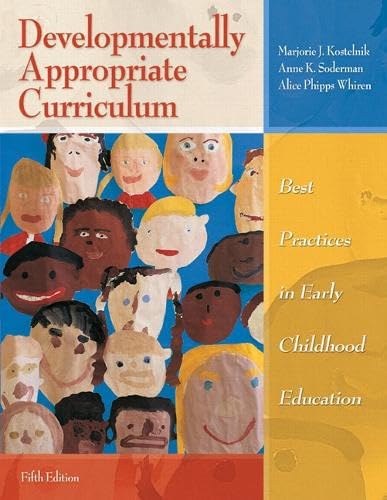

Developmentally appropriate curriculum best practices in early childhood education Marjorie J. Kostelnik, Anne K. Soderman, Alice P. Whiren.
Detalles de publicación: Upper Saddle, N.J. Pearson 2011.Edición: 5th edDescripción: xviii,530 p. 24 cmISBN:- 9780131381445
| Imagen de cubierta | Tipo de ítem | Biblioteca actual | Biblioteca de origen | Colección | Ubicación en estantería | Signatura topográfica | Materiales especificados | Info Vol | URL | Copia número | Estado | Notas | Fecha de vencimiento | Código de barras | Reserva de ítems | Prioridad de la cola de reserva de ejemplar | Reservas para cursos | |
|---|---|---|---|---|---|---|---|---|---|---|---|---|---|---|---|---|---|---|
| Libro | Biblioteca de Mayagüez Colección General mb | LB 1139.25 .K67 2011 (Navegar estantería(Abre debajo)) | Disponible | 50000003206090 |
Descripciones mejoradas de Syndetics:
This best-selling text addresses all aspects of classroom life, including the roles of children and adults, the physical and social environments, and teaching and learning within multiple domains for children age three to eight. It provides a comprehensive, cohesive approach to curriculum development, which results in greater continuity for children and practitioners in group settings in childcare, preschool, and the early elementary grades. Concentrating as much on the how of curriculum development as on the what and why, the authors provide practical, research-based guidelines for translating theory into best practice that accommodates age-appropriateness, individual differences, and social and cultural diversity. Students learn how to conceptualize, plan, implement, and evaluate curriculum through detailed application opportunities in each chapter.New Features to this Edition include: * Assignable activities online at MyEducationLab are meaningfully integrated into each chapter, with margin notes referring to videos, classroom artifacts, and strategies in Assignments and Activities and more applied exercises in Building Teaching Skills and Dispositions * New Developmentally Appropriate Practice definitions are incorporated throughout * Stronger focus on national curriculum standards * More emphasis on key topics such as circle time, structuring the environment, classroom arrangements, scheduling, and cultural variations in teaching * Thorough integration of children with special needs in every chapter, offering examples, case studies, and specific adaptations to activities * Stronger emphasis on intentional teaching, helping students prepare for the reality of classroom expectations
Includes bibliographical references and index.
eigm 06/2011
Tabla de contenidos provista por Syndetics
- Introduction
- Part 1 Foundations of Early Childhood Education
- Chapter 1 Developmentally Appropriate Practice: An Evolving Framework for Teaching Young Children
- Why Is There a Need for DAP?
- The Early Childhood Profession Responds
- General Practices Typically Associated with DAP
- It Requires Judgment to Determine Developmental Appropriateness
- DAP Has Historic Roots
- There Is Empirical Support for Developmentally Appropriate Programs
- DAP Programs Vary in Structure and Content
- DAP Is Adaptable Across Program Settings
- The High/Scope Approach to Early Childhood Education
- The Reggio Emilia Approach to Early Childhood Education
- The DAP Debate
- What Does the DAP Debate Mean for Early Childhood Practitioners?
- Implications of DAP for Professional Practice
- Summary
- Applying What You've Read in This Chapter
- Practice for Your Certification or Licensure Exam
- Chapter 2 Teaching and Learning in Developmentally Appropriate Programs
- Early Childhood Educators Need to Know About Child Development and Learning
- Early Childhood Educators Need to Know About Effective Teaching Strategies
- Which Teaching Strategies Are Best?
- Common Teaching Strategies
- The Cycle of Learning
- Linking the Cycle of Learning to Teaching
- Teaching in the Zone of Proximal Development
- Early Childhood Educators Need to Know About Content
- Addressing Content in Early Childhood Education
- Benefits of Standards
- Challenges in Using Standards
- Addressing the Challenges
- Summary
- Applying What You've Read in This Chapter
- Practice for Your Certification or Licensure Exam
- Part 2 Setting the Stage for Learning
- Chapter 3 Planning and Implementing Effective Small-Group Activities
- Why Plan?
- Characteristics of Effective Planning
- Planning Basics
- Creating Developmentally Appropriate Plans
- Aligning All the Parts of the Lesson Plan
- Using Principles of Developmental Direction to Enhance Your Planning
- Applying the Principles of Developmental Direction to Your Plans
- Common Activities in Early Childhood Programs
- Making and Implementing Plans
- Summary
- Applying What You've Read in This Chapter
- Practice for Your Certification or Licensure Exam
- Chapter 4 Planning and Implementing Effective Group-Time Activities
- Planning Effective Group Times
- Writing Group-Time Plans
- Group-Time Preparations and Strategies
- Variations on Traditional Group Times
- Common Questions Practitioners Ask About Group Time
- Adaptation of Whole-Group Instruction for Children of Different Ages and Abilities
- Pitfalls to Avoid During Group-Time Planning
- Summary
- Applying What You've Read in This Chapter
- Practice for Your Certification or Licensure Exam
- Chapter 5 Organizing Space, Materials, and Time
- Organizing the Physical Environment
- Why Use Learning Centers?
- Characteristics of Effective Early Childhood Learning Centers
- Examples of Centers
- Dealing with Implementation Issues
- Adjusting the Physical Environment
- Selecting Materials for Each Curricular Domain
- General Guidelines for the Selection and Use of Materials
- Using the Same Materials for Many Purposes
- Creating a Daily Schedule
- Sample Schedule
- Summary
- Applying What You've Read in This Chapter
- Practice for Your Certification or Licensure Exam
- Chapter 6 Child Guidance in Early Childhood Classrooms
- What Children Need to Know
- What Self-Discipline Is
- How Self-Discipline Evolves
- Degrees of Self-Discipline Among Children and Within the Same Child
- Developmental Influences on Self-Discipline
- How Experience Influences Self-Discipline
- How Adult Discipline Styles Influence Children's Self-Discipline
- The Relation Between Authoritative Teaching and DAP
- Authoritative Teaching and the Importance of Teamwork Among Staff
- Questions Adults Ask About Promoting Self-Discipline in Children
- Summary
- Applying What You've Read in This Chapter
- Practice for Your Certification or Licensure Exam
- Chapter 7 Evaluating and Guiding Children's Progress by Using Authentic Assessment
- The Changing Face of Early Childhood Assessment
- Responsible Early Childhood Assessment and Evaluation
- Standardized Testing: What Part Should It Play in Evaluating Children's Progress?
- Placement of Young Children on the Basis of Test Results
- The Concept of Authentic Assessment
- Strategies for Assessment in the Early Childhood Classroom
- Organization and Use of Authentic Assessment and Evaluation Data: Portfolios and Student-Led Conferences
- Summary
- Applying What You've Read in This Chapter
- Practice for Your Certification or Licensure Exam
- Chapter 8 Strengthening Developmentally Appropriate Programs Through Family Involvement
- The Changing Nature of Family Involvement in Early Childhood Education
- Barriers to Family Involvement
- Characteristics of Effective Family Involvement
- Effective Family Involvement Techniques
- Summary
- Applying What You've Read in This Chapter
- Practice for Your Certification or Licensure Exam
- Part 3 The Curriculum
- Chapter 9 The Aesthetic Domain
- Aesthetics Defined
- The Arts Defined
- Scope of This Chapter
- Aesthetic Education for Young Children
- Importance of Aesthetic Learning
- Relationship Between Aesthetic Learning and Knowing
- Children's Acquisition of a Fundamental Knowledge Base for Aesthetic Development
- Aesthetic Learning and the Teacher's Role
- Current Educational Issues
- Purpose and Goals
- Teaching Strategies
- Pitfalls to Avoid
- Approaches to Teaching the Arts
- Activity Suggestions
- Summary
- Applying What You've Read in This Chapter
- Practice for Your Certification or Licensure Exam
- Chapter 10 The Affective Domain
- Children's Developing Self-Awareness and Sense of Competence
- Children's Acquisition of a Fundamental Knowledge Base for Affective Development
- Children's Stress Reactions in Response to Overwhelming Emotional Demands
- Promotion of Healthy Self-Esteem in the Early Learning Environment
- Current Educational Issues
- Purpose and Goals for Affective Development
- Affective Teaching Strategies
- Activity Suggestions
- Summary
- Applying What You've Read in This Chapter
- Practice for Your Certification or Licensure Exam
- Chapter 11 The Cognitive Domain
- Cognitive Maturation
- Children's Acquisition of a Fundamental Knowledge Base for Cognitive Development
- National Expectations and Standards
- Current Educational Issues
- Purpose and Goals for the Cognitive Domain
- Teaching Strategies
- Activity Suggestions
- Summary
- Applying What You've Read in This Chapter
- Practice for Your Certification or Licensure Exam
- Chapter 12 The Language Domain
- Oral Language Development
- Children's Acquisition of Literacy: Connections Among Oral Language, Phonological and Phonemic Awareness, and Emerging Reading and Writing
- Integration of Language Experiences Across the Curriculum
- Current Educational Issues
- Purpose and Goals for the Language Domain
- Teaching Strategies
- Activity Suggestions
- Summary
- Applying What You've Read in This Chapter
- Practice for Your Certification or Licensure Exam
- Chapter 13 The Physical Domain
- Physical Activity
- Health, Safety, and Nutrition
- Current Educational Issues
- Purpose and Goals
- Teaching Strategies
- Activity Suggestions
- Summary
- Applying What You've Read in This Chapter
- Practice for Your Certification or Licensure Exam
- Chapter 14 The Social Domain
- Social Skill Development
- Socialization: Children's Behavior and Adult Expectations
- Social Responsibility
- Social Studies
- Relationship Between the Social Domain and Cognition
- Current Educational Issues
- Purpose and Goals
- Teaching Strategies
- Activity Suggestions
- Summary
- Applying What You've Read in This Chapter
- Practice for Your Certification or Licensure Exam
- Part 4 Integrating Curriculum
- Chapter 15 Integrating Curriculum Through Pretend and Construction Play
- Characteristics of Play
- Pretend and Construction Play Across the Curriculum and in Development
- Integration of Multiple Domains
- Teachers' Questions Regarding Pretend and Construction Play
- Promotion of Play Skills
- Summary
- Applying What You've Read in This Chapter
- Practice for Your Certification or Licensure Exam
- Chapter 16 Integrating Curriculum by Using Themes and Projects
- Defining Themes and Projects
- How Themes and Projects Contribute to Children's Concept Development
- Additional Benefits for Children
- Teachers' Benefits
- Program Effects
- Pitfalls in Theme Teaching
- Principles of Effective Theme Teaching
- How to Create Thematic Units
- Common Questions About Themes and Projects
- Summary
- Applying What You've Read in This Chapter
- Practice for Your Certification or Licensure Exam
- Appendix A Sample Lesson Plans
- Appendix B Field Trips
- Appendix C the Big, Big Turnip
- Glossary
- References
- Name Index
- Subject Index
Notas de autor provistas por Syndetics
Marjorie J. Kostelnik is Dean of the College of Education and Human Sciences at the University of Nebraska, Lincoln. A former child care, Head Start, and preschool teacher, as well as elementary school specialist, Dr. Kostelnik has been actively involved in helping educators in early childhood programs explore the implications of developmentally appropriate practices. Her work has taken her to many settings throughout the United States and abroad. Marjorie teaches classes in early childhood inclusive education and is currently on the Coordinating Commission for High Quality Early Childhood Education for the state of Nebraska.
Anne K. Soderman had 14 years of classroom experience working with children in both public and nonpublic educational settings prior to joining Michigan State University in 1979, where she is now Professor Emeritus. In addition to continuing to consult with schools in international settings, she is currently carrying out an administrative assignment and conducting research on second-language acquisition in Beijing, China. Soderman is also co-author of Guiding Children's Social Development and Learning, 6th Ed. (2009), Creating Literacy-Rich Preschools and Kindergartens (2008) and Scaffolding Emergent Literacy (2005).
Alice Phipps Whiren is a professor emeritus of the Department of Family and Child Ecology, Michigan State University. She taught curriculum in early childhood and child development to undergraduate and graduate students and was supervisor of the Child Development Laboratories. Early in her career, she taught young children in an inner-city public school in Michigan. She also served as a Head Start assistant director and has provided a variety of training sessions for preprimary teachers nationally and internationally.