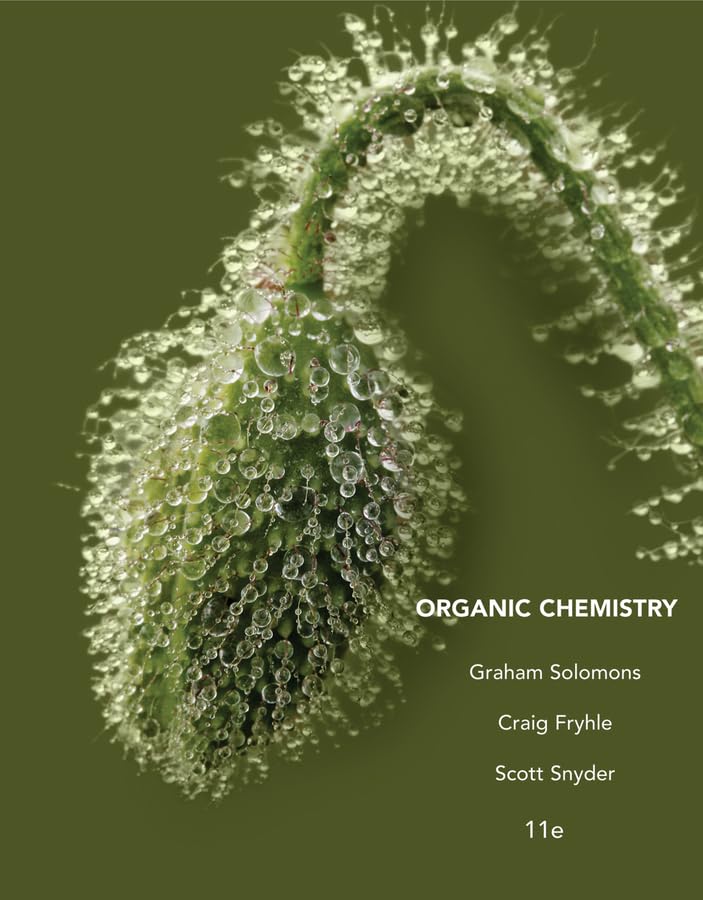

Organic chemistry.
Detalles de publicación: Hoboken, NJ Wiley ©2014.Edición: 11th editionDescripción: xxxvi, 1139, [25] pages illustrations (some color) 29 cm Tipo de medio:- 9781118133576 (hardback)
- 547
- QD253.2 .S65 2014
| Imagen de cubierta | Tipo de ítem | Biblioteca actual | Biblioteca de origen | Colección | Ubicación en estantería | Signatura topográfica | Materiales especificados | Info Vol | URL | Copia número | Estado | Notas | Fecha de vencimiento | Código de barras | Reserva de ítems | Prioridad de la cola de reserva de ejemplar | Reservas para cursos | |
|---|---|---|---|---|---|---|---|---|---|---|---|---|---|---|---|---|---|---|
| Libro | Biblioteca Encarnación Valdés Colección General bev | 547 S6896o 2014 (Navegar estantería(Abre debajo)) | Disponible | 80000002556515 |
Descripciones mejoradas de Syndetics:
Organic Chemistry, 11th Edition continues its tradition of excellence in teaching and preparing students for success in the organic classroom and beyond. A central theme of the authors' approach to organic chemistry is to emphasize the relationship between structure and reactivity. To accomplish this, the text is organized in a way that combines the most useful features of a functional group approach with one largely based on reaction mechanisms. Emphasizing mechanisms and their common aspects as often as possible, this book shows students what organic chemistry is, how it works, and what it does in living systems and the physical world around us.
Includes index.
"Now in a new edition, this book continues its tradition of excellence in teaching and preparing students for success in the organic classroom and beyond. A central theme of the authors' approach to organic chemistry is to emphasize the relationship between structure and reactivity. To accomplish this, the text is organized in a way that combines the most useful features of a functional group approach with one largely based on reaction mechanisms. Emphasizing mechanisms and their common aspects as often as possible, this book shows students what organic chemistry is, how it works, and what it does in living systems and the physical world around us"-- Provided by publisher.
Machine generated contents note: 1.The Basics: Bonding and Molecular Structure 2. Families of Carbon Compounds : Functional Groups, Intermolecular Forces, and Infrared (IR) 3. An Introduction to Organic Reactions and Their Mechanisms: Acids and Bases 4. Nomenclature and Conformations of Alkanes and Cycloalkanes 5. Stereochemistry: Chiral Molecules 6. Ionic Reactions : Nucleophilic Substitution & Elimination Reactions of Alkyl Halides 7. Alkenes & Alkynes I: Properties & Synthesis. Elimination Reactions of Alkyl Halides 8. Alkenes & Alkynes II: Addition Reactions 9. Nuclear Magnetic Resonance and Mass Spectroscopy: Tools for Structure Determination 10. Radical Reactions 11. Alcohols & Ethers 12. Alcohols from Carbonyl Compounds : Oxidation-Reduction & Organometallic Compounds 13. Conjugated Unsaturated Systems 14. Aromatic Compounds 15. Reactions of Aromatic Compounds 16. Aldehydes & Ketones: Nucleophilic Addition to the Carbonyl Group 17. Carboxylic Acids and Their Derivatives: Nucleophilic Addition-Elimination at the Acyl Carbon 18. Reactions at the [alpha] Carbon of Carbonyl Compounds: Enols and Enolates 19. Condensation and Conjugate Addition Reactions of Carbonyl Compounds : More Chemistry of Enolates 20. Amines 21. Phenols & Aryl Halides: Nucleophilic Aromatic SubstitutionSpecial Topic G: Carbon-Carbon Bond-Forming and Other Reactions of Transition Metal Organometallic Compounds 22. Carbohydrates 23. Lipids 24. Amino Acids & Proteins 25. Nucleic Acids & Protein Synthesis .
Tabla de contenidos provista por Syndetics
- 1 The Basics: Bonding and Molecular Structure
- 2 Families of Carbon Compounds: Functional Groups, Intermolecular Forces, and Infrared (IR)
- 3 An Introduction to Organic Reactions and Their Mechanisms: Acids and Bases
- 4 Nomenclature and Conformations of Alkanes and Cycloalkanes
- 5 Stereochemistry: Chiral Molecules
- 6 Ionic Reactions: Nucleophilic Substitution & Elimination Reactions of Alkyl Halides
- 7 Alkenes & Alkynes I: Properties & Synthesis. Elimination Reactions of Alkyl Halides
- 8 Alkenes & Alkynes II: Addition Reactions
- 9 Nuclear Magnetic Resonance and Mass Spectroscopy: Tools for Structure Determination
- 10 Radical Reactions
- 11 Alcohols & Ethers
- 12 Alcohols from Carbonyl Compounds: Oxidation-Reduction & Organometallic Compounds
- 13 Conjugated Unsaturated Systems
- 14 Aromatic Compounds
- 15 Reactions of Aromatic Compounds
- 16 Aldehydes & Ketones: Nucleophilic Addition to the Carbonyl Group
- 17 Carboxylic Acids and Their Derivatives: Nucleophilic Addition-Elimination at the Acyl Carbon
- 18 Reactions at the ¿ Carbon of Carbonyl Compounds: Enols and Enolates
- 19 Condensation and Conjugate Addition Reactions of Carbonyl Compounds: More Chemistry of Enolates
- 20 Amines
- 21 Phenols & Aryl Halides: Nucleophilic Aromatic SubstitutionSpecial Topic G: Carbon-Carbon Bond-Forming and Other Reactions of Transition Metal Organometallic Compounds
- 22 Carbohydrates
- 23 Lipids
- 24 Amino Acids & Proteins
- 25 Nucleic Acids & Protein Synthesis