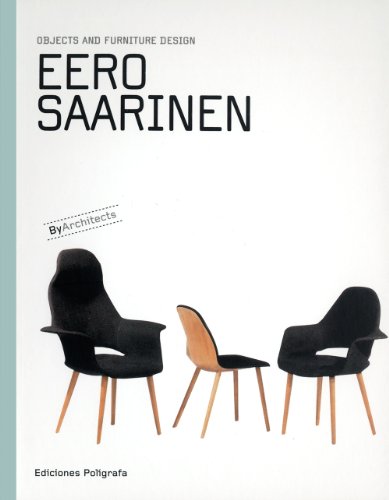

Eero Saarinen
Idioma: Inglés Series Objects and furniture design by architectsDetalles de publicación: Barcelona Polígrafa 2011Descripción: 127p. Ill. some col 21cmISBN:- 9788434312647
- 749.092
- NK2401.S237 2011
| Imagen de cubierta | Tipo de ítem | Biblioteca actual | Biblioteca de origen | Colección | Ubicación en estantería | Signatura topográfica | Materiales especificados | Info Vol | URL | Copia número | Estado | Notas | Fecha de vencimiento | Código de barras | Reserva de ítems | Prioridad de la cola de reserva de ejemplar | Reservas para cursos | |
|---|---|---|---|---|---|---|---|---|---|---|---|---|---|---|---|---|---|---|
| Libro | CARIBET Biblioteca Arquitectura Colección General CARIBET | NK2401.S237 2011 (Navegar estantería(Abre debajo)) | 30.82 | Disponible | 91000000033498 |
Descripciones mejoradas de Syndetics:
Born in Finland, Ero Saarinen (1910-1961) immigrated to the United States of America in 1923, at the age of thirteen. He grew up in Bloomfield Hills, Michigan, where he took courses in sculpture and furniture design, established a close relationship with fellow students Charles and Ray Eames, and also became good friends with Florence Knoll (then Schust). Criticised in his own time for having no identifiable style, Saarinen developed a remarkable range of work, which depended on colour, form and materials. Saarinen showed a marked dependence on innovative structures and sculptural forms, but not at the cost of pragmatic considerations. He moved back and forth freely between the International Style and Expressionism, utilizing a vocabulary of curves and cantilevered forms, some of which have remained in production and became twentieth century furniture icons. SELLING POINTS: * In addition to an introductory essay, this book analyses the main designs of these key modern architects through sketches, drawings, photos of the original works, and shots of period settings * A full illustrated chronology of all the featured works completes each volume. Reflecting the series' focus on design, special attention has been paid to the layout and binding, making these books designer objects in their own right. 180 illustrations
Includes Index
Includes bibliographical references (p.127).