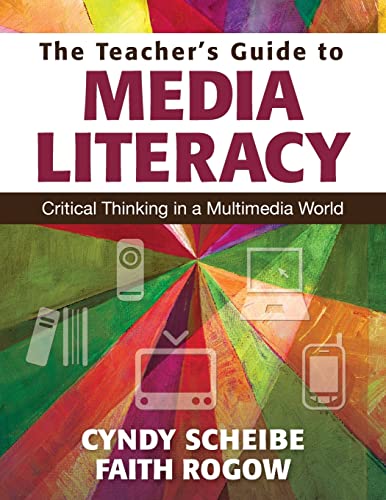

The teacher's guide to media literacy critical thinking in a multimedia world Cyndy Scheibe, Faith Rogow.
Detalles de publicación: Thousand Oaks, Calif. Corwin Press c2012.Descripción: p. cmISBN:- 9781412997584 (pbk.)
- 371.33 23
- P96.M4 S34 2012
| Imagen de cubierta | Tipo de ítem | Biblioteca actual | Biblioteca de origen | Colección | Ubicación en estantería | Signatura topográfica | Materiales especificados | Info Vol | URL | Copia número | Estado | Notas | Fecha de vencimiento | Código de barras | Reserva de ítems | Prioridad de la cola de reserva de ejemplar | Reservas para cursos | |
|---|---|---|---|---|---|---|---|---|---|---|---|---|---|---|---|---|---|---|
| Libro | Biblioteca de Mayagüez Colección General mb | P96 .M4 S34 2012 (Navegar estantería(Abre debajo)) | Disponible | 50000003210647 |
Descripciones mejoradas de Syndetics:
Use media literacy to reach all students!
The Teacher′s Guide to Media Literacy starts by asking, "What does it mean to be literate in today′s world, and how can those literacy skills be developed?" The authors answer those questions by providing concrete, innovative ways to integrate media literacy across the curriculum and teach students to be independent, skilled, and reflective thinkers. Through dozens of suggested activities, teaching strategies, and lessons, this book′s unique vision allows schools to
Integrate media literacy into teaching at all grade levels and core content areas Address key education standards Teach 21st-century skills and higher-order critical thinking Engage students by bridging schoolwork with their lives outside the classroomIn addition to dozens of activity ideas, the text and companion website include self-reflection exercises, voices from the field, a glossary of terms, and seven annotated, original, classroom-tested lesson plans that illustrate different approaches to media literacy in the classroom. In a time of hectic schedules and ever increasing expectations, the authors help teachers reframe their instruction to focus on the skills students need to succeed in the digital age.
Includes bibliographical references and index.
What do we mean by media? -- What is media literacy? -- What is media literacy education? -- When are questions the answer?: teaching students how to analyze media -- General approaches to teaching media literacy across the whole curriculum -- Integrating media literacy into specific content areas -- Media literacy lesson plans -- Does it work? -- "Sounds great, but I don't have time!": getting past the barriers and why it's worth it.
Tabla de contenidos provista por Syndetics
- List of Figures and Tables, Voices from the Field, and Reflection Boxes
- Preface
- Acknowledgments
- About the Authors
- Introduction
- 1 What Do We Mean by "Media"?
- 2 What Is "Media Literacy"?
- 3 What Is Media Literacy Education?
- 4 When Are Questions the Answer? Teaching Students How to Analyze Media Messages
- 5 General Approaches to Teaching Media Literacy Across the Whole Curriculum
- 6 Integrating Media Literacy Into Specific Content Areas
- 7 Media Literacy Lesson Plans
- 8 Does It Work?
- 9 "Sounds Great, But I Don't Have Time!" Getting Past the Barriers and Why It's Worth It
- Afterword: Where Do We Go From Here?
- Appendices
- References
- Endnotes
- Index