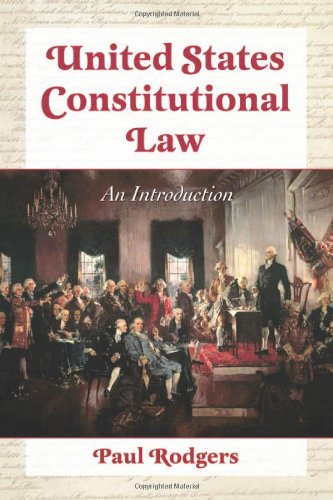

United States constitutional law an introduction Paul Rodgers.
Detalles de publicación: Jefferson, N.C. McFarland c2011.Descripción: xi, 288 p. 23 cmISBN:- 9780786459407 (softcover : alk. paper)
- 0786459409 (softcover : alk. paper)
- 342.73 22
- KF 4550 .R579 2011
| Imagen de cubierta | Tipo de ítem | Biblioteca actual | Biblioteca de origen | Colección | Ubicación en estantería | Signatura topográfica | Materiales especificados | Info Vol | URL | Copia número | Estado | Notas | Fecha de vencimiento | Código de barras | Reserva de ítems | Prioridad de la cola de reserva de ejemplar | Reservas para cursos | |
|---|---|---|---|---|---|---|---|---|---|---|---|---|---|---|---|---|---|---|
| Libro | Biblioteca de Derecho Mons. Fremiot Torres Oliver Colección General biblioteca derecho | KF 4550 .R579 2011 (Navegar estantería(Abre debajo)) | Disponible | 70000000889628 |
Descripciones mejoradas de Syndetics:
The great liberties and guarantees of the United States Constitution are stated as general principles, to be perpetuated and reapplied in a changing America. This book provides a basic understanding of Constitutional law, addressing both the history of the U.S. Constitution and each of its individual clauses. It explains the power of the Supreme Court, whereby a bare majority of five justices, each with lifetime tenure, can overrule the president, the Congress, and state and local governments--effectively declaring the rights and obligations of persons and organizations across the land. Referencing more than 950 Supreme Court decisions, the book treats each subject objectively and without opinionated commentary.
Includes bibliographical references (p. 269-270) and indexes.
"The great liberties and guarantees of the United States Constitution are stated as general principles, able to be perpetuated and reapplied to meet the needs of a changing America. This book aims to provide a basic understanding of Constitutional law. Referencing more than 950 Supreme Court decisions, the book treats each subject objectively and without opinionated commentary"--Provided by publisher.
Tabla de contenidos provista por Syndetics
- Acknowledgments(p. vi)
- Preface(p. 1)
- Prologue: Events Leading to the Ratification of the Constitution(p. 5)
- The Constitution of the United States(p. 13)
- Preamble(p. 15)
- Article I The Legislative Branch(p. 16)
- I$1 Legislative Vesting(p. 16)
- I$2 Clause 1 House of Representatives(p. 19)
- I$2 Clause 2 Qualifications for Representatives(p. 21)
- I$2 Clause 3.1 Apportionment(p. 21)
- I$2 Clause 3.2 Enumeration(p. 22)
- I$2 Clause 3.3 Allocation of Representatives(p. 22)
- I$2 Clause 4 Vacancies(p. 23)
- I$2 Clause 5 Speaker of the House; Impeachment(p. 23)
- I$3 Clause 1 Senate(p. 24)
- I$3 Clause 2 Senatorial Classes and Vacancies(p. 24)
- I$3 Clause 3 Qualifications for Senators(p. 25)
- I$3 Clause 4 Vice President as Presiding Officer(p. 25)
- I$3 Clause 5 President Pro Tempore(p. 25)
- I$3 Clause 6 Trial of Impeachment(p. 26)
- I$3 Clause 7 Punishment for Impeachment(p. 26)
- I$4 Clause 1 Election Regulations(p. 26)
- I$4 Clause 2 Meetings of Congress(p. 27)
- I$5 Clause 1 Qualifications and Quorum(p. 28)
- I$5 Clause 2 Rules and Expulsion(p. 28)
- I$5 Clause 3 House Journal(p. 29)
- I$5 Clause 4 Adjournment(p. 29)
- I$6 Clause 1 Compensation; Privilege from Arrest; Speech and Debate(p. 29)
- I$6 Clause 2 Sinecure; Incompatibility(p. 31)
- I$7 Clause 1 Origination(p. 31)
- I$7 Clause 2 Presentment of Bills; Pocket Veto(p. 32)
- I$7 Clause 3 Presentment of Resolutions(p. 34)
- I$8 Clause 1 Taxes; Spending(p. 34)
- I$8 Clause 2 Borrowing(p. 36)
- I$8 Clause 3 Commerce(p. 36)
- I$8 Clause 4 Naturalization; Bankruptcy(p. 43)
- I$8 Clause 5 Coinage; Weights and Measures(p. 44)
- I$8 Clause 6 Counterfeiting(p. 44)
- I$8 Clause 7 Post Office(p. 45)
- I$8 Clause 8 Patent and Copyright(p. 45)
- I$8 Clause 9 Inferior Courts(p. 46)
- I$8 Clause 10 Define and Punish(p. 46)
- I$8 Clause 11 Declare War; Marque and Reprisal; Captures(p. 47)
- I$8 Clause 12 Army(p. 48)
- I$8 Clause 13 Navy(p. 49)
- I$8 Clause 14 Military Regulations(p. 49)
- I$8 Clause 15 Militia(p. 50)
- I$8 Clause 16 Organizing Militia(p. 50)
- I$8 Clause 17 Enclave(p. 51)
- I$8 Clause 18 Necessary and Proper(p. 52)
- I$9 Clause 1 Slave Trade(p. 52)
- I$9 Clause 2 Habeas Corpus(p. 53)
- I$9 Clause 3 Bill of Attainder; Ex Post Facto Law(p. 54)
- I$9 Clause 4 Direct Taxes(p. 56)
- I$9 Clause 5 Export Taxation(p. 56)
- I$9 Clause 6 Port Preference(p. 57)
- I$9 Clause 7 Appropriations(p. 57)
- I$9 Clause 8 Titles of Nobility; Emoluments(p. 57)
- I$10 Clause 1 State Absolute Prohibitions(p. 57)
- I$10 Clause 2 Import-Export(p. 60)
- I$10 Clause 3 Compact(p. 61)
- Article II The Executive Branch(p. 63)
- II$1 Clause 1 Executive Vesting; Electoral College; Eligibility; Succession(p. 63)
- II$1 Clause 1 Executive Power(p. 66)
- II$1 Clause 2 Presidential Electors(p. 68)
- II$1 Clause 3 Electoral College(p. 68)
- II$1 Clause 4 Presidential Elector Vote(p. 70)
- II$1 Clause 5 Presidential Eligibility(p. 71)
- II$1 Clause 6 Presidential Succession(p. 71)
- II$1 Clause 7 Presidential Compensation(p. 72)
- II$1 Clause 8 Oath of Office(p. 73)
- II$2 Clause 1 Commander in Chief; Opinions; Reprieves and Pardons(p. 73)
- II$2 Clause 2 Treaties; Appointments(p. 75)
- II$2 Clause 3 Recess Appointments(p. 78)
- II$3 State of the Union; Convening and Adjourning Congress; Receiving Ambassadors; Faithful Execution; Commissioning Officers(p. 78)
- II$4 Impeachment(p. 81)
- Article III The Judicial Branch(p. 83)
- III$1 Judicial Vesting; Good Behavior; Compensation(p. 83)
- III$2 Clause 1 Judicial Power(p. 88)
- III$2 Clause 2 Original and Appellate Jurisdiction(p. 92)
- III$2 Clause 3 Criminal Trials(p. 94)
- III$3 Clause 1 Treason(p. 94)
- III$3 Clause 2 Punishment of Treason(p. 95)
- Article IV State Relations(p. 97)
- IV$1 Full Faith and Credit(p. 97)
- IV$2 Clause 1 Privileges and Immunities(p. 98)
- IV$2 Clause 2 Interstate Extradition (Rendition)(p. 98)
- IV$2 Clause 3 Fugitive Slaves(p. 99)
- IV$3 Clause 1 New States(p. 100)
- IV$3 Clause 2 Territory, Property(p. 100)
- IV$4 Guarantee of Republican Government(p. 101)
- Article V The Amendment Process(p. 103)
- Article VI The Supremacy of the Constitution(p. 105)
- VI Clause 1 Debt Assumption(p. 105)
- VI Clause 2 Supreme Law of the Land(p. 105)
- VI Clause 3 Loyalty(p. 107)
- Article VII The Ratification Process(p. 108)
- VII Clause 1 Ratification(p. 108)
- VII Clause 2 Subscription(p. 109)
- Amendments to the Constitution(p. 110)
- Amendment I The Five Freedoms of Religion, Speech, Press, Assembly and Petition(p. 111)
- Amendment II Right to Bear Arms(p. 143)
- Amendment III Quartering of Soldiers(p. 144)
- Amendment IV Search and Seizure; Warrants(p. 144)
- Amendment V The Five Rights of Grand Jury, Protection from Double Jeopardy, Protection from Self-incrimination, Due Process, and Just Compensation(p. 154)
- Amendment VI Seven Rights of the Accused: Criminal Court Procedures(p. 168)
- Amendment VII Trial by Jury in Common Law Cases(p. 179)
- Amendment VIII Cruel and Unusual Punishment(p. 181)
- Amendment IX Retention of Unenumerated Rights by the People(p. 185)
- Amendment X Power Reserved to States or People(p. 186)
- Amendment XI Suits Against a State(p. 187)
- Amendment XII Electoral College(p. 189)
- Amendment XIII Slavery Abolition(p. 191)
- Amendment XIV Citizenship; Privileges or Immunities; Due Process; Equal Protection(p. 193)
- Amendment XV Racial Suffrage(p. 222)
- Amendment XVI Income Tax(p. 224)
- Amendment XVII Popular Election of Senators(p. 226)
- Amendment XVIII Prohibition of Intoxicating Liquors(p. 226)
- Amendment XIX Woman Suffrage(p. 227)
- Amendment XX Term Endings; Presidential Succession(p. 228)
- Amendment XXI Repeal of Amendment XVIII re Prohibition(p. 231)
- Amendment XXII Presidential Term Limit(p. 233)
- Amendment XXIII Presidential Electors for the District of Columbia(p. 234)
- Amendment XXIV Poll Tax Prohibition(p. 234)
- Amendment XXV Presidential Succession(p. 235)
- Amendment XXVI Voting Age Fixed at Eighteen(p. 237)
- Amendment XXVII Congressional Compensation(p. 238)
- Appendix A Supreme Court Justices, 1789-2010(p. 241)
- Appendix B Text of the Constitution(p. 245)
- Bibliography(p. 269)
- Index of Cases(p. 271)
- General Index(p. 281)