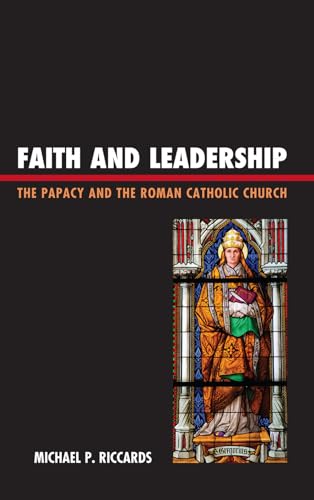

Faith and leadership the papacy and the Roman Catholic Church Michael P. Riccards.
Detalles de publicación: Lanham, Md. Lexington Books c2012.Descripción: xxii, 615 p. 24 cmISBN:- 9780739171325 (cloth : alk. paper)
- 262.1309 R489f 23
- BX957 .R53 2012
| Imagen de cubierta | Tipo de ítem | Biblioteca actual | Biblioteca de origen | Colección | Ubicación en estantería | Signatura topográfica | Materiales especificados | Info Vol | URL | Copia número | Estado | Notas | Fecha de vencimiento | Código de barras | Reserva de ítems | Prioridad de la cola de reserva de ejemplar | Reservas para cursos | |
|---|---|---|---|---|---|---|---|---|---|---|---|---|---|---|---|---|---|---|
| Libro | Biblioteca Encarnación Valdés Colección General bev | 262.1309 R489f (Navegar estantería(Abre debajo)) | Disponible | 80000002506064 |
Descripciones mejoradas de Syndetics:
This study is a comprehensive history of the papacy, the oldest elective office in the world, and how it has managed over the centuries the most complex voluntary association of faith. The book argues that in fact through most of its existence, the papacy has adapted managerial models of the secular world and applied them to the Catholic Church. Since its emergence from the Jewish synagogues to a persecuted minority in the Roman Empire to becoming the established religion of the West, the Church and the papacy engaged the world on its own terms. It is only after the Council of Trent did the Church become somewhat more divorced and estranged from the environment around it. This book focused on those changes and on the great popes across the centuries who reformed and altered Catholicism. Special attention is directed to Gregory I, Innocent I, Innocent III, Pius IX, Leo XIII, Pius XI, Pius XII, John XXVII, Paul VI, and John Paul II. The conclusion is that the persistence of the Catholic Church for so many centuries was due to its ability to preserve the faith, but re-establish its forms and managerial class.
Includes bibliographical references (p. 601-602) and index.
The primitive church -- From bishop to pope (Peter to Leo the Great, 500 a.d.) -- The threats to orthodoxy -- Beyond the end of the empire, 500-800 -- The medieval papacy looks East -- Abuses and reform, 800-1000 -- The papal monarchy, 1000-1500 -- The worldly popes -- The Protestant Reformation -- The timidity of reform -- The Catholic Reformation -- The council as a reform movement -- Religious wars and religious repression -- The Enlightenment -- The church confronts the Leviathan -- The church and the ancien regime -- The emperor's attack on the papacy -- Pius IX: the first modern Pope -- Leo XIII: the soul of the industrial state -- Pius X: moods of piety and repression -- Benedict XV and the mad dogs of war -- Pius XI and the new men of violence -- Pius XII and the spiritual twilight of the West -- John XXII and the promise of aggiornamento -- Paul VI: the perils of aggiornamento -- John Paul II: the uneasy agenda of restoration -- Postscript: Benedict XVI.