Imagen de Amazon.com

Portada de Syndetics
Imagen de OpenLibrary
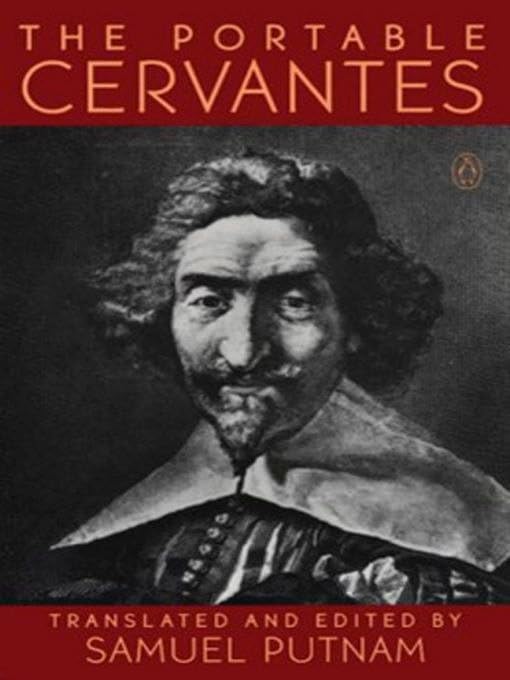
The portable Cervantes translated and edited, with an introd. and notes, by Samuel Putnam.
Idioma: Detalles de publicación: New York The Viking Press,l954.Descripción: ix, 854 pISBN:- 0140150579
- 863/.3 19
- PQ6329 .A1 1976
| Imagen de cubierta | Tipo de ítem | Biblioteca actual | Biblioteca de origen | Colección | Ubicación en estantería | Signatura topográfica | Materiales especificados | Info Vol | URL | Copia número | Estado | Notas | Fecha de vencimiento | Código de barras | Reserva de ítems | Prioridad de la cola de reserva de ejemplar | Reservas para cursos | |
|---|---|---|---|---|---|---|---|---|---|---|---|---|---|---|---|---|---|---|
| Libro | Biblioteca Encarnación Valdés Colección General bev | 863 C419i I 1954 (Navegar estantería(Abre debajo)) | c. 2 | Disponible | 80000000954738 | |||||||||||||
| Libro | Biblioteca Encarnación Valdés Colección General bev | 863 C419i I 1954 (Navegar estantería(Abre debajo)) | Disponible | 80000000947963 |
Total de reservas: 0
Descripciones mejoradas de Syndetics:
Contains Don Quixote , in Samuel Putnam's acclaimed translation, substantially complete, with editorial summaries of the omitted passages; two 'Exemplary Novels, 'Rinconete and Cortadillo' and 'Man of Glass'; and 'Foot in the Stirrup,' Cervantes's extraordinary farewell to life from The Troubles of Persiles and Sigismunda .
Contains Don Quixote, substantially complete, with all omitted passages covered by editorial summaries, plus two complete exemplary novels: Rinconete and Cortadillo and Man of glass, and Foot in the stirrup, Cervantes' farewell to life.
Tabla de contenidos provista por Syndetics
- Introduction(p. 1)
- Suggested Readings in English(p. 35)
- The Ingenious Gentleman, Don Quixote De La Mancha
- Editor's Note(p. 41)
- Part 1 Prologue(p. 48)
- Don Quixote's Background and First Sally (Chapters I-VI)(p. 57)
- I Which treats of the station in life and the pursuits of the famous gentleman, Don Quixote de la Mancha
- II Which treats of the first sally that the ingenious Don Quixote made from his native heath
- III Of the amusing manner in which Don Quixote had himself dubbed a knight
- IV Of what happened to our knight when he sallied forth from the inn
- V In which is continued the narrative of the misfortune that befell our knight
- VI Of the great and diverting scrutiny which the curate and the barber made in the library of our ingenious gentleman
- The Second Sally: Adventure of the Windmills, Encounter with the Biscayan (Chapters VII-X)(p. 103)
- VII Of the second sally of our good knight, Don Quixote de la Mancha
- VIII Of the good fortune which the valorous Don Quixote had in the terrifying and never-before-imagined adventure of the windmills, along with other events that deserve to be suitably recorded
- IX In which is concluded and brought to an end the stupendous battle between the gallant Biscayan and the valiant Knight of La Mancha
- X Of the pleasing conversation that took place between Don Quixote and Sancho Panza, his squire
- A Pastoral Interlude (Chapters XI-XIV)(p. 134)
- XI From Of what happened to Don Quixote in the company of certain goatherds
- XIII From in which is brought to a close the story of the shepherdess Marcela, along with other events
- XIV From in which are ... other unlooked-for happenings
- More Adventures along the Way (Chapters XV-XXII)(p. 153)
- XV In which is related the unfortunate adventure that befell Don Quixote when he encountered certain wicked Yanguesans
- XVI Of what happened to the ingenious gentleman in the inn which he imagined was a castle
- XVII Wherein is continued the account of the innumerable troubles that the brave Don Quixote and his good squire Sancho Panza endured in the inn, which, to his sorrow, the knight took to be a castle
- XVIII In which is set forth the conversation that Sancho Panza had with his master, Don Quixote, along with other adventures deserving of record
- XIX Of the shrewd things that Sancho Panza said to his master and the adventure that happened to him in connection with a dead body, along with other famous events
- XX Of an adventure such as never was seen or heard of, which was completed by the valorous Don Quixote de la Mancha with less peril than any famous knight in all the world ever incurred in a similar undertaking
- XXI Which treats of the high and richly rewarded adventure of Mambrino's helmet, together with other things that happened to our invincible knight
- XXII Of how Don Quixote freed many unfortunate ones who, much against their will, were being taken where they did not wish to go
- Don Quixote's Penance and Sancho's Embassy to Dulcinea (Chapters XXIII-XXIX)(p. 253)
- XXIII From of what happened to the famous Don Quixote in the Sierra Morena, which is one of the rarest adventures related in this true history
- XXV From which treats of the strange things that happened to the valiant Knight of La Mancha in the Sierra Morena and of his imitation of Beltenebros's penance
- The Return to the Village (Chapters XXX-LII)(p. 283)
- XXX From which treats of ... matters very pleasant and amusing
- XXXI Of the delectable conversation that took place between Don Quixote and Sancho Panza, his squire, together with other events
- XXXV In which the "Story of the One Who Was Too Curious for His Own Good" is brought to a close, and in which is related the fierce and monstrous battle that Don Quixote waged with certain skins of red wine
- XLIII From in which is related ... other strange events that took place at the inn
- XLIV In which are continued the unheard-of adventures at the inn
- XLV In which the dispute over Mambrino's helmet and the packsaddle is finally settled, with other events that in all truth occurred
- XLVI Wherein is concluded the notable adventure of the troopers, together with an account of the great ferocity of our good knight, Don Quixote
- XLVII Of the strange manner in which a spell was laid on Don Quixote de la Mancha, together with other remarkable occurrences
- XLVIII In which the canon continues his discourse on the subject of books of chivalry, with other matters worthy of his intelligence
- XLIX Of the shrewd conversation that Sancho Panza had with his master, Don Quixote
- L Of the weighty argument that took place between Don Quixote and the canon
- LII... From the rare adventure of the penitents, which the knight by the sweat of his brow brought to a happy conclusion
- Part 2
- Preparations for the Third Sally (Chapters I-VII)(p. 374)
- I Of the conversation which the curate and the barber had with Don Quixote concerning his malady
- II Which treats of the notable quarrel that Sancho Panza had with Don Quixote's niece and housekeeper, along with other droll happenings
- III Of the laughable conversation that took place between Don Quixote, Sancho Panza, and the bachelor Sanson Carrasco
- IV Wherein Sancho Panza answers the bachelor's questions and removes his doubts, together with other events that are worthy of being known and set down
- V Of the shrewd and droll remarks that passed between Sancho Panza and his wife, Teresa Panza, with other matters of a pleasant nature that deserve to be recorded
- VI Of what took place between Don Quixote and his niece and housekeeper, which is one of the most important chapters in the entire history
- VII Of what passed between Don Quixote and his squire, with other very famous incidents
- The "Enchantment" of Dulcinea (Chapters VIII-X)(p. 437)
- VIII Wherein is related what happened to Don Quixote as he went to see his lady, Dulcinea del Toboso
- IX A chapter in which is related what will be found set forth in it
- X Wherein is related the ingenuity that Sancho Panza displayed by laying a spell upon the lady Dulcinea, with other events as outlandish as they are true
- To the Road Again (Chapters XI-XXIX)(p. 463)
- XI Of the strange adventure that befell the valiant Don Quixote in connection with the cart or wagon of the Parliament of Death
- XIV From wherein is continued the adventure of the Knight of the Wood
- XVI From of what happened to Don Quixote upon his meeting with a prudent gentleman of La Mancha
- XVII Wherein Don Quixote's unimaginable courage reaches its highest point, together with the adventure of the lions and its happy ending
- XXII From wherein is related the great adventure of the Cave of Montesinos in the heart of La Mancha, which the valiant Don Quixote brought to a triumphant conclusion
- XXIII Of the amazing things which the incomparable Don Quixote told of having seen in the deep Cave of Montesinos, an adventure the grandeur and impossible nature of which have caused it to be regarded as apocryphal
- XXIV From wherein are related trifling matters...
- XXVIII Of things that, Benengeli says, the reader will come to know if he reads attentively
- With the Duke and Duchess (Chapters XXX-XLI)(p. 530)
- XXXII From concerning ... incidents, some serious and some amusing
- XXXIII Of the delightful conversation which the duchess and her waiting women had with Sancho Panza, worth reading and worth noting
- XXXV From Wherein is continued the information that Don Quixote received concerning Dulcinea's disenchantment, with other astonishing incidents
- XXXVI Wherein is related the weird and never-before-imagined adventure of the Distressed Duenna, otherwise known as the Countess Trifaldi, together with a letter that Sancho Panza wrote to his wife, Teresa Panza
- XLI Of the coming of Clavileno, with the conclusion of this long-drawn-out adventure
- Sancho's Government (Chapters XLII-LV)(p. 578)
- XLII Of the advice which Don Quixote gave Sancho Panza before the latter set out to govern his island, with other well-considered matters
- XLIII Of the further advice which Don Quixote gave to Sancho Panza
- XLIV How Sancho Panza was taken away to be governor, and the strange adventure that befell Don Quixote in the castle
- XLV Of how the great Sancho took possession of his island and of the way in which he began to govern
- XLVII Wherein is continued the account of how Sancho Panza deported himself in his government
- XLIX Of what happened to Sancho Panza as he made the rounds of his island
- L Wherein is set forth who the enchanters and executioners were who spanked the duenna and pinched and scratched Don Quixote, together with what happened to the page who carried the letter to Teresa Panza, Sancho Panza's wife
- LI Of the course of Sancho Panza's government, with other entertaining matters of a similar nature
- LII From the Correspondence of Teresa Panza
- LIII Of the troublous end and conclusion of Sancho Panza's government
- LV Fron of the things that happened to Sancho...
- The Last Adventures (Chapters LVI-LXXIV)(p. 664)
- LXII From which deals with ... things that cannot be left untold
- LXIV From which treats of the adventure that caused Don Quixote the most sorrow of all those that have thus far befallen him
- LXXI Of what befell Don Quixote and his squire Sancho on the way to their village
- LXXIV Of how Don Quixote fell sick, of the will that he made, and of the manner of his death
- Two Exemplary Novels
- Prologue(p. 705)
- Rinconete and Cortadillo(p. 709)
- Editor's Note(p. 709)
- Man of Glass(p. 760)
- Editor's Note(p. 760)
- "Foot in the Stirrup": Cervantes' Farewell to Life (from The Troubles of Persiles and Sigismunda)
- Editor's Note(p. 797)
- Dedication(p. 798)
- Prologue(p. 800)
- Notes
- To Don Quixote(p. 805)
- To Two Exemplary Novels(p. 845)
- To "Foot in the Stirrup"(p. 854)