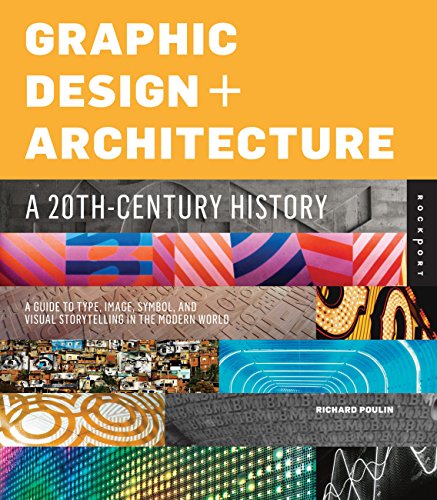
Imagen de portada de Amazon
Imagen de Amazon.com
Imagen de cubierta Syndetics
Portada de Syndetics
Imagen de OpenLibrary

Graphic design and architecture, a 20th century history a guide to type, image, symbol, and visual storytelling in the modern world Richard Poulin.

Por: Idioma: Inglés Detalles de publicación: Beverly, M.A. Rockport Publishers [2012]Descripción: 272 p. ill. 11 cmISBN:
  • 9781592537792
Tema(s): Clasificación CDD:
  • 741.609
Clasificación LoC:
  • NK1390.P67 2012
Valoración
    Valoración media: 0.0 (0 votos)
Existencias
Imagen de cubierta Tipo de ítem Biblioteca actual Biblioteca de origen Colección Ubicación en estantería Signatura topográfica Materiales especificados Info Vol URL Copia número Estado Notas Fecha de vencimiento Código de barras Reserva de ítems Prioridad de la cola de reserva de ejemplar Reservas para cursos
Libro CARIBET Biblioteca Arquitectura Colección General CARIBET NK1390.P67 2012 (Navegar estantería(Abre debajo)) Disponible 91000000040279
Total de reservas: 0

Descripciones mejoradas de Syndetics:

This comprehensive work closely examines the relationship between typography, image, symbolism, and the built environment.

Includes index and bibliographical references.

Extracto provisto por Syndetics

First Church of Christ Scientist Graphic Tile Panels The Hague, Netherlands Piet Zwart (1885-1977), Designer The Hague, Netherlands 1926 Piet Zwart (1885-1977), a Dutch craftsman, draftsman, architect, photographer, and pioneer of modern typography, was born in Zaandijk, north of Amsterdam. From 1902 to 1907, he attended Amsterdam's School of Arts and Crafts, where he became interested in architecture. His early work involved designing textiles, furniture, and interiors in a style that showed his affinity for the de Stijl art movement. Zwart was influenced by many of the modern, avant-garde movements, as well as Jan Tschichold's (1902-1974) Die Neue Typographie (The New Typography, 1928). He was also one of the first modernist designers in Holland to apply the principles of de Stijl and constructivism to graphic design in the built environment during the 1920s. From 1921 to 1927, Zwart worked for H. P. Berlage, the most influential Dutch architect of the era. Hendrik Pieter (H. P.) Berlage (1856- 1934) was the architect for the First Church of Christ Scientist complex in The Hague. This modernist complex is composed of a church, assembly hall, residence, and school with its interiors designed by Berlage, in collaboration with Zwart. One primary example of this collaboration is located above the entrance to the complex in a series of metallic gold-on-blue ceramic tiles containing bold, square, sans-serif "fat-face" letterforms designed by Zwart to visually integrate with the rectangular architectural form of the church. Throughout the auditorium, typographic inspirational quotations are located on walls and ceilings articulated in a similar graphic manner by Zwart, reinforcing a strong visual integrity to the graphic and architectural identities of the buildings. Zwart synthesized two distinct and contradictory points of view--the constructivist movement's visual playfulness and de Stijl's formal functionality. With the First Church of Christ Scientist, as well as with his entire body of work, this typotekt, as he called himself, created a unified language that has prevailed for the last eighty years and to this day strongly influences contemporary graphic designers. Excerpted from Graphic Design and Architecture, a 20th Century History: A Guide to Type, Image, Symbol, and Visual Storytelling in the Modern World by Richard Poulin All rights reserved by the original copyright owners. Excerpts are provided for display purposes only and may not be reproduced, reprinted or distributed without the written permission of the publisher.

Reseñas proporcionadas por Syndetics

CHOICE Review

Design consultant Poulin classifies a category of "environmental graphic design" from instances where traditional distinctions of architecture, sculpture, and graphic design have failed. With dual attention to visual and narrative material, the author reinterprets 20th-century urban environments and examines forms of modern storytelling. The book is organized in four sections: "Pre-20th Century Influences"; "The Modern Age"; "The Post-War World"; and "The Beginning of the 21st Century." It offers page-long explanations of particular visual examples, such as the Daily News Building in New York in 1930. Every page is graced with a vivid color image and corresponding analysis. Although primarily focused on modernist narratives of the West, the book exposes important considerations of contemporary public and corporate stories that have replaced traditional visual and formal narratives. As such, it offers a new perspective on 20th-century inspirations for 21st-century design. Summing Up: Recommended. Lower- and upper-division undergraduates; general readers. L. Banu Purdue University

Notas de autor provistas por Syndetics

Richard Poulin is cofounder, design director, and a principal of Poulin + Morris Inc. (http://www.poulinmorris.com), an internationally recognized, multidisciplinary design consultancy located in New York City. His work has been recognized by major design organizations, competitions, and publications including the American Institute of Graphic Arts (AIGA), Communication Arts , Graphis , Library of Congress, Type Director Club, and the New York Art Directors Club. Richard is a Fellow of the Society for Environmental Graphic Design, the organization's highest honor, and is a past President and board member of the New York Chapter of AIGA.
Compartir
logopucpr-y-vive

Contáctanos

¡Queremos saber de ti!

Tel. 787.841.2000 Ext. 1801

bibliotecavaldes@pucpr.edu

⁣Búscanos en las redes

© 2026 Desarrollado por Ignite Online • All Rights Reserved • Powered by Koha.