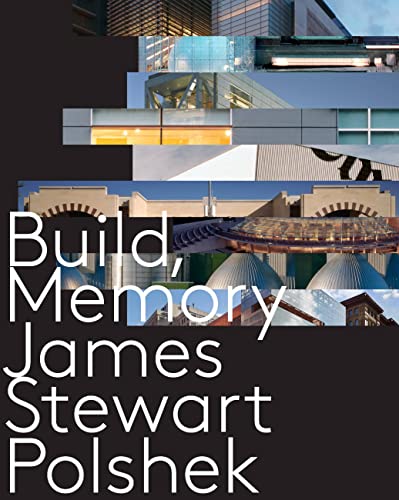

Build memory. James Stewart Polshek. txt
Idioma: Inglés New York : Monacelli Press , 2014Edición: 1st editionDescripción: 512 p. ill. ;col. ;plans. ; 26 cmTipo de contenido:- text
- unmediaded
- volume
- 9781580933629
- 1580933629
- 23 720.9730904
- NA737.P55 A4 2014
| Imagen de cubierta | Tipo de ítem | Biblioteca actual | Biblioteca de origen | Colección | Ubicación en estantería | Signatura topográfica | Materiales especificados | Info Vol | URL | Copia número | Estado | Notas | Fecha de vencimiento | Código de barras | Reserva de ítems | Prioridad de la cola de reserva de ejemplar | Reservas para cursos | |
|---|---|---|---|---|---|---|---|---|---|---|---|---|---|---|---|---|---|---|
| Libro | CARIBET Biblioteca Arquitectura Colección General CARIBET | General NA737.P55 A4 2014 (Navegar estantería(Abre debajo)) | 1 | Disponible | 91000000044636 |
Descripciones mejoradas de Syndetics:
A look at a life in architecture from the architect of the Rose Center at the American Museum of Natural History in New York and the Newseum in Washington, D.C. James Stewart Polshek has witnessed changing architectural tastes, worked with numerous high-profile personalities, and designed many of America's most prominent buildings. His notable and immediately recognizable projects include the William J. Clinton Presidential Center in Little Rock, Arkansas, and the renovation and expansion of Carnegie Hall in New York City. Committed to principles of community, history, and environment, Polshek has devoted his fifty-plus-year career to serving the common good. In Build, Memory, he surveys his life's work in an accessible personal narrative, with a focus on the process of designing a building and working with clients to implement their vision. A lively narrative and abundant imagery guide the reader through the sixteen diverse and important structures that Polshek has named the highlights of his active and impressive career, revealing details about the history and development of these buildings along the way.
Include index
Teijin Institute for Biomedical Research; Teijin Applied Textile Science Center / Hino, Tokyo; Ibaraki, Osaka, Japan 1962-1965 --
New York State Bar Center / Albany, New York 1968-1971 --
Quinco Regional Mental Health Center / Columbus, Indiana 1969-1973 --
Carnegie Hall / New York, New York 1978-2003 --
United States Embassy, Oman / Muscat, Oman 1981-1991 --
Brooklyn Museum / Brooklyn, New York 1986-2004 --
Seamen's Church Institute / New York, New York 1988-1991 --
Santa Fe Opera / Santa Fe, New Mexico 1988-1998 --
Newtown Creek Wastewater Treatment Plant / Brooklyn, New York 1990-2014 --
New York Times Printing Plant, College Point / New York 1993-1997 --
Rose Center for Earth and Space, American Museum of Natural History / New York, New York 1994-2000 --
Scandinavia House / New York, New York 1997-2000 --
William J. Clinton Presidential Center / Little Rock, Arkansas 1999-2004 --
National Museum of American Jewish History / Philadelphia, Pennsylvania 1999-2010 --
Lycée Français de New York / New York, New York 2000-2003 --
Newseum/Freedom Forum Foundation World Headquarters / Washington, D.C. 2000-2008 --
A look at a life in architecture from the architect of the Rose Center at the American Museum of Natural History in New York and the Newseum in Washington, D.C.
James Stewart Polshek has witnessed changing architectural tastes, worked with numerous high-profile personalities, and designed many of America’s most prominent buildings. His notable and immediately recognizable projects include the William J. Clinton Presidential Center in Little Rock, Arkansas, and the renovation and expansion of Carnegie Hall in New York City.
Committed to principles of community, history, and environment, Polshek has devoted his fifty-plus-year career to serving the common good. In Build, Memory, he surveys his life’s work in an accessible personal narrative, with a focus on the process of designing a building and working with clients to implement their vision. A lively narrative and abundant imagery guide the reader through the sixteen diverse and important structures that Polshek has named the highlights of his active and impressive career, revealing details about the history and development of these buildings along the way.