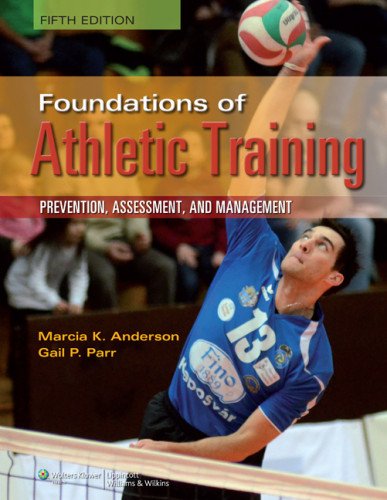

Foundations of athletic training prevention, assessment, and management Marcia K. Anderson, Gail P. Parr.
Detalles de publicación: Baltimore Lippincott Williams & Wilkins c2012.Edición: 5th edDescripción: xlii, 981 p. 29 cmISBN:- 9781451116526 (hardback : alk. paper)
- 617.1027 A5451f5 23
- RD97 .A53 2012
- QT 261
| Imagen de cubierta | Tipo de ítem | Biblioteca actual | Biblioteca de origen | Colección | Ubicación en estantería | Signatura topográfica | Materiales especificados | Info Vol | URL | Copia número | Estado | Notas | Fecha de vencimiento | Código de barras | Reserva de ítems | Prioridad de la cola de reserva de ejemplar | Reservas para cursos | |
|---|---|---|---|---|---|---|---|---|---|---|---|---|---|---|---|---|---|---|
| Libro | Biblioteca Encarnación Valdés Colección General bev | 617.1027 A5451f5 (Navegar estantería(Abre debajo)) | Disponible | 80000002531385 |
Descripciones mejoradas de Syndetics:
This text integrates basic medical concepts and related scientific information to provide a strong foundation of general athletic training practices. Using a problem-solving approach to prevention, recognition, assessment, management, and disposition of sports-related injuries and diseases, this text provides athletic trainers and athletic training students with the most extensive, challenging content in a user-friendly format.
New Content! This edition features a new chapter on Psychosocial Intervention Strategies.Includes bibliographical references and index.
Machine generated contents note: Section I: Foundations of Injury Care Chapter 1: Injury Care and the Athletic Trainer Chapter 2: Preparticipation Examination Chapter 3: Protective Equipment Chapter 4: Protective Taping and Wrapping Section II: Injury Assessment and Rehabilitation Chapter 5: Injury Assessment Chapter 6: Tissue Healing and Wound care Chapter 7: Psychological Intervention Strategies Chapter 8: Therapeutic Modalities Chapter 9: Therapeutic Exercise Section III: Conditions to the Axial Region Chapter 10: Head and Facial Conditions Chapter 11: Cervical and Thoracic Spinal Conditions Chapter 12: Lumbar Spinal Conditions Chapter 13: Throat, Thorax, and Visceral Conditions Section IV: Upper Extremity Chapter 14: Shoulder Conditions Chapter 15: Upper Arm, Elbow, and Forearm Conditions Chapter 16: Wrist and Hand Conditions Section V: Lower Extremity Chapter 17: Pelvis, Hip, and Thigh Conditions Chapter 18: Knee Conditions Chapter 19: Lower Leg, Ankle, and Foot Conditionsc Section VI: Systemic Conditions Chapter 20: Cardiovascular Conditions Chapter 21: Neurologic Conditions Chapter 22: Respiratory Tract Conditions Chapter 23: Gastrointestinal Conditions Chapter 24: Endocrine Conditions Section VII: Special Considerations Chapter 25: Environmental Conditions Chapter 26: Common Infectious Diseases Chapter 27: Conditions of the Female Athlete, Disabled Athlete, and Senior Athlete Chapter 28: Pharmacology Chapter 29: Dermatology.
"This text integrates basic medical concepts and related scientific information to provide a strong foundation of general athletic training practices. Using a problem-solving approach to prevention, recognition, assessment, management, and disposition of sports-related injuries and diseases, this text provides athletic trainers and athletic training students with the most extensive, challenging content in a user-friendly format. New Content - This edition features a new chapter on Psychological Intervention Strategies"--Provided by publisher.
Tabla de contenidos provista por Syndetics
- Section I Foundations of Injury Care
- Chapter 1 Injury Care and the Athletic Trainer
- Chapter 2 Preparticipation Examination
- Chapter 3 Protective Equipment
- Chapter 4 Protective Taping and Wrapping
- Section II Injury Assessment and Rehabilitation
- Chapter 5 Injury Assessment
- Chapter 6 Tissue Healing and Wound Care
- Chapter 7 Psychological Intervention Strategies
- Chapter 8 Therapeutic Modalities
- Chapter 9 Therapeutic Exercise
- Section III Conditions to the Axial Region
- Chapter 10 Head and Facial Conditions
- Chapter 11 Cervical and Thoracic Spinal Conditions
- Chapter 12 Lumbar Spinal Conditions
- Chapter 13 Throat, Thorax, and Visceral Conditions
- Section IV Upper Extremity
- Chapter 14 Shoulder Conditions
- Chapter 15 Upper Arm, Elbow, and Forearm Conditions
- Chapter 16 Wrist and Hand Conditions
- Section V Lower Extremity
- Chapter 17 Pelvis, Hip, and Thigh Conditions
- Chapter 18 Knee Conditions
- Chapter 19 Lower Leg, Ankle, and Foot Conditions
- Section VI Systemic Conditions
- Chapter 20 Cardiovascular Conditions
- Chapter 21 Neurologic Conditions
- Chapter 22 Respiratory Tract Conditions
- Chapter 23 Gastrointestinal Conditions
- Chapter 24 Endocrine Conditions
- Section VII Special Considerations
- Chapter 25 Environmental Conditions
- Chapter 26 Common Infectious Diseases
- Chapter 27 Conditions of the Female Athlete, Disabled Athlete, and Senior Athlete
- Chapter 28 Pharmacology
- Chapter 29 Dermatology